•
IT Services
•
Automate Accounts Receivable
•
Reduce DSO
•
Set Up Subscription Billing
•
Collections
July 16, 2026
How MSPs Automate Payment Processing and PSA Reconciliation
Manual reconciliation is the hidden tax on MSP finance teams. Your PSA creates the invoice, your processor collects the payment, your accounting software tracks the balance, and somewhere in the middle a human is matching deposits to invoices in a spreadsheet. That gap between invoice creation and cash in the bank is where most MSP billing pain lives.
The good news: it is solvable. PSA-integrated payment automation closes the loop from invoice to deposit, so payments map to the right invoice and post to your general ledger without manual triage. This guide walks through how managed service providers handle payment processing and invoicing today, what breaks, and how to fix it.
Most MSP billing follows the same lifecycle: issuance, communication, collection, reconciliation, and reporting. Here is what should happen at each stage.
- Issuance — The PSA (ConnectWise, Autotask, or HaloPSA) generates the invoice from agreements, time entries, and ticket logs. It is the single source of truth for what is owed.
- Communication — The client receives the invoice, plus reminders before and after the due date.
- Collection — The client pays by ACH, credit card, or a financing option.
- Reconciliation — The payment is matched to the original invoice and posted to QuickBooks or Xero.
- Reporting — Finance leaders track DSO, exception rates, and on-time payment ratios.
The problem is that most PSAs stop at issuance. ConnectWise generates invoices, but it does not natively process payments, auto-charge stored client cards, or reconcile collected funds back to accounting. Autotask handles invoice generation and contract management, but collection, reminders, and GL reconciliation still need an external integration. That leaves a lean finance team (often one person) to bridge the gap by hand.
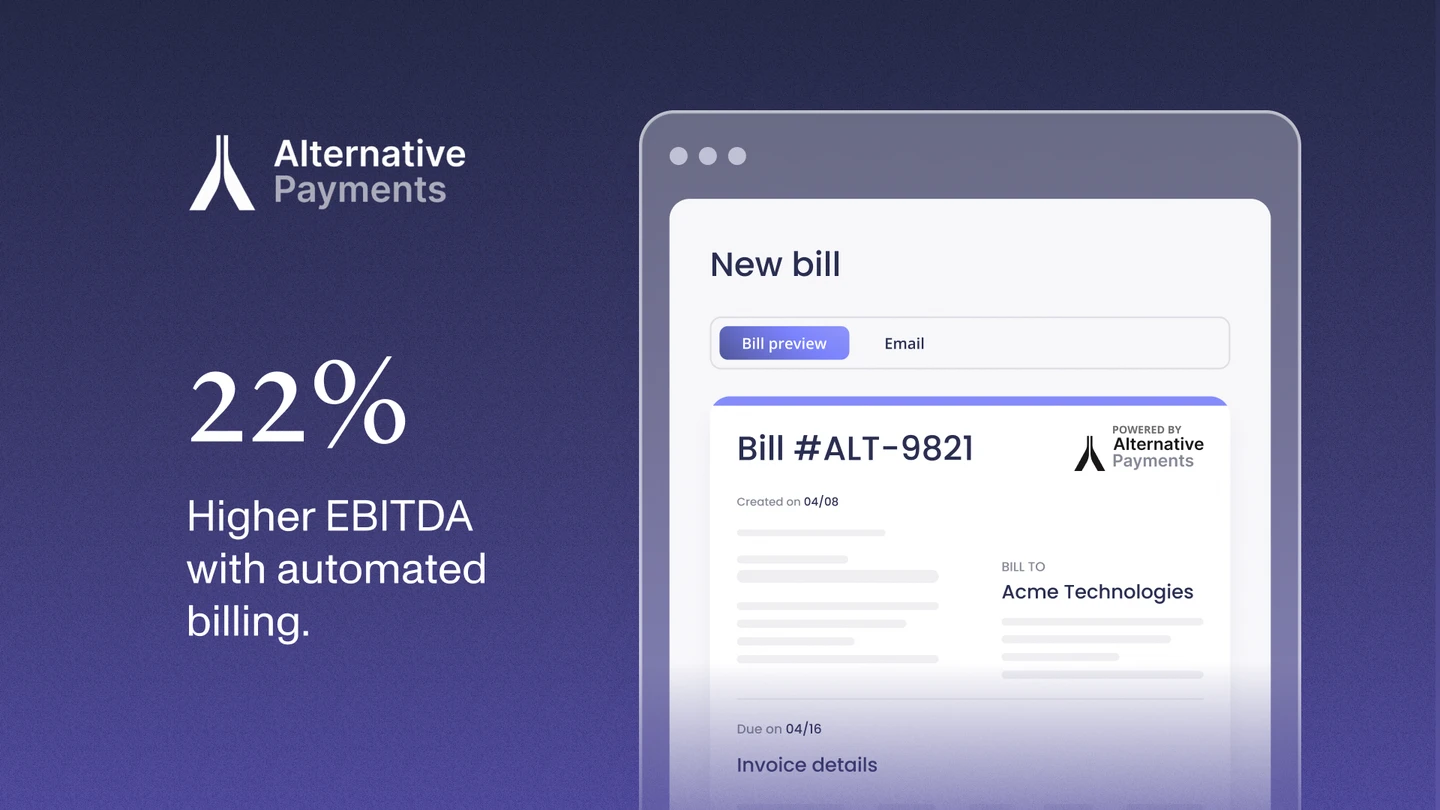
The cost adds up. According to DeskDay's 2025 analysis of Service Leadership data, MSPs that optimize their billing workflows see an average 22% higher EBITDA margin than peers relying on manual or semi-automated processes. Billing is not back-office overhead. It is a margin lever.
Can Something Automate PSA Reconciliation? Yes. Here Is How
If you are tired of manually reconciling payments with your PSA, the fix is a payment layer that syncs bidirectionally with it. Here is what automated reconciliation actually does.
- Pulls invoices from the PSA automatically. Invoices created in ConnectWise or Autotask push to the payment platform with full line-item detail, not just a total.
- Matches every payment to its invoice. When a client pays, the payment ties back to the original invoice and the PSA marks it paid.
- Posts to accounting without manual entry. The settlement reconciles to QuickBooks or Xero, so your books, bank feed, and PSA all agree.
- Batches deposits predictably. Same-day payments are grouped into a single deposit, which removes the guesswork of untangling lump-sum deposits in your accounting software.
The distinction that matters is native versus bolt-on. Bolt-on connectors built on Zapier or generic APIs import invoice totals without detail, require manual mapping between PSA entities and accounting categories, and break when PSA data structures change. Native two-way integrations move full invoice data automatically, push payment status back in real time, and reconcile settlements without middleware.
At Alternative Payments, we built this loop specifically for MSP workflows. You can read how that works in our complete MSP billing guide from invoice to reconciliation.
Best MSP Billing Software That Integrates With Autotask or ConnectWise
When you evaluate billing software for an MSP, the integration question is not "does it connect to my PSA?" It is "does it sync bidirectionally, in real time, with no middleware?" Prioritize these capabilities, in roughly this order of impact.
- Native two-way PSA sync — ConnectWise, Autotask, and HaloPSA, not a Zapier workaround.
- Auto-pay with retry logic — the single highest-impact feature for reducing DSO.
- Automatic GL reconciliation — eliminates month-end manual matching to QuickBooks or Xero.
- Multiple payment methods — ACH, cards, and financing in one checkout.
- A branded client portal — reduces friction and speeds time-to-pay.
Several platforms target this space: ConnectBooster, FlexPoint, WisePay, and Benji Pays among them. Each handles a slice of the workflow. The differences show up in integration breadth and AR automation depth. Alternative Payments integrates natively with ConnectWise and Autotask plus HaloPSA, reconciles automatically to QuickBooks and Xero, and includes Collections Assist for automated AR.
Payment Processing That Lets Clients Store a Card and Pay Automatically
Auto-pay is where DSO drops fastest. When a client stores a credit card or bank account and enrolls in auto-pay, recurring invoices collect on schedule without anyone chasing them.
Here is how the stored-payment flow works on a purpose-built platform:
- Clients log in to a branded portal, view current and past invoices, and save a card or ACH method.
- Recurring invoices auto-charge the stored method on the due date.
- Failed payments trigger retry logic — for example, retries at 3 and 7 days — paired with automated client notifications, so a single declined card does not become an aging receivable.
The payoff shows up in the numbers. Internal Alternative Payments data shows MSPs on the platform have only 6.7% of invoices overdue, compared to 20.5% for MSPs using traditional methods, a reduction of more than two-thirds. For deeper detail on configuring this, see our guide to optimizing AutoPay features for your MSP.
Alternative Payments vs. Bill.com for MSP Billing
Bill.com is a capable, widely used AP and AR automation tool. It handles invoicing templates, auto-pay, payment reminders, and accounting sync, and it scales from startups to mid-market at $49 per user per month for its AR product. For a general business that bills out of an ERP or manual entry, it works well.
The gap appears when you run a PSA. MSPs do not generate invoices from an ERP. They originate in ConnectWise, Autotask, or HaloPSA, pulling from service agreements, time entries, and ticket logs. A platform that integrates with accounting software but not your PSA misses the upstream data that makes billing accurate, and it leaves the PSA-to-payment handoff manual.
The takeaway is not that Bill.com is a poor tool. It is that contract-driven, recurring MSP billing needs a platform that starts in the PSA and finishes in the GL. Generic processors treat each invoice as a standalone transaction; purpose-built platforms keep contract context across the whole lifecycle.
Generic Processor vs. Purpose-Built MSP Platform
A generic AR tool can tell you that Invoice #4872 is 45 days overdue. A PSA-integrated platform tells you that Invoice #4872 belongs to a per-device managed services agreement, the client's average payment time has drifted from 18 to 34 days over the past quarter, and a reminder sequence is already running. That context is the difference between reacting to aging AR and preventing it.
This is why we built Alternative Payments for service businesses running on recurring revenue across the U.S. and Canada. The platform connects the full payment lifecycle: issuance, communication, collection, reconciliation, and reporting. That means fixes address root causes, not symptoms.
Frequently Asked Questions
Can I automate reconciliation between my PSA and accounting software?
Yes. A PSA-integrated payment platform pulls invoices from ConnectWise, Autotask, or HaloPSA, matches each payment to its invoice, and posts the settlement to QuickBooks or Xero automatically. No spreadsheets, no manual entry. See our complete MSP billing guide for the full flow.
Can my clients store a credit card and pay invoices automatically?
Yes. Clients save a card or ACH method in a branded portal and enroll in auto-pay, so recurring invoices collect on the due date. Retry logic and automated reminders handle failed payments without manual follow-up.
Which PSAs does Alternative Payments integrate with?
Alternative Payments offers native, two-way integrations with ConnectWise, Autotask, and HaloPSA, plus reconciliation to QuickBooks and Xero. You can review the full list on our integrations hub.
How is this different from a payment gateway?
A gateway processes individual transactions, like charging a card. A billing automation platform manages the full lifecycle: pulling invoices from your PSA, communicating with clients, collecting on multiple methods, reconciling to accounting, and reporting on AR health. MSP billing is contract-driven and recurring, so the latter fits better.
Is Alternative Payments available outside the U.S. and Canada?
Alternative Payments is built for recurring-revenue service businesses in the U.S. and Canada, including MSPs, telecom providers, and accounting firms.
See It Work on Your Stack
If your team still untangles deposits in a spreadsheet every Friday, the path out is well defined and the payoff is measurable from the first billing cycle: faster collections, cleaner books, and hours returned to your week. Book a 20-minute demo and see how Alternative Payments automates your billing from PSA to GL.
Simplify your customer payments, unlock instant cash flow
Keep reading


Can AI financial analysis explain why your margins changed?

Autotask QuickBooks integration: choosing a billing and payment operating model