•
Accounting
•
Automate Accounts Receivable
•
Reduce DSO
•
Collections
•
Professional Services
May 8, 2026
How QuickBooks Payment Portal Is Changing CAS Firm Workflows
The Billing Problem Accounting Firms Will Not Talk About
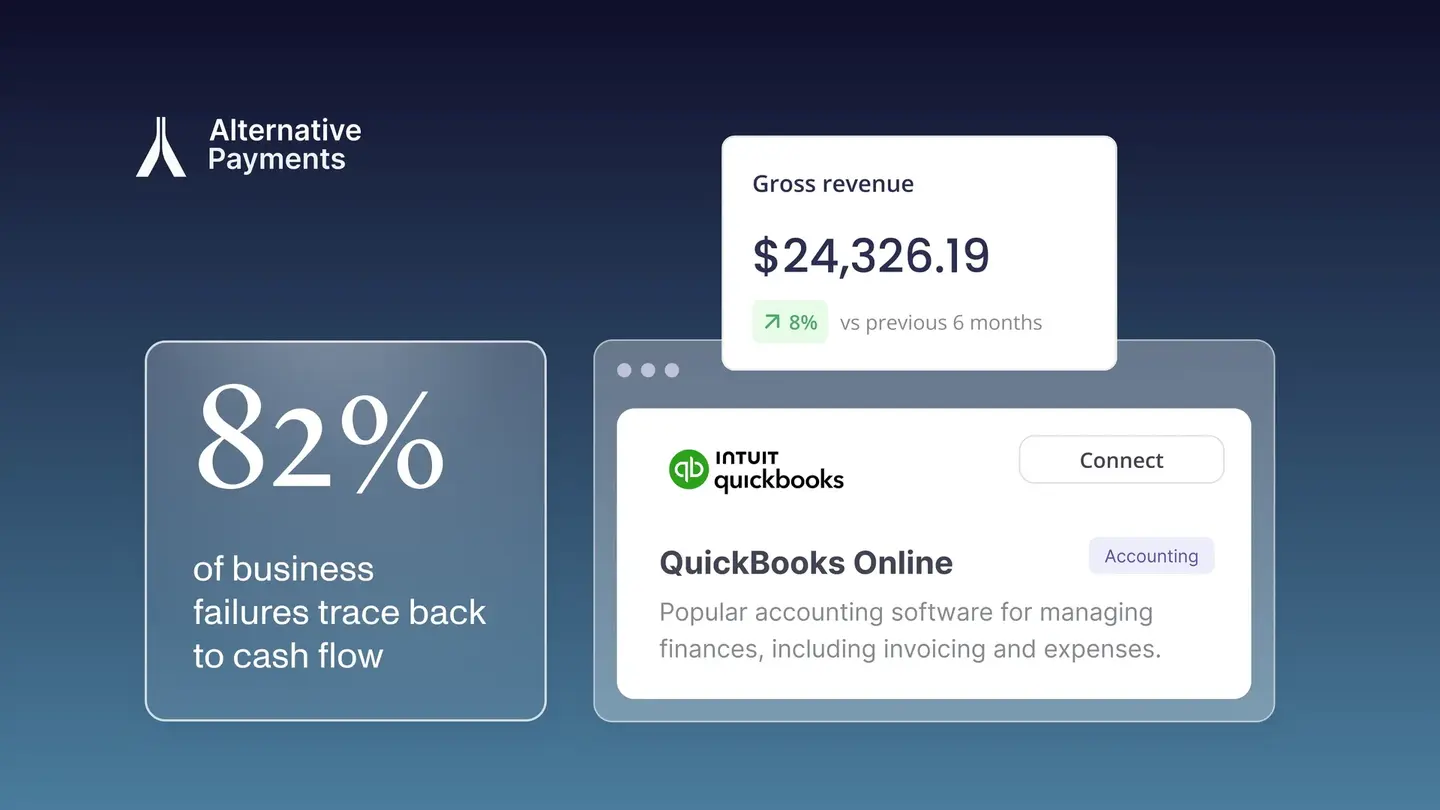
CAS practices and accounting firms have a hidden billing problem. The fastest way to automate payments for accounting firms is to deploy a payment platform that connects natively to your accounting software, handles auto-pay enrollment across your full client book, and posts every payment back to the correct invoice without manual matching.
But most firms are not there yet. They are running QuickBooks reminders for some clients, manually sending payment links for others, and reconciling deposits by hand at month end. The system works until the client book grows past 30 or 40 accounts. Then it breaks.
This guide covers the specific infrastructure accounting firms need, where generic payment tools fall short, and how to evaluate a platform that handles the full billing lifecycle without adding to your team's workload.
Where the Payment Lifecycle Breaks for CAS Firms
Most CAS billing stacks have a gap between invoice generation and cash in the bank. The invoice goes out. The reminder goes out. The client pays when they get around to it. Someone matches the deposit to the invoice. The GL gets updated. For 15 clients, this is manageable. For 60, it consumes hours your team does not have.
The specific failure points:
Reminder caps: QuickBooks Online limits how many automated reminders can run simultaneously. For firms managing large client books, some accounts consistently receive fewer reminders than others. Late payment habits form where follow-up is inconsistent.
Reconciliation manual matching: when clients pay via bank transfer, card, or check, the payment arrives as a deposit entry in your accounting system. Matching that entry to the specific invoice it covers is a manual step. At 50 clients paying across different methods on different schedules, this matching takes hours each month.
No client self-service: generic payment tools send a payment link. Clients cannot update payment methods, enroll in auto-pay, or view invoice history without contacting your office. Every billing question that lands in your inbox is friction your platform should be absorbing.
According to the Institute of Finance and Management (2024), companies using automated AR workflows reduce days sales outstanding by an average of 15 to 25% and cut manual collection labor by up to 40%. The firms achieving those results have moved past the reminder-and-reconcile-manually model. They have automated the full loop.
The Infrastructure Accounting Firms Actually Need
A payment platform for accounting firms needs to solve five specific problems, not just accept payments.
Native accounting system integration with auto-reconciliation
The platform must sync with your accounting system at the invoice level, not just push payment notifications. When a client pays, the payment maps to the specific invoice, the invoice marks as paid, and the GL entry posts automatically. Platforms that connect to QuickBooks but only sync deposit totals leave you with the matching step still to do manually.
Auto-pay with full enrollment management
Auto-pay eliminates the collection step entirely for enrolled clients. But the enrollment management layer matters as much as the auto-pay itself. Bulk enrollment, payment method updates, failed payment retry logic, and re-enrollment after method changes all need to run without your team initiating each step per client.
Client self-service portal
A branded client portal where clients can view invoices, update payment methods, and manage auto-pay enrollment reduces inbound billing questions and gets clients paid without your team in the loop. When the portal looks like your firm rather than a third-party processor, clients trust it and use it.
Surcharging compliance built in
For firms billing via card, surcharging allows you to pass the 2-3% processing fee to the client rather than absorbing it. This requires compliance with state law (prohibited in Connecticut, Maine, Massachusetts, and California) and card network rules. A platform with built-in surcharging handles jurisdiction-specific compliance automatically rather than requiring your team to monitor rules per client location.
Trust accounting compliance
For firms handling client funds, the platform must support separation of client funds from operating funds in a way that meets professional standards requirements. This is not universally supported across payment platforms. Verify explicitly before committing.
How Alternative Payments Serves Accounting Firms
Alternative Payments was built for recurring-revenue service businesses, including accounting firms and CAS practices. The platform connects natively with QuickBooks Online, QuickBooks Desktop, and Xero, reconciling every payment at the invoice level automatically.
ACH has no per-transaction fee. Card processing includes built-in surcharging with automatic jurisdiction compliance. Collections Assist handles automated AR follow-up for overdue invoices without requiring a separate collections vendor. The client portal is white-labeled to your firm. Setup completes in days, not weeks.
For accounting firms that want to use the same platform for their own billing and for clients' businesses, Alternative Payments supports multi-entity structures. The same workflow that handles your firm's CAS retainers can handle the businesses you advise, with each entity maintaining its own integrations, branding, and billing rules.
Book a 20-minute demo to see how Alternative Payments maps to your specific accounting stack and client billing structure.
FAQs
Q: How do accounting firms automate payments for clients?
A: The most effective approach is a payment platform that connects natively to your accounting software, handles auto-pay enrollment and management, and posts every payment back to the correct invoice automatically. This eliminates the manual matching and reminder steps that consume staff time across large client books. Look specifically for auto-reconciliation at the invoice level, not just accounting system connectivity.
Q: What is the fastest way to reduce DSO for a CAS firm?
A: Auto-pay enrollment is the single highest-impact step. When clients pay automatically on the billing cycle, collection time drops to near zero for enrolled accounts. Combined with automated reminders for non-enrolled clients and a client self-service portal for payment method management, most CAS firms see DSO reductions within the first two billing cycles after full rollout.
Q: Can accounting firms use one platform for their own billing and for clients' businesses?
A: Yes, if the platform supports multi-entity structures. Alternative Payments allows accounting firms to run their own CAS retainer billing and extend the same collection, reconciliation, and financing workflow to the client businesses they advise. Each entity maintains its own integrations, branding, and billing rules within the same platform.
Simplify your customer payments, unlock instant cash flow
Keep reading