•
IT Services
•
Automate Accounts Receivable
December 23, 2025
Why Your PSA’s Payment Feature Might Be Limiting Your MSP Payments Growth
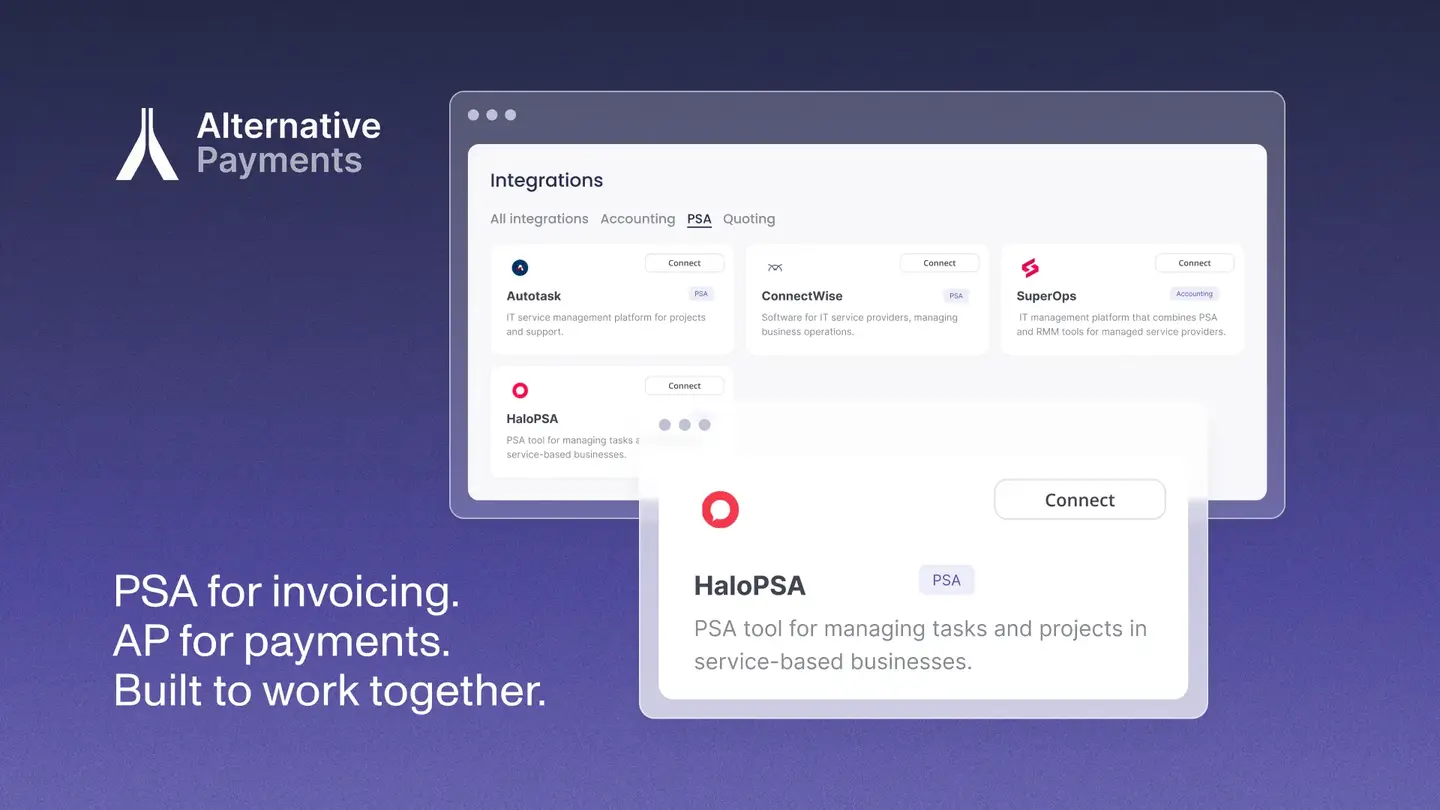
In conversations with MSP owners, the pattern is consistent. Everything feels fine until volume increases, clients get more complex, or the finance team starts double-checking things more often than they should.
Here are the first signs we see that PSA-based payments are starting to strain:
- Payment failures are not surfaced clearly, forcing reactive follow-up
- Payout timing changes without explanation, making cash flow harder to predict
- Reporting lacks clarity around why money did or did not move
- Manual checks are required to confirm what should be automated
None of this means the PSA is broken. It usually means payments have grown beyond being a background feature and now deserve dedicated attention.
The Convenience Trap In MSP Payments
Most MSPs do not choose their payment setup deliberately. It usually comes bundled with the PSA, turned on during onboarding, and left alone because it works well enough. That convenience is appealing, especially when there are dozens of other operational priorities competing for attention.
The issue is not that PSA payment features are bad. The issue is that convenience can hide tradeoffs. When payments are treated as just another checkbox inside the PSA, they often lack the depth needed to support predictable growth. Reporting stays shallow. Failure visibility is limited. Flexibility around how and when clients pay is constrained by what the PSA was designed to support.
At a small scale, these gaps are easy to ignore. At a larger scale, they quietly compound. Leadership teams start spending more time asking whether numbers can be trusted instead of using those numbers to plan.
Why Built-In Payment Tools Exist Inside PSAs
It helps to understand why PSA payment features exist in the first place. PSA platforms are designed to centralize service delivery, ticketing, contracts, and billing logic. Payments are included to complete the billing loop, not to function as a standalone financial system.
That design choice makes sense. A PSA’s job is to generate accurate invoices based on agreements and usage. Collecting money is adjacent to that workflow, but it is not the core problem the PSA was built to solve. As a result, payment features tend to focus on basic functionality rather than deep financial controls.
This is not a flaw. It is a deliberate scope decision. When MSPs expect PSA-native payments to handle complex reconciliation, nuanced failure handling, or flexible client payment experiences, frustration usually follows.
When Payments Feel Fine, But Growth Feels Harder
Is your current approach to MSP Payments actually supporting growth, or is it quietly setting limits you have not noticed yet?
The reality is more nuanced. As your business scales, the way payments are handled starts to affect cash flow confidence, operational clarity, and even leadership decision-making in ways that are easy to underestimate.
How Payment Visibility Impacts Cash Flow Predictability
Cash flow predictability is not just about speed. It is about confidence. Leaders need to know not only what has been paid, but what is likely to be paid, what is delayed, and what requires attention.
When you look at how businesses actually pay each other, it becomes clear that today’s environment places a premium on payment speed, choice, and control, a point reinforced throughout the Federal Reserve’s latest insights brief on business payments.
And when payment visibility is limited, finance teams become reactive. Instead of spotting issues early, they are forced into uncomfortable follow-ups after balances grow. That dynamic creates stress internally and tension externally, even when no one has done anything wrong.
The Operational Cost Of Silent Payment Failures
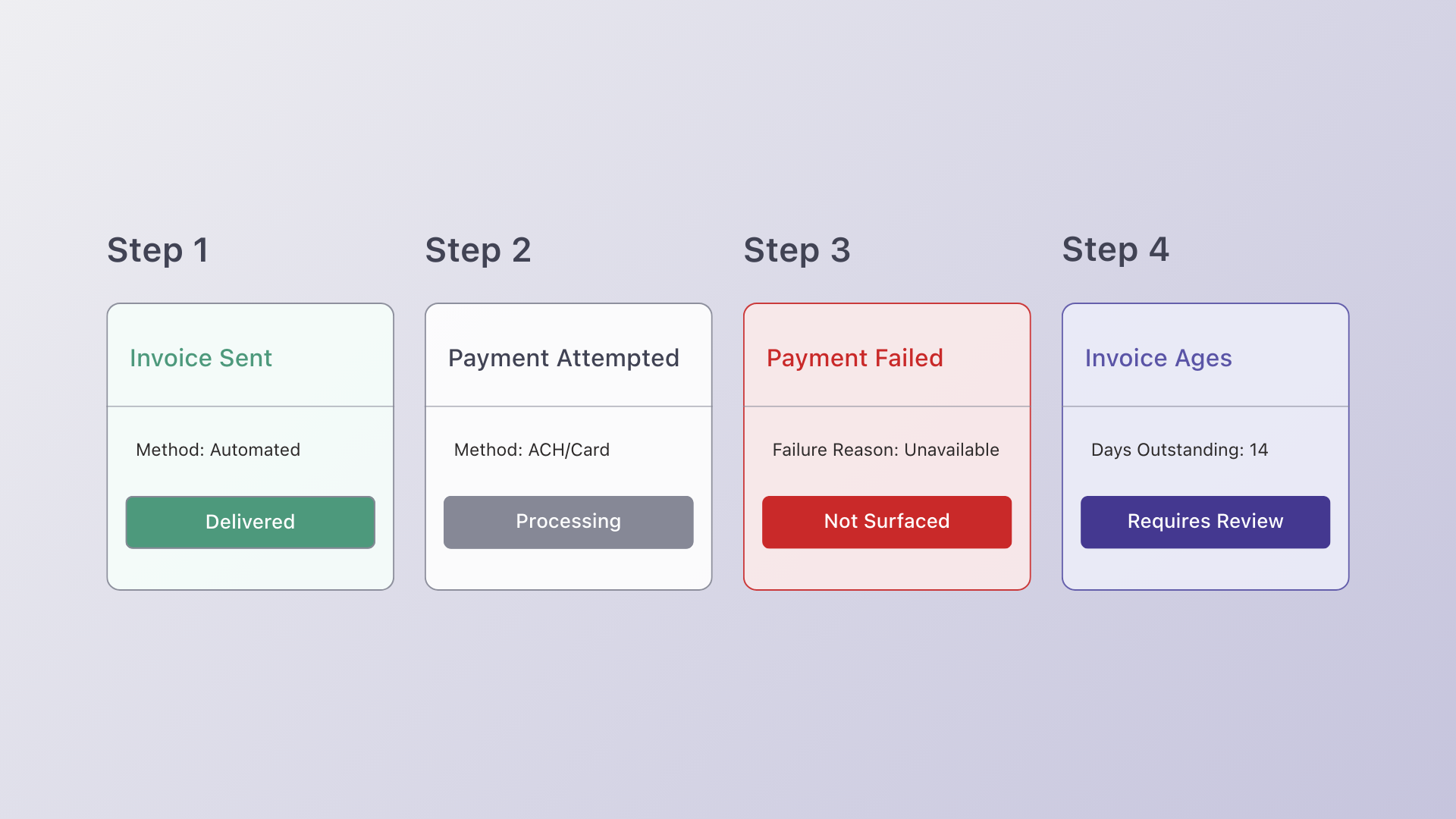
Silent failures are one of the most damaging issues in MSP billing, precisely because they are easy to miss. A recurring payment fails. No alert fires. The invoice quietly ages. By the time someone notices, the situation is harder to fix.
This is where many MSPs assume the problem is people, not systems. In reality, it is usually a design issue. If a platform does not surface problems early, it forces humans to compensate later with manual work and awkward conversations.
The cost is not just delayed cash. It is lost time, eroded trust, and leadership distraction. Over time, those small costs add up and make the business harder to run than it needs to be.
Dedicated Payment Platforms Serve A Different Purpose
Dedicated payment platforms exist because collecting money reliably is its own discipline. These systems are designed around fund flow, failure handling, reconciliation, and payer experience first, not as a secondary feature.
Where a PSA focuses on generating the correct invoice, a payment platform focuses on what happens after that invoice exists. Did the payment attempt succeed? If not, why? Was it a bank issue, an expired card, a timing problem, or a permission issue? More importantly, who needs to know, and when.
This distinction matters because MSPs operate on recurring revenue. Small issues that repeat monthly quickly become systemic risks if they are not surfaced and resolved early.
Flexibility Matters As Client Expectations Change
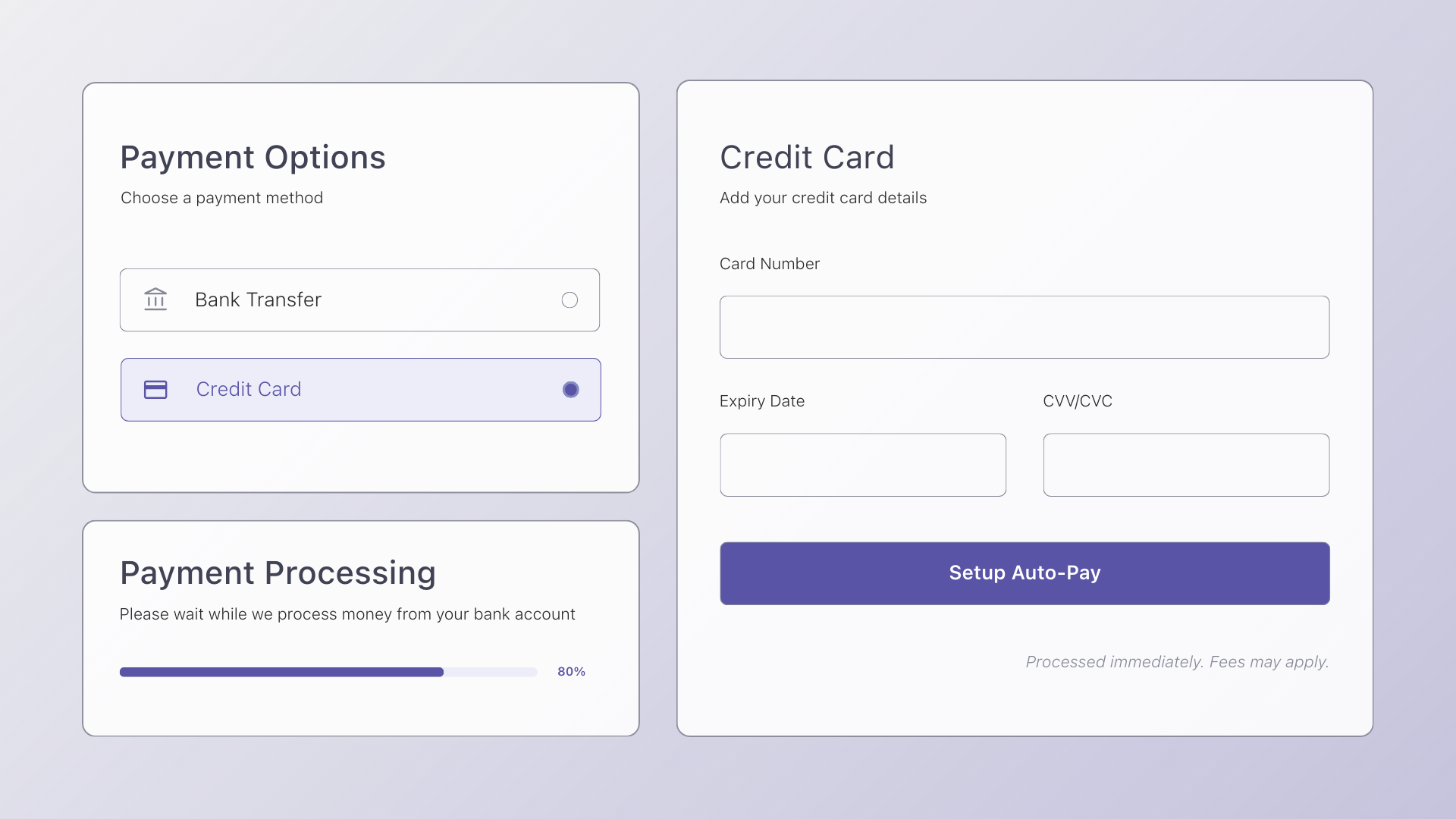
Client expectations around payment are evolving, even in B2B environments. Some clients prefer ACH. Others rely on cards for internal accounting reasons. Larger engagements may require financing or staged payments.
PSA payment features are typically rigid because flexibility was not part of their original design scope. Dedicated platforms, by contrast, are built to accommodate variation without breaking reporting or reconciliation.
This flexibility reduces friction for clients while protecting the MSP from exceptions that require manual handling. The result is fewer special cases and fewer one-off processes that only one person understands.
Reconciliation Is Where The Difference Becomes Obvious
Reconciliation is often where MSPs first feel the limits of PSA based payments. When deposits hit the bank, finance teams need to match them cleanly to invoices, fees, and adjustments.
In many setups, this requires hopping between systems, exporting reports, and manually confirming that totals align. Even when it works, it creates uncertainty. People double-check because they do not fully trust the data.
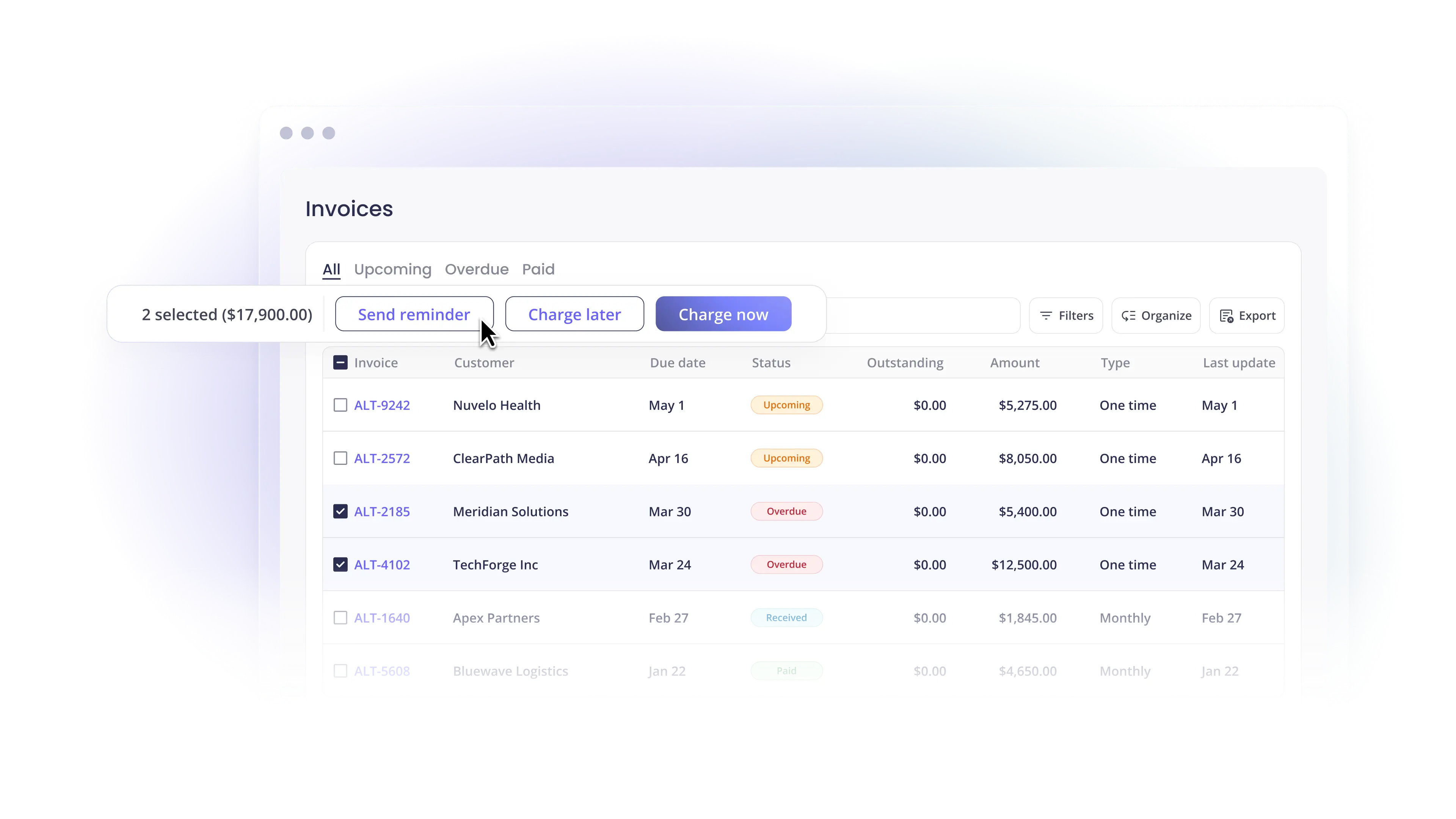
Dedicated payment platforms are designed to close that gap. Payments, fees, deposits, and invoice status stay aligned automatically. This does not just save time, it restores confidence in the numbers leadership relies on.
The Emotional Impact On Teams Is Often Overlooked
Payments are not just financial transactions. They affect how teams feel about their work. When systems are unreliable, people compensate with vigilance and stress.
Finance teams worry about what they might be missing. Service leaders brace for uncomfortable client conversations. Owners carry a background anxiety about whether revenue is as predictable as it looks.
When payment systems work quietly and transparently, that emotional load disappears. Teams trust the process. Conversations stay proactive instead of reactive. The business feels calmer to run.
This benefit rarely shows up in ROI spreadsheets, but it is one of the most meaningful outcomes of getting payments right.
Choosing The Right Role For Each System
The takeaway is not that PSAs should not handle payments. It is that each system should do what it is best at.
PSAs excel at defining what should be billed and when. Dedicated payment platforms excel at ensuring money moves predictably, visibly, and with minimal friction. When those roles are clearly separated and well integrated, MSPs gain both operational clarity and financial confidence.
Growth does not usually break businesses overnight. It exposes weak spots that were easy to live with before. Payments are one of those areas where clarity early makes everything else easier later.
Next Steps: Take A Clear Look At Your Payments Flow
When we talk to MSP leaders, most already sense where things feel off, even if they cannot name it yet.
This is not about switching platforms right away. It is about getting honest visibility into how payments actually behave inside your business today.
Here is how we recommend starting that assessment:
- We look at how quickly payment failures surface and who sees them first
- We review how much manual reconciliation still happens each month
- We ask whether payout timing feels predictable enough to plan around
- We reflect on how billing conversations with clients feel, calm or tense
You do not need to fix everything at once. In my experience, clarity alone often highlights the one change that would make everything else easier. For many MSPs, this review becomes the starting point for exploring whether a dedicated payments layer would bring more visibility and control than their PSA alone.
Simplify your customer payments, unlock instant cash flow
Keep reading


Can AI financial analysis explain why your margins changed?

Autotask QuickBooks integration: choosing a billing and payment operating model