•
IT Services
•
Enterprise
•
Accounting
March 13, 2026
Why Your Billing Infrastructure Determines Your Exit Valuation
Growth Is Not the Same as Exit Readiness
Many managed service provider owners devote significant energy to revenue growth, service expansion, and acquiring new clients. These metrics signal market traction, yet they are rarely the primary factors buyers evaluate when determining acquisition value.
Private equity firms and strategic acquirers typically look beyond topline performance and focus instead on MSP accounting infrastructure. The quality of a company’s financial systems determines whether reported performance can be trusted during diligence.
When investors evaluate a potential acquisition, they look for confidence that financial performance reflects operational reality. That confidence begins with robust MSP accounting practices that maintain structured, reconciled financial records across billing, collections, and the general ledger.
For high growth providers, strong MSP accounting discipline often becomes the difference between receiving a standard valuation multiple and achieving a premium exit outcome.
How Messy Billing Creates Valuation Risk
Financial reporting problems rarely originate inside the accounting platform itself. The root cause usually appears earlier in the revenue lifecycle.
Manual billing workflows introduce inconsistencies that eventually surface in financial reporting. Invoices may be generated manually from PSA systems without standardized rules. Payment reconciliation may occur outside the accounting system using spreadsheets or disconnected tools. Service revenue categories may not align clearly with accounting classifications. Delayed collections can also create volatile accounts receivable balances that distort financial visibility.
Each of these issues adds noise to financial reporting.
When buyers encounter unclear billing records or inconsistent revenue attribution, they cannot easily validate recurring revenue quality. As a result, investors must spend additional time reconstructing financial history during diligence.
For MSPs preparing for a potential exit, improving MSP financial management often begins by strengthening the systems that generate and collect your invoices.
The CFO Strategy for Exit Ready MSPs
Sophisticated MSPs that anticipate future acquisition opportunities treat financial systems as strategic infrastructure rather than administrative tools.
A CFO-driven strategy for managed service provider accounting typically focuses on three priorities.
The first priority is revenue integrity. Invoices must accurately reflect service agreements, subscription commitments, and usage-based billing.
The second priority is payment automation. Manual collections processes introduce delays and inconsistencies that complicate reconciliation and reporting. Automated payment authorization and collection systems reduce administrative effort while improving cash flow consistency.
The third priority is ledger-level accuracy. Financial records must remain clean, consistent, and traceable so they can withstand investor scrutiny during diligence.
When these systems operate together, financial reporting becomes reliable and repeatable. Buyers can quickly understand the financial structure of the business and evaluate performance without ambiguity.

Modern Payment Infrastructure Is the Missing Layer in MSP Accounting
For most MSPs, the problem isn’t the accounting platform, it’s everything between service delivery and the ledger.
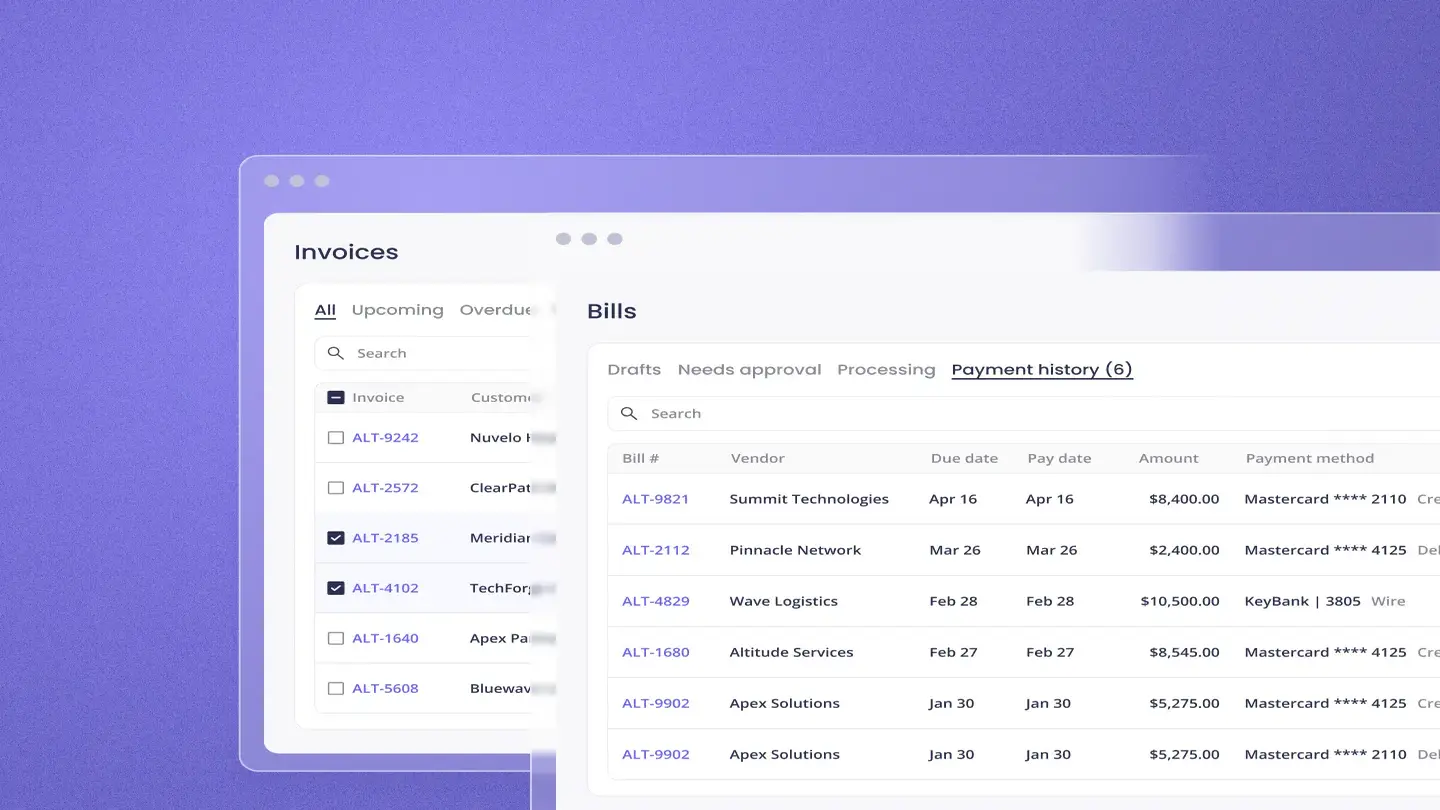
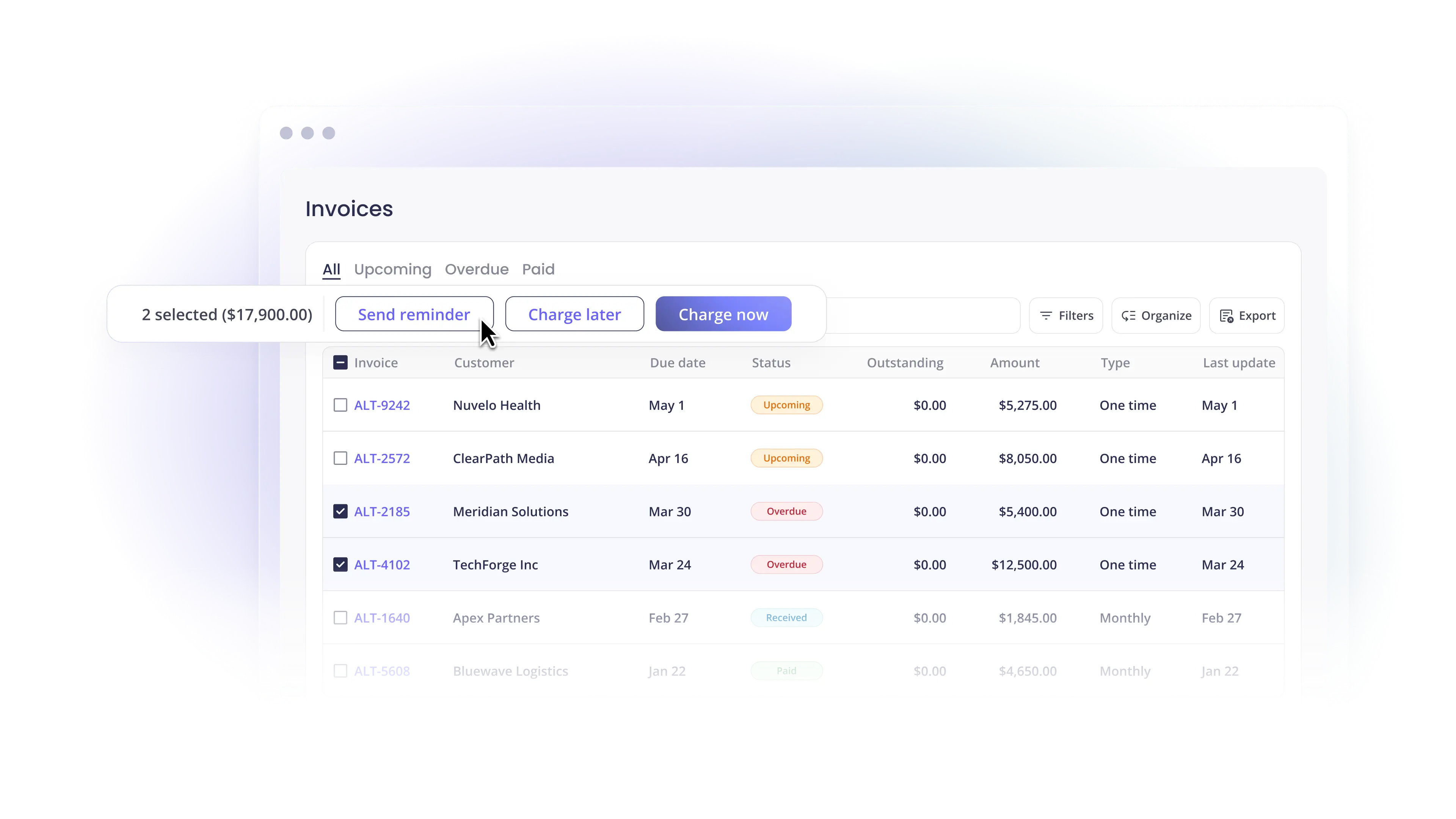
Alternative Payments addresses this gap by connecting invoice delivery, client payment authorization, automated collections, and accounting reconciliation into one integrated workflow. When a payment is processed, the transaction flows directly into your accounting system — no manual export, no reconciliation spreadsheet, no end-of-month cleanup.
The cost of fragmented systems isn’t just administrative time. Every manual handoff between your PSA, payment processor, and accounting platform is a place where data can fall out of sync. During diligence, buyers encounter those gaps and have to reconstruct what actually happened — which slows the process and introduces doubt about your numbers.
When your billing and payment infrastructure runs through a single system, that reconstruction isn’t necessary. Buyers can trace revenue from invoice to payment to ledger entry without asking questions.
Why Clean Financial Data Drives Higher Valuation Multiples
In acquisition scenarios, certainty increases valuation. Buyers pay higher multiples for businesses whose financial performance is transparent and easy to validate.
When investors review an MSP and see reliable recurring revenue reporting, consistent collections performance, reconciled financial statements, and clearly defined service margins, they perceive significantly less operational risk.
Lower perceived risk directly influences valuation outcomes. Two MSPs may generate similar revenue, yet the company with cleaner financial infrastructure often commands a higher EBITDA multiple because its performance can be validated quickly during diligence.
Industry advisors frequently report that companies with automated billing and payment reconciliation complete diligence faster because buyers can verify financial performance without reconstructing transaction history.
The most valuable MSPs understand that this level of financial readiness does not begin when an exit becomes imminent. They build the infrastructure buyers expect early by standardizing billing workflows, automating payment collection, and maintaining disciplined MSP Accounting practices.
Evaluate Whether Your Payment Infrastructure Is Exit Ready
Fragmented billing and payment systems are the most common reason MSPs face extended diligence — and the most preventable.
Alternative Payments unifies invoicing, collections, and accounting reconciliation into a single workflow built for recurring revenue businesses. See how it works here.
Simplify your customer payments, unlock instant cash flow
Keep reading

How Seamless PSA Integration for MSP Payments Is Changing MSP Operations
ConnectBooster vs. Alternative Payments: Which MSP Payment Platform Fits Your Billing Workflow?