•
Automate Accounts Receivable
•
IT Services
•
Set Up Subscription Billing
February 24, 2026
Why Your Billing Cycle Is the Secret to Client Retention
Most MSPs believe client retention is driven by technical performance.
Fast response times. Strong cybersecurity posture. Reliable infrastructure. Strategic guidance.
All of that matters. But there is another force shaping retention that rarely gets discussed.
Your IT Billing process.
Retention is not determined only by how well you solve technical problems. It is influenced by how easy you are to work with. And billing is one of the most frequent, repeated touchpoints your clients experience.
If that experience creates friction, clients begin to associate your firm with headaches. Not because of your service delivery but because of your administration.
Over time, that distinction disappears. Consider a client reviewing their monthly invoice and noticing a higher-than-expected user count. They send an email. Your team investigates. The response takes two days. The explanation makes sense, but the doubt lingers. Multiply that interaction by twelve months, and billing stops feeling neutral. It starts feeling uncertain.
Administrative Friction Is a Retention Risk
Administrative friction is the unnecessary effort a client must expend to do business with you.
In MSP environments, friction in IT Billing rarely shows up as a dramatic failure. It shows up in the details — small discrepancies that require clarification and interrupt the client’s day.
Common examples include:
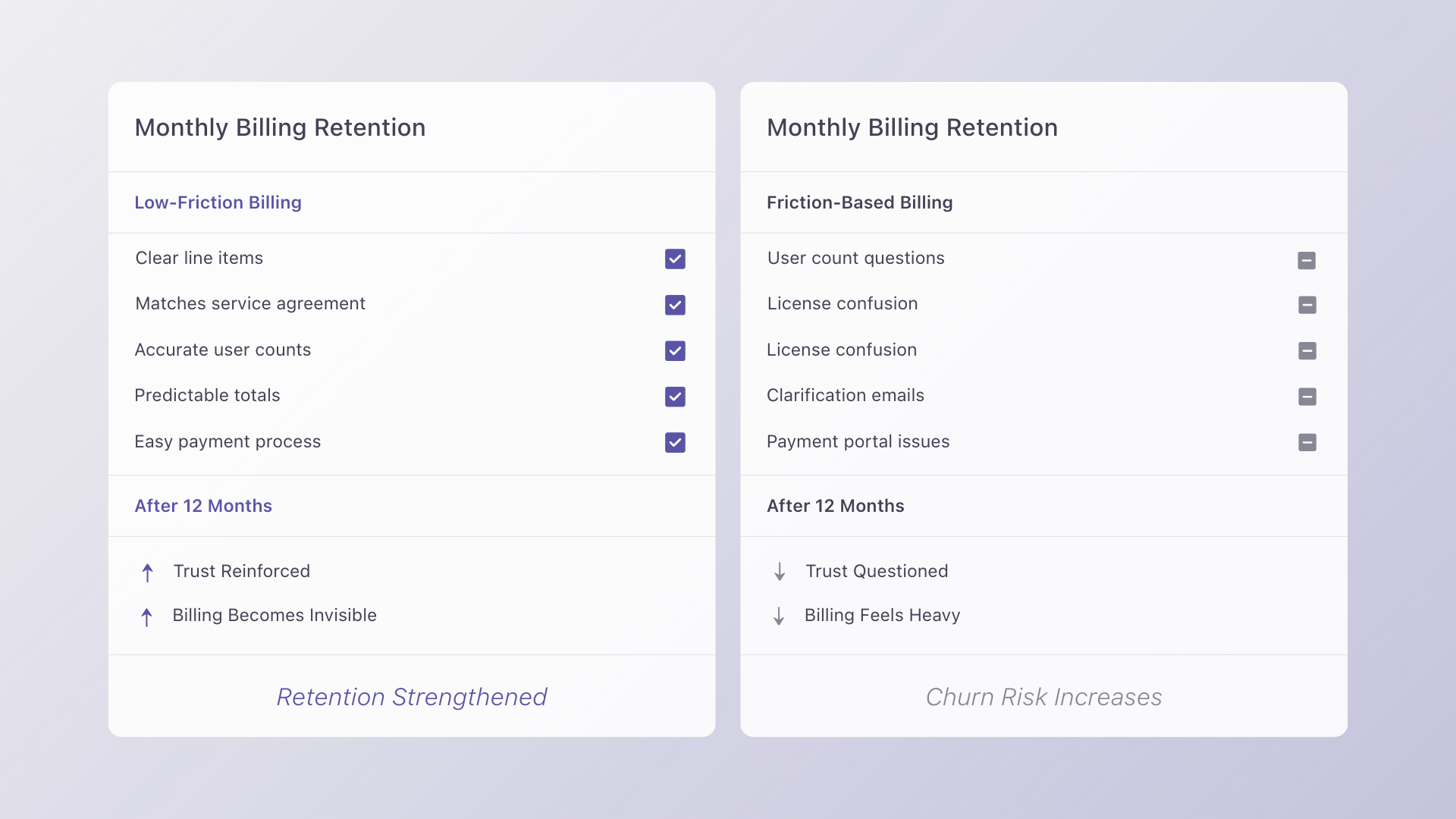
- Per-user count discrepancies that trigger back-and-forth emails
- License true-ups that create confusion at renewal
- RMM or cloud overage charges that prompt surprise conversations
- Invoice line items that do not clearly align with the signed service agreement
Individually, these are not catastrophic issues. They are clarifications.
But clarifications require time. They require internal review. They require someone on the client side to pause their work and investigate a charge.
The internal dialogue often sounds like this:
- “Why are we being billed for more users than we have?”
- “Was this license increase approved?”
- “This line item doesn’t match our contract.”
Each issue may be resolved quickly. But repetition creates a pattern.
Over time, clients begin to associate IT Billing with explanation instead of confidence.
Individually, these issues seem operational. Collectively, they create low-grade irritation that compounds month after month.
If billing feels inconsistent, the relationship feels inconsistent.
And inconsistency erodes trust.
How Billing Friction Shapes Client Perception
Clients rarely separate operational friction from overall brand perception.
When billing is difficult, the internal dialogue shifts:
- ‘They are good at IT, but billing is always a hassle.’
- ‘I have to double check every invoice.’
- ‘Something always needs clarification.’
Even if service delivery is strong, billing friction plants doubt.
Research in customer experience consistently shows that reducing effort is one of the strongest predictors of loyalty. When clients must expend extra effort to resolve administrative issues, their perception of reliability declines.
Retention is emotional before it is contractual.
When the experience feels heavy, switching vendors begins to feel lighter.
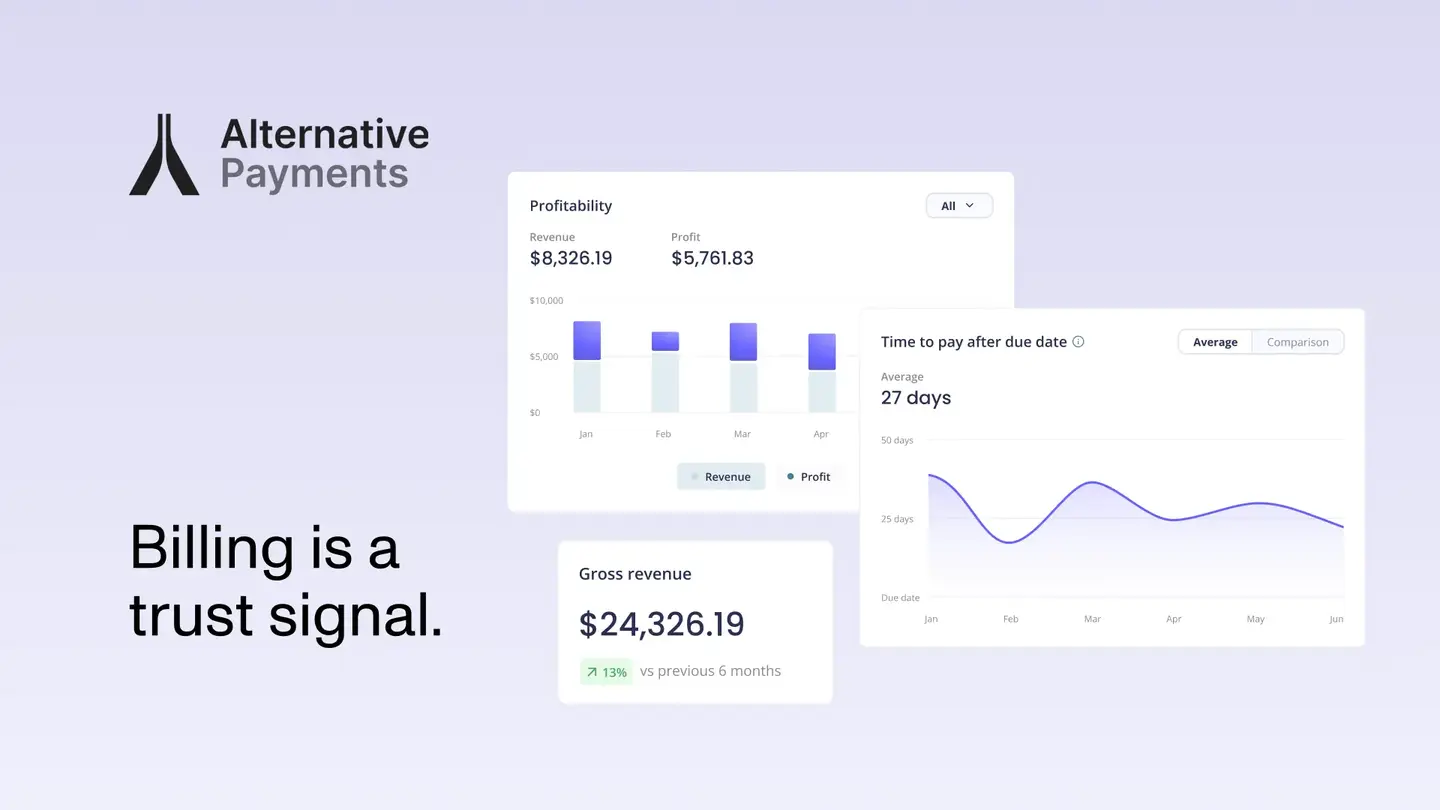
Billing Is a Trust Signal
IT Billing is not just a financial transaction. It is a signal about how your organization operates.
Accurate invoices communicate operational maturity. Predictable billing cycles reinforce stability. Clear, transparent line items demonstrate discipline and internal control.
When billing feels inconsistent or confusing, clients begin to question that control. If the back office appears disorganized, it subtly raises a broader concern: if this part feels messy, what else might be?
These doubts rarely surface immediately. They accumulate quietly and tend to emerge at pivotal moments — during budget reviews, vendor consolidation discussions, and renewal negotiations.
When procurement teams evaluate providers side by side, administrative ease becomes a differentiator. If one MSP consistently requires fewer explanations, fewer corrections, and fewer follow-ups, that difference carries weight.
At that point, accumulated friction becomes a decision factor.
Rarely does a client leave because of one major failure. More often, they leave because of repeated minor frustrations.
The Compounding Effect of Monthly Touch Points
Most MSPs bill monthly. For recurring revenue businesses, retention is the single most important driver of long-term MRR growth. Every friction point inside the billing cycle influences how stable that revenue truly is.
That means twelve billing touch points per year. Over a three year agreement, that is thirty six opportunities to reinforce professionalism or frustration.
Each invoice either strengthens trust or chips away at it.
Smooth IT Billing reinforces confidence, friction filled billing reinforces headaches.
The effect compounds quietly.
Retention decisions are not made in isolation. They are influenced by the total experience across every operational interaction.
Billing is one of the most consistent of those interactions.
What Low Friction IT Billing Looks Like
Low-friction IT Billing does not draw attention to itself because it simply works.
It is predictable and aligned with the service agreement. Invoices arrive on a consistent cadence, reflect agreed-upon terms, and require no follow-up clarification. Clients understand what they are paying for, when payment is due, and how to complete it easily. There is no need to question totals or request explanations.
Internally, your team is not scrambling to reconcile payments, correct preventable errors, or respond to avoidable disputes. The billing cycle runs quietly in the background, supporting operations instead of disrupting them.
When billing functions properly, it becomes invisible — and that invisibility is powerful. It allows your technical expertise and strategic guidance to stand on their own, without being diluted by administrative friction.
Turning IT Billing Into a Retention Advantage
Reducing administrative friction requires more than sending invoices faster. It requires intentionally redesigning the billing cycle so that every touchpoint reinforces professionalism, clarity, and trust.
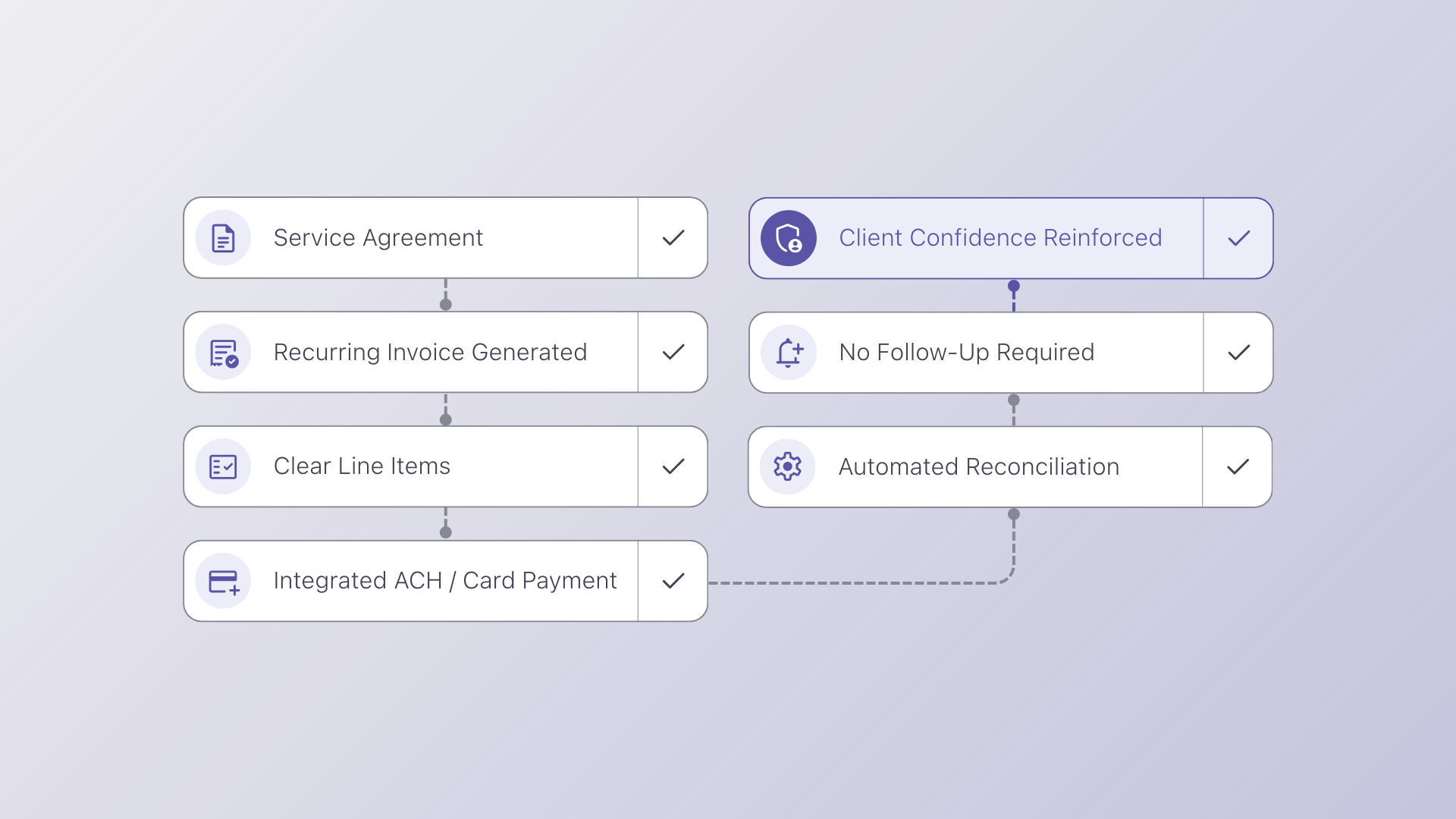
Alternative Payments helps MSPs modernize their IT Billing infrastructure by automating recurring invoices, standardizing workflows, and reducing the manual intervention that introduces errors and delays. Instead of generating invoices and reconciling payments across disconnected systems, billing aligns directly with the service agreement. What is delivered matches what is billed, and discrepancies are minimized before they ever reach the client.
The impact is both operational and relational.
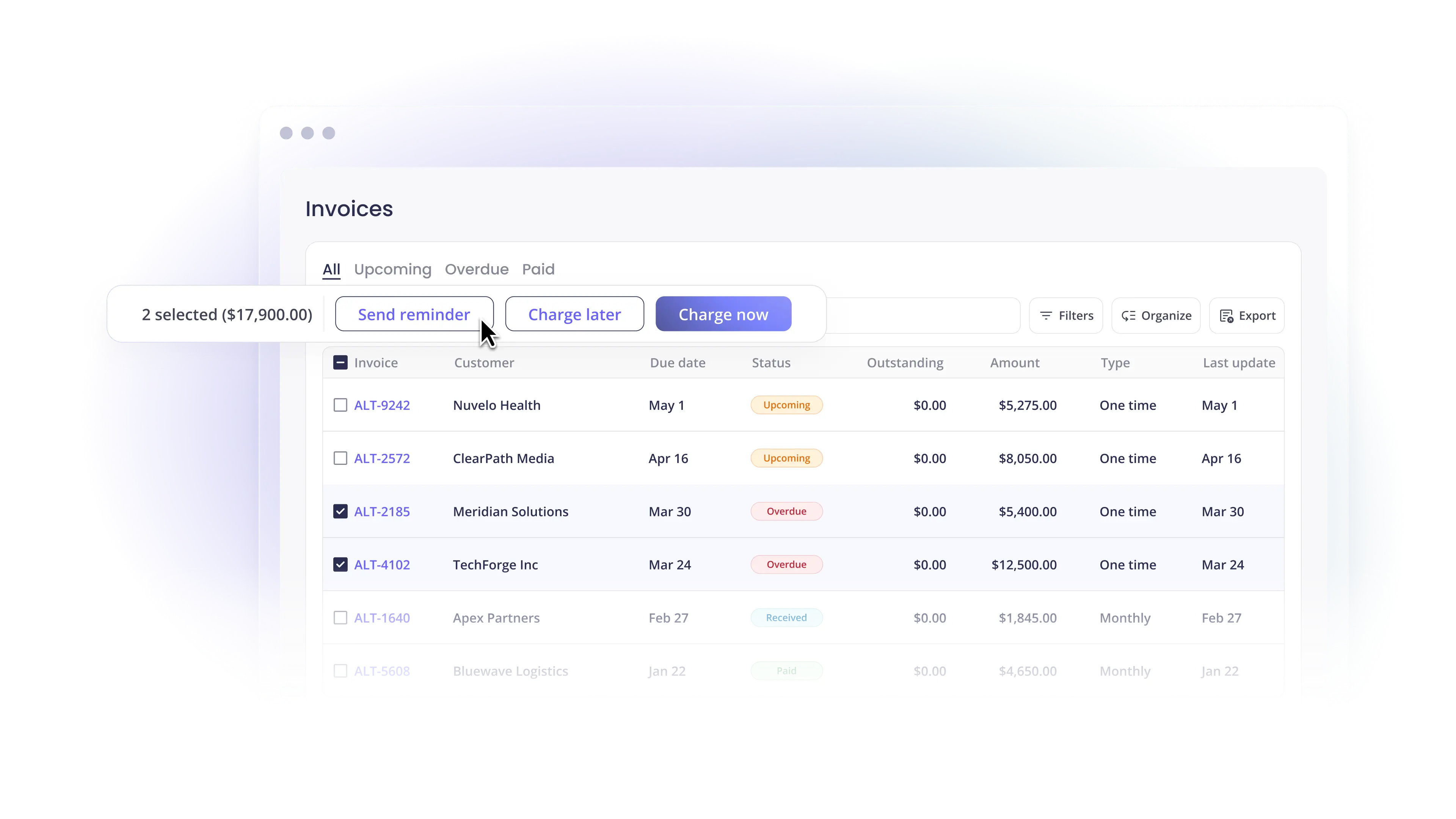
A consistent billing cadence sets clear expectations. Standardized invoices reduce confusion and prevent avoidable disputes. Integrated payment options remove friction at the moment of payment. Automated reconciliation limits internal errors that would otherwise spill into client communication.
Over time, this creates something powerful: administrative calm.
When IT Billing becomes predictable and reliable, clients stop thinking about it. And when clients stop thinking about billing, they focus on the value you deliver instead of the effort required to work with you.
That absence of friction reinforces confidence in your organization. And sustained confidence is what strengthens retention.
Retention Is Operational
Strong service delivery matters. Strategic alignment matters. Relationship management matters.
But retention is not driven by relationships alone. It is reinforced by operations.
When clients have to question invoices, clarify charges, or follow up on billing inconsistencies, friction enters the relationship — even if the technical work is excellent. Over time, that friction reshapes perception.
The most effective IT Billing process is the one clients never have to think about. It runs quietly, aligns with expectations, and supports the partnership without drawing attention to itself.
When billing is seamless, it strengthens the relationship instead of straining it.
In competitive MSP markets, reducing administrative friction may be one of the most understated advantages available — a quiet lever that protects revenue and reinforces retention long after marketing efforts fade.
Simplify your customer payments, unlock instant cash flow
Keep reading


Can AI financial analysis explain why your margins changed?

Autotask QuickBooks integration: choosing a billing and payment operating model