•
IT Services
•
Automate Accounts Receivable
•
Automate Accounts Payable
February 3, 2026
Why Manual Matching is a 2025 Relic
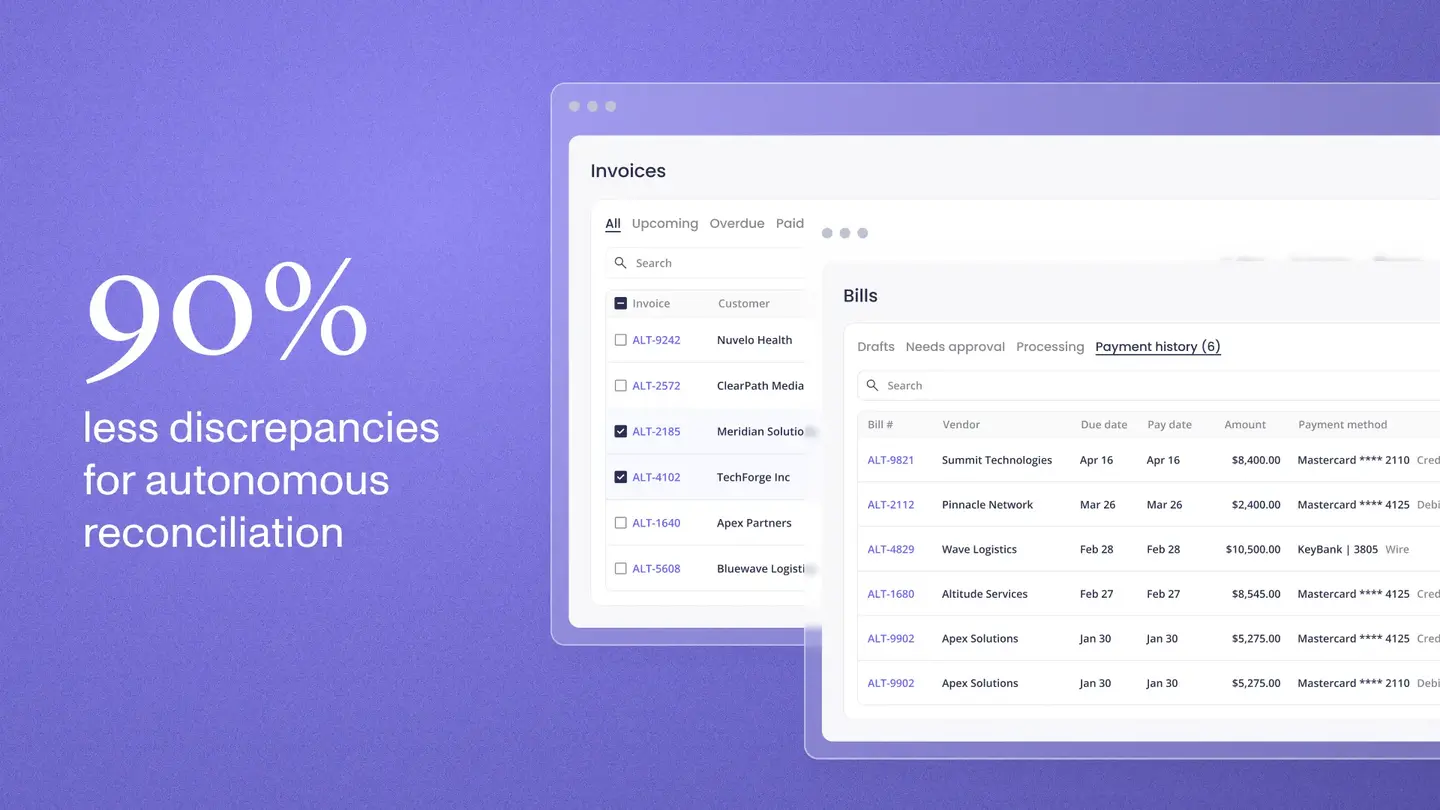
As we move toward a more automated financial future, the way transaction matching is handled must evolve beyond historical cleanup. Manual reconciliation was designed for smaller volumes and slower decision cycles, not for modern firms managing high transaction counts and advisory-driven leadership expectations.
When reconciliation lags behind reality, financial data stops supporting timely decisions. Leadership hesitates. Hiring pauses. Growth conversations slow down, not because strategy is unclear, but because the numbers cannot be trusted quickly enough.
Transitioning to an autonomous financial model addresses several structural challenges:
- Forensic Investigation Burden: Reconciliation feels like solving a cold case instead of executing a routine accounting function
- Predictable Fire Drills: Month-end and leadership reviews trigger unnecessary scrambles for confirmation
- Compounding Discrepancies: Small errors sit unresolved long enough to become material issues
- Operational Drag: Manual intervention scales linearly with transaction volume
- Real-Time Accuracy: Autonomous matching keeps the ledger continuously aligned with bank activity
Adopting these workflows allows accounting teams to replace cleanup with clarity and restore confidence at the leadership level.
The Anatomy Of The Month-End Fire Drill
The traditional month-end close relies on a batch-and-correct mindset that concentrates risk into a single, stressful window. When reconciliation is deferred until the end of a cycle, small discrepancies have weeks to compound, making resolution slower and more disruptive.
This usually surfaces just before a leadership review. The finance team is asked to confirm available cash before approving a hire or investment, but the ledger still shows several invoices as unpaid, even though the bank balance suggests otherwise. Work stops while transactions are traced across bank feeds, payment platforms, and spreadsheets, all to answer one basic question:
“Are these numbers actually final?”
This fire drill is not a people problem. It is a process failure. And it acts as an avoidable tax on both team morale and the firm’s ability to move decisively.
Defining Autonomous Reconciliation For The Modern Firm
To understand the shift away from manual matching, we must define what Autonomous Reconciliation actually represents for the modern firm. This technology moves beyond the basic “if-then” rules of early automation and instead utilizes AI-driven pattern recognition to identify and pair transactions without human intervention. The system doesn’t just look for an exact dollar amount; it understands the context of the transaction, the vendor’s behavior, and historical patterns to ensure a match is accurate. This allows the back office to function as a self-correcting engine that maintains ledger integrity every hour of the day.
The Opportunity Cost Of Human Ledger Management
The most significant expense of manual reconciliation isn’t the software subscription, it’s the high cost of using skilled human intelligence for low-value data entry. When a CFO or a senior accountant spends hours “hunting” for a missing transaction link, the firm is essentially paying premium rates for a task that adds little strategic value relative to the cost of skilled time. This opportunity cost is measured in the lost hours that could have been spent on margin analysis, tax planning, or client strategy. We believe that human talent should be reserved for interpreting financial data, not for the tedious labor of moving it from one spreadsheet to another.
How AI Patterns Surpass Boolean Logic
Older automation tools relied on strict Boolean logic, which often failed whenever a transaction contained a typo, a partial payment, or a different naming convention. Autonomous matching utilizes sophisticated algorithms that surpass these rigid rules by interpreting data with a level of nuance previously reserved for human eyes.
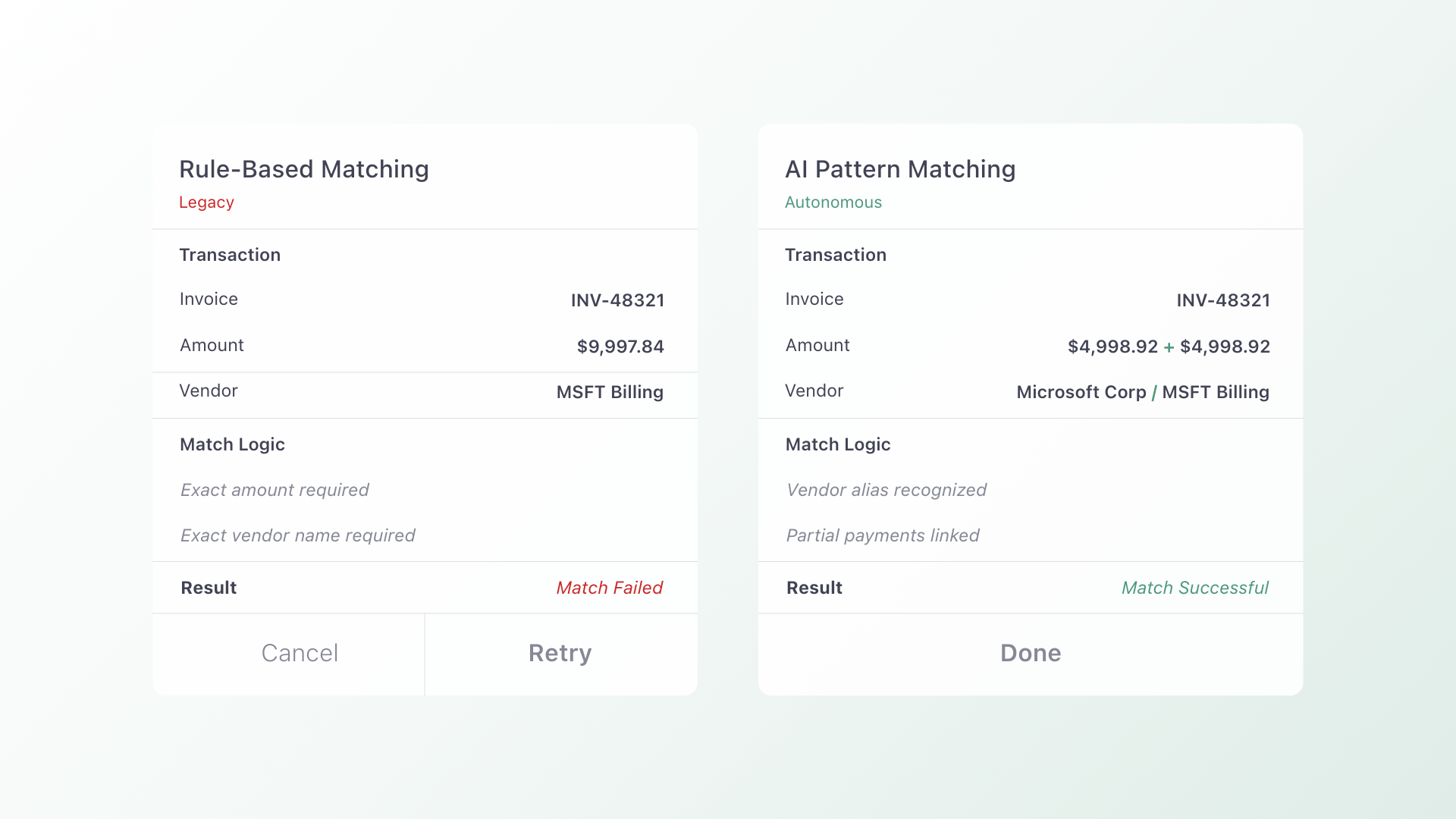
These AI patterns allow the system to maintain accuracy even when the data is imperfect.
Implementing a uniform structure ensures that the system handles various reconciliation hurdles:
- Fragmented Payments: Automatically linking multiple small payments to a single large invoice without manual intervention.
- Vendor Naming Variations: Recognizing that “Microsoft Corp” and “MSFT Billing” represent the same entity within the ledger.
- Partial Match Logic: Flagging transactions that are off by a few cents for human review while automatching the remaining 99%.
- Historical Learning: Improving matching accuracy over time as the AI learns the specific financial rhythms of your firm.
- Cross-Platform Syncing: Keeping payment platforms, bank feeds, and the general ledger continuously aligned without manual intervention.
The overall narrative is a move toward “smart” systems that think like an accountant but work with the speed of a machine. This transition ensures that your data remains clean regardless of how many hands touch the entry point.
Real-Time Visibility As A Competitive Edge
When your reconciliation process is autonomous, your ledger becomes a “live” document rather than a historical post-mortem. This real-time visibility provides a significant competitive edge, as it allows leadership to make decisions based on today’s cash position rather than last month’s history. If you are considering a major hire or a new equipment purchase on the 15th of the month, you don’t have to “guess” your profitability; the data is already matched and ready for analysis. This agility is what separates the modern, data-driven firm from those still waiting on a manual end-of-month report.
Reducing The Surface Area For Financial Error
Every time a human hand touches a financial transaction, the “surface area” for potential error increases. In manual reconciliation environments, “fat-finger” errors, duplicate entries, and misallocated payments are not just risks, they are mathematical certainties. Implementing Autonomous Reconciliation, you effectively shrink this surface area to nearly zero. The system maintains a level of precision that is impossible for a human to sustain over thousands of transactions, ensuring that the data in your ledger is a perfect reflection of your bank activity. We find that firms moving to an autonomous model often discover that their “discrepancy rate” drops by over 90% in the first quarter of adoption.
The Psychological Shift: From Cleanup To Analysis
There is a profound psychological benefit to freeing your finance team from the drudgery of manual matching. When a team spends its entire week in “cleanup mode,” morale suffers, and the role becomes a repetitive hurdle to be cleared rather than a professional discipline. Automating the matching process, you allow your staff to move into high-value advisory roles where they are analyzing trends rather than hunting for typos. This shift not only improves staff retention but also transforms the finance department into a proactive partner in the firm’s growth. According to a study on financial transformation by PwC, organizations that automate routine tasks see a 15% increase in employee engagement scores within their finance functions.
Scaling Transaction Volume Without Scaling Headcount
The true test of Autonomous Reconciliation is how it handles rapid business expansion. In a manual environment, doubling your transaction volume usually requires doubling your administrative headcount, which creates a linear growth in overhead that eats away at your margins. An AI-driven system, however, can handle a 500% increase in volume with zero additional labor cost. This decoupling of volume from headcount is the secret to scaling a professional services firm without sacrificing Firm Profitability. It allows the firm to take on larger, more complex projects without worrying if the back office can keep up with the increased billing complexity.
Strengthening Audit Defensibility With Digital Paper Trails
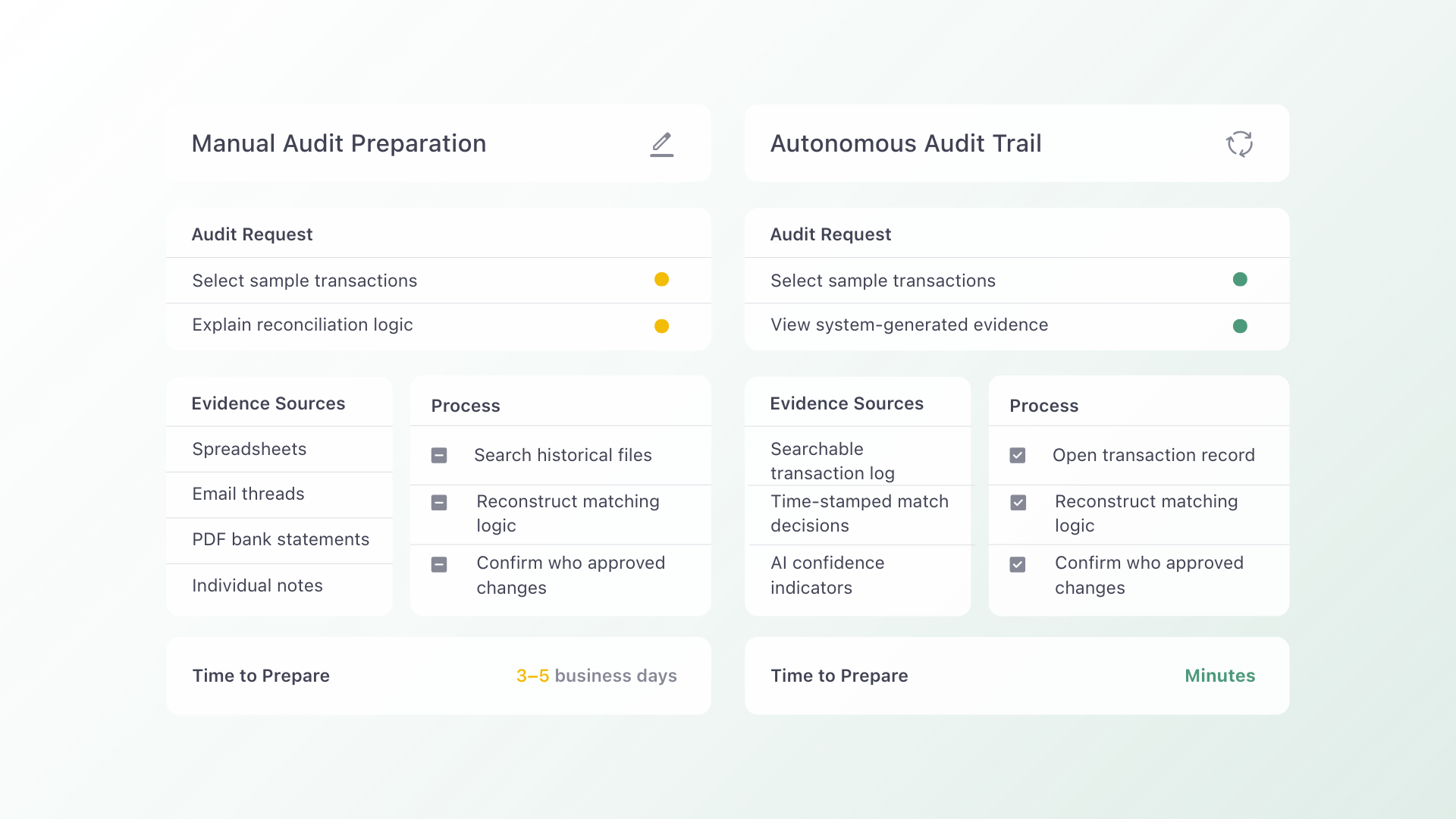
For many firms, the most stressful part of an audit is trying to reconstruct the logic behind a manual reconciliation that happened months or years ago. Autonomous Reconciliation removes this ambiguity by creating a robust, immutable digital paper trail for every single transaction. The AI doesn’t just match the numbers; it logs the exact data points and historical patterns it used to confirm the match. This level of audit defensibility is far superior to manual notes or spreadsheet logs, providing both the partners and external auditors with absolute confidence in the integrity of the firm’s financial history.
Ending The 2025 Relic: A Vision For The Autonomous Back Office
The transition away from manual matching is not just about a technical upgrade; it is about retiring a mindset that no longer serves the modern professional services firm. As we move deeper into 2026, the firms that continue to rely on the “month-end fire drill” will find themselves increasingly at a disadvantage compared to those with real-time, autonomous financial engines. The roadmap to this future requires a commitment to process maturity and a willingness to trust the precision of AI-driven systems. When the books are always closed because they are always reconciled, the finance department is finally free to focus on what matters most: the future of the firm.
Next Steps For Implementing Autonomous Reconciliation
Moving your firm away from manual matching requires a strategic shift in how you manage your daily financial data. We recommend starting with an assessment of your current “reconciliation lag” to see how much time is being lost to historical cleanup.
Establishing a real-time ledger involves several key phases of technical and cultural alignment.
Consider the following actions to begin your transition to an autonomous back office:
- Document your current month-end close process to identify exactly how many hours are spent on manual transaction matching.
- Review your accounting software capabilities to determine if your current platform supports direct, AI-driven API connections for bank feeds.
- Set a goal to reduce your reconciliation frequency from monthly to daily by leveraging automated matching tools.
- Evaluate your finance team’s current workload to identify which high-value analytical tasks they could take on once freed from manual entry.
- Conduct a “Data Integrity Audit” to find common recurring errors in your manual ledger that could be eliminated through automation.
Taking these steps ensures that your firm leaves the relics of the past behind and embraces a state of permanent, real-time financial readiness.
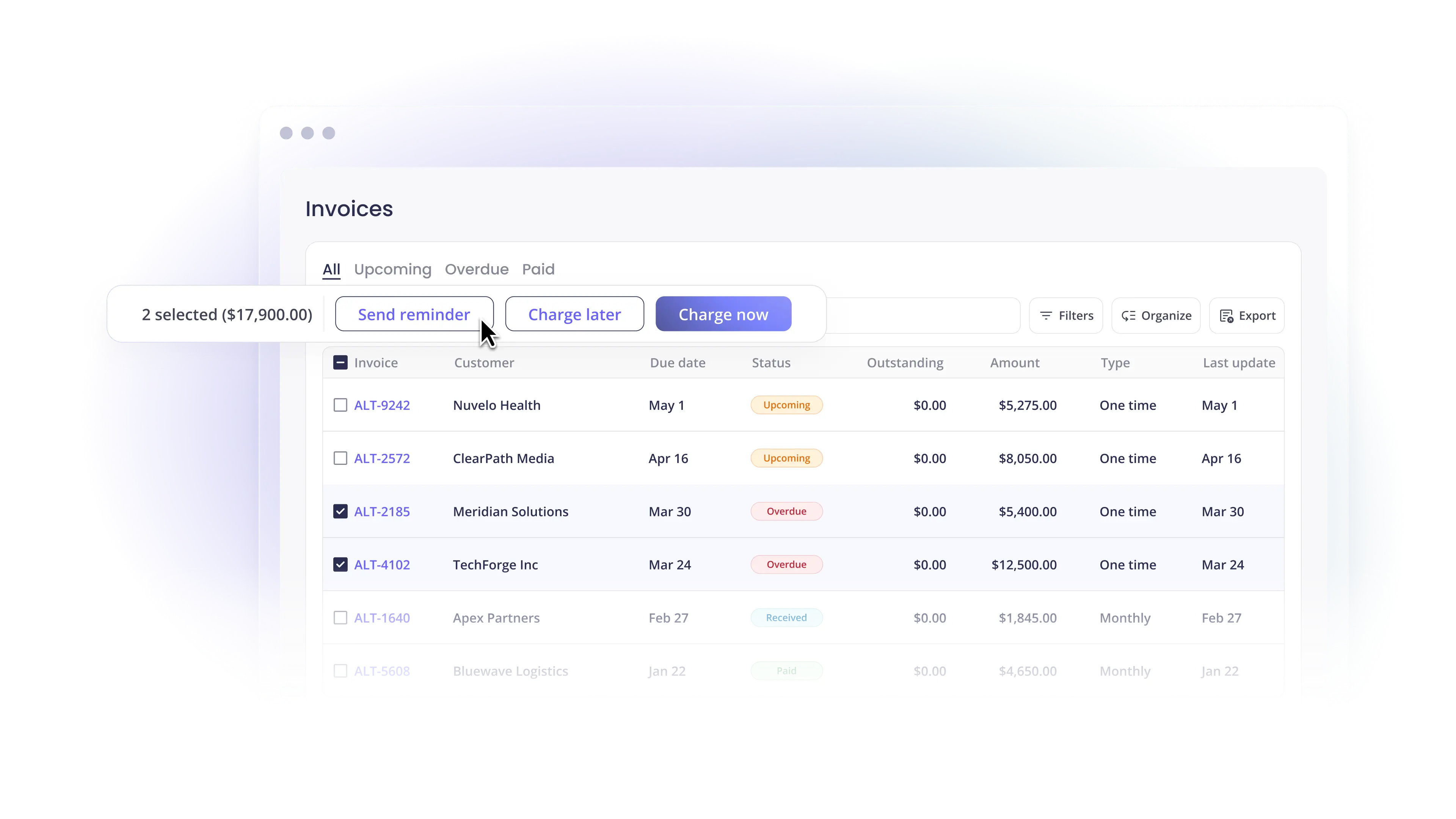
Simplify your customer payments, unlock instant cash flow
Keep reading


ConnectWise QuickBooks integration: what a complete payment workflow should cover

NetSuite payment gateways: an enterprise MSP buyer's framework