•
IT Services
•
Security
February 6, 2026
Why 2026 Compliance Changes Are a Major Growth Opportunity for MSPs
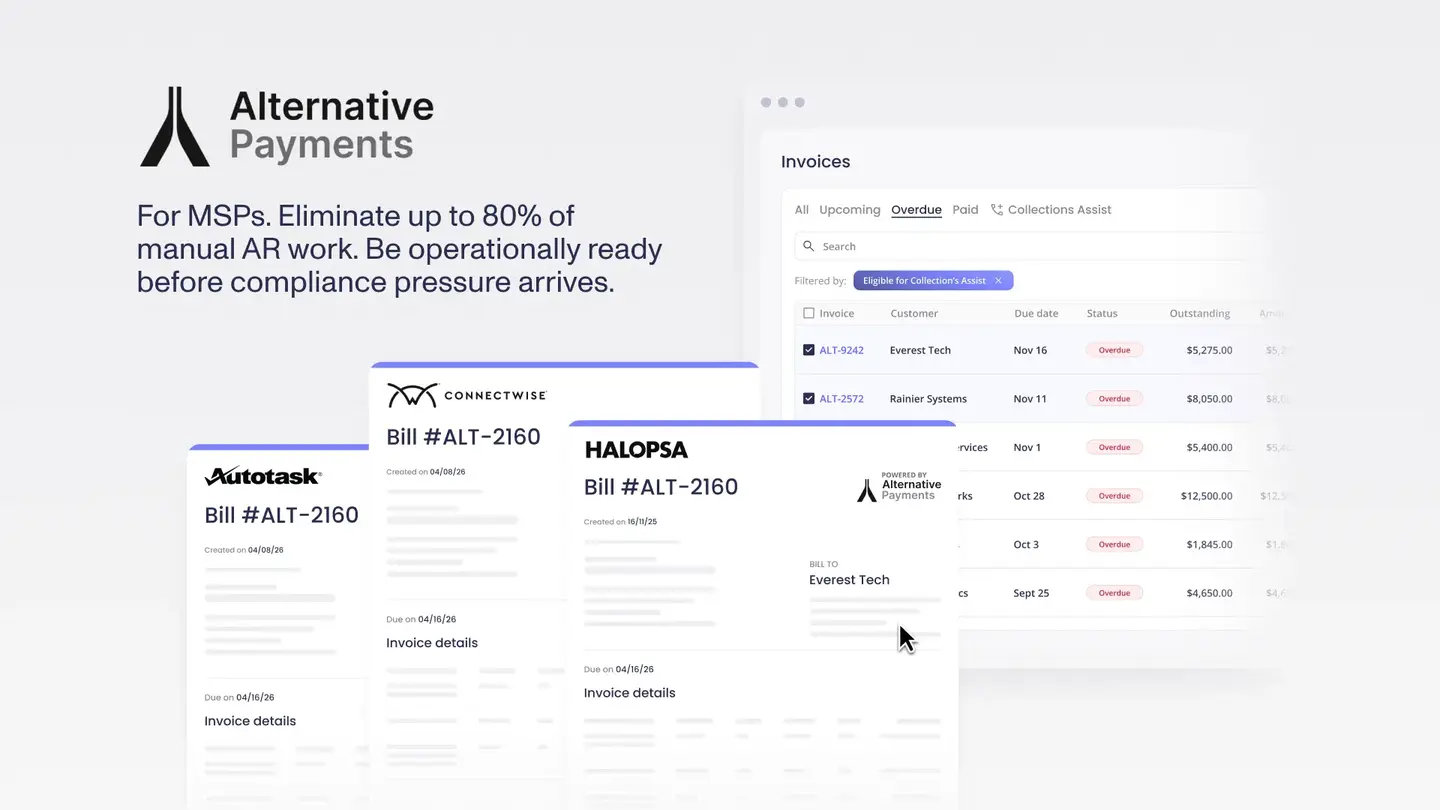
Compliance is no longer a future concern for managed service providers. In 2026, it is quickly becoming one of the most meaningful growth levers for MSPs that are prepared—and a serious risk for those that are not.This article is specifically written for MSPs that support regulated or compliance‑sensitive clients, including those in government, healthcare, defense, and other highly regulated industries.
During a recent webinar with Alex Spigel, Founder of Choice Cyber Solutions, we broke down what’s actually changing in the 2026 compliance landscape and how MSPs should be thinking about frameworks like CMMC, NIST, ISO 27001, and HIPAA as both a risk-management requirement and a growth opportunity.
The takeaway was clear: compliance itself isn’t the blocker. Operational readiness is.
The Compliance Landscape MSPs Are Facing in 2026
Regulatory pressure is increasing across multiple industries, but the most immediate impact for MSPs is coming from a handful of frameworks that are rapidly maturing from “recommended” to “required.”
Alex highlighted several key areas MSPs are encountering right now:
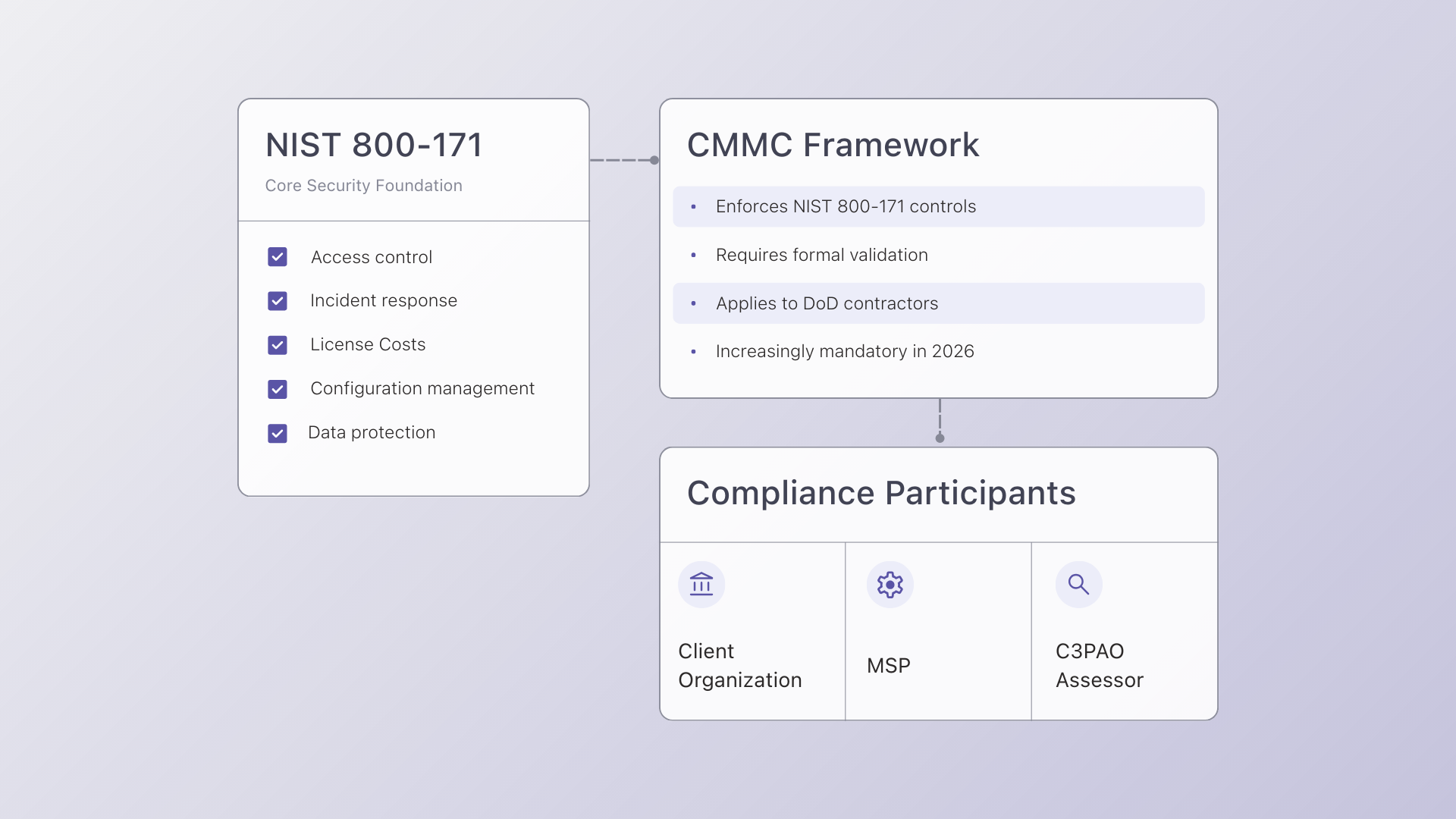
- CMMC (Cybersecurity Maturity Model Certification) for Department of Defense contractors
- NIST 800-171 and NIST CSF as foundational cybersecurity standards
- ISO 27001 as an internationally recognized governance and security framework
- Proposed HIPAA Security Rule updates, the first major changes in over a decade
What’s different in 2026 compared to even two years ago is accountability. MSPs and vendors are increasingly being held responsible for meeting the same compliance standards as their clients. That means it’s no longer enough to “support” compliance, you must be able to prove your role, your controls, and your processes.
Why CMMC Is Top of Mind for MSPs
A large portion of the discussion focused on CMMC Phase 2 enforcement, which is expected to become widespread in government contracts throughout 2026.
CMMC does not introduce new cybersecurity concepts. Instead, it enforces existing standards, primarily NIST 800-171, with significantly more rigor. For MSPs, that enforcement layer changes everything.
Understanding the Real Impact of CMMC
- Self-assessments are no longer enough for many contracts
- Third-party C3PAO audits are becoming mandatory
- MSPs are increasingly part of their clients’ audits, whether they intend to be or not
Alex shared that audits commonly start around $50,000, require 40+ hours of auditor time, and often demand 160+ hours of combined MSP and client effort leading up to the assessment. And that’s when things go well.
More importantly, MSPs often underestimate where they touch Controlled Unclassified Information (CUI). In most environments, access through RMM tools, Microsoft environments, backups, or administrative credentials places the MSP directly in scope.
The risk of getting this wrong is significant. Alex noted real-world cases where inaccurate self-attestations led to Department of Justice involvement and multi-million-dollar fines.
The Biggest Compliance Misconception MSPs Have
One of the most common misconceptions Alex sees is the belief that compliance assessments are straightforward.
They’re not.
“Assessment is easy or supporting a client through an audit is easy, that’s the biggest misconception. It requires real labor from the MSP, the client, and compliance partners, and it’s not something you can shortcut.” — Alex Spigel, Founder, Choice Cyber Solutions
Supporting a client through CMMC, HIPAA, or ISO 27001 requires documented processes, defined responsibilities, and sustained operational discipline. Even when a third-party compliance firm is involved, MSPs must invest time, resources, and leadership attention.
Another surprise for many MSPs is consistency. Different assessors can interpret requirements slightly differently. What passes for one client may require changes for another, especially as standards evolve.
This is why there is no one-size-fits-all compliance solution, and why MSPs need partners who understand the nuance.
HIPAA Updates and Why They Still Matter
HIPAA may not grab headlines the way CMMC does, but it remains critically important. The upcoming HIPAA Security Rule updates, expected to be the most significant since 2013, are designed to better align healthcare compliance with modern cybersecurity realities.
Alex emphasized that MSPs supporting healthcare clients should already be implementing:
- Incident response planning
- Advanced logging and monitoring
- Vulnerability management and EDR
- Ongoing documentation and review
Most proposed HIPAA changes align closely with NIST CSF and ISO 27001, meaning MSPs that follow a cybersecurity best practices framework are already well on their way.
What MSPs Should Do About Their Own Compliance
An important shift in the conversation focused on the MSP’s internal posture.
Your business is not the same as your client’s business. That means your compliance framework shouldn’t automatically mirror theirs.
For MSPs looking to demonstrate maturity and differentiate:
Recommended Starting Points
- Adopt a cybersecurity best practices framework (ISO 27001, NIST CSF, or CIS)
- Build and maintain a complete asset and data inventory
- Document data flows and administrative access
- Implement basic data classification (public, internal, confidential)
- Clearly define shared responsibility matrices with clients
- Require formal sign-off when clients refuse security controls
ISO 27001, in particular, offers MSPs an auditable certification with strong market recognition, often at a far lower cost than CMMC, making it a strategic option for MSPs looking to stand out.
Turning Compliance Into a Sustainable Revenue Stream
One of the most valuable insights from the webinar was how MSPs can ethically and effectively convert compliance findings into ongoing managed services.
The key is separation of roles.
By partnering with a third-party compliance expert like Choice Cyber Solutions, MSPs avoid conflicts of interest while gaining a trusted authority that can clearly define requirements. The MSP then delivers the operational services needed to maintain compliance, positioning those services as essential, not optional.
Compliance, when done right, becomes:
- A differentiator in competitive sales cycles
- A driver of long-term recurring revenue
- A way to deepen client trust and retention
Why Operational Efficiency Makes Compliance Possible
Operational efficiency is not just a benefit of good compliance delivery, it is a prerequisite for it.The session ultimately tied back to a core reality: MSPs cannot pursue compliance opportunities if they are buried in manual work.
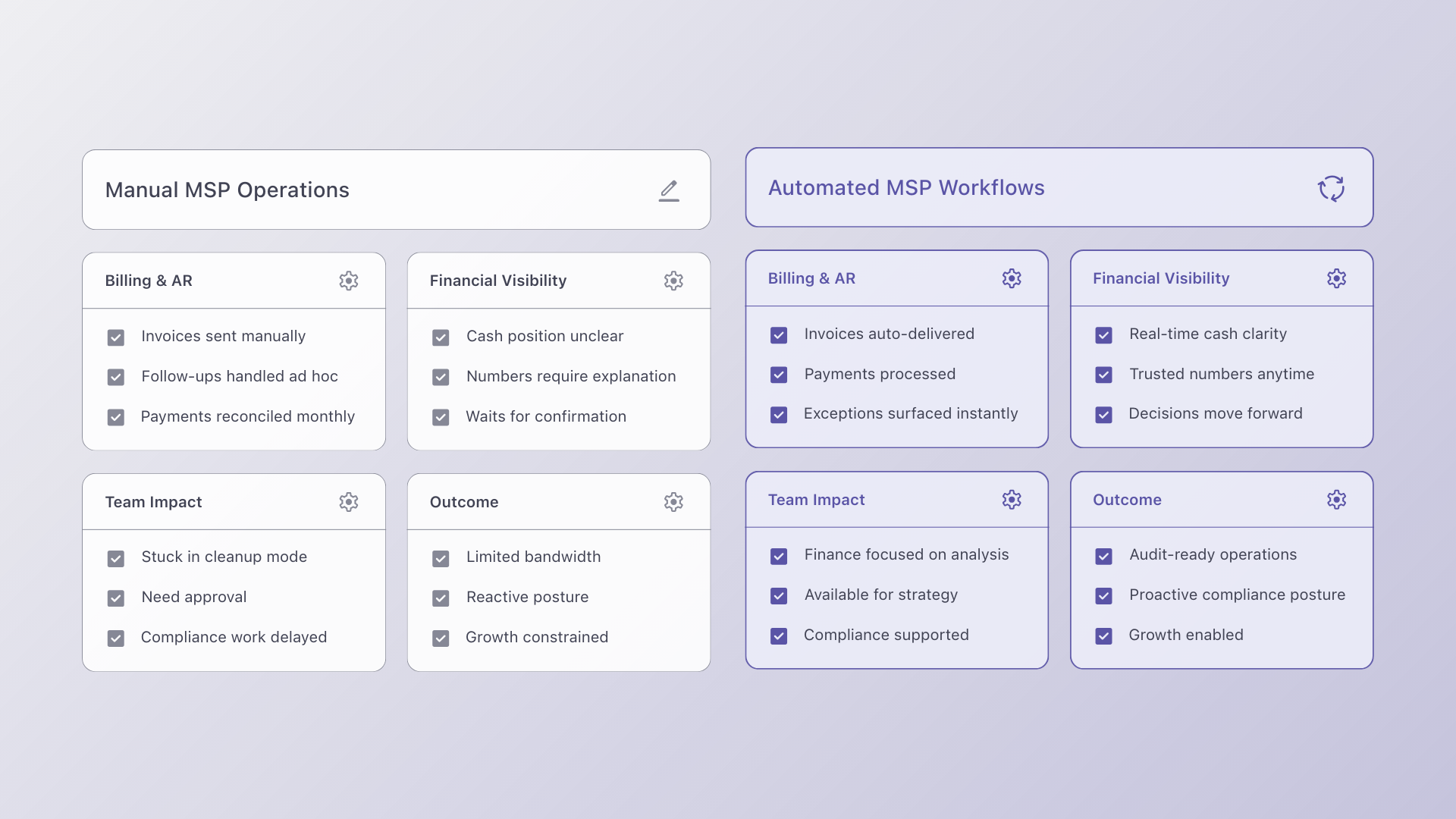
Chasing invoices, reconciling payments, and managing cash flow uncertainty consume the very time and energy required to build higher-value services.
That’s where Alternative Payments fits into the picture.
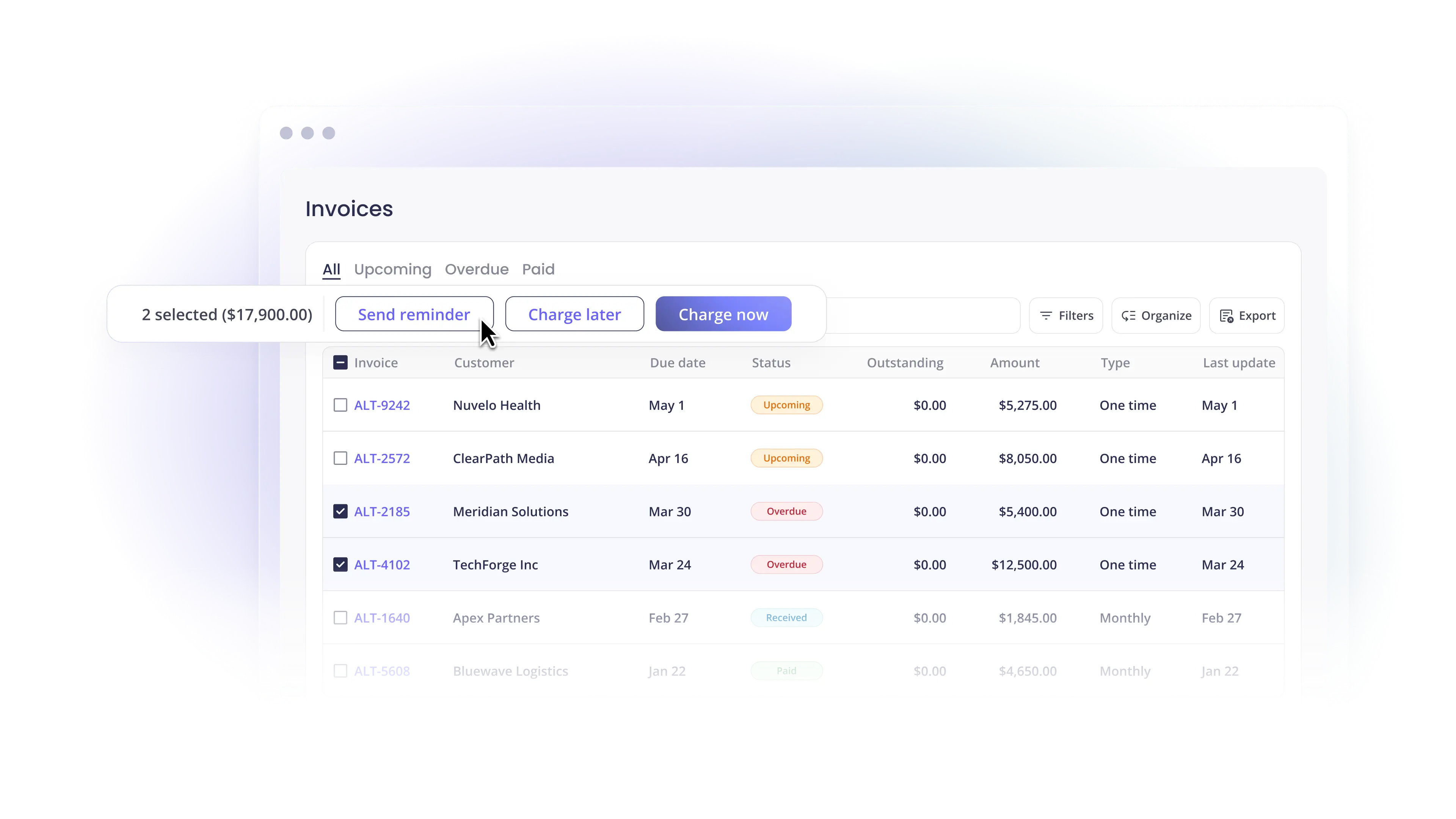
By automating accounts receivable, from invoice delivery to payment processing and reconciliation, Alternative Payments helps MSPs eliminate up to 80% of manual AR work, improve cash flow predictability, and reduce processing costs. The result is more time, less stress, and a stronger foundation for growth.
The Bottom Line for MSPs in 2026
Compliance is not just a regulatory burden, it’s a business opportunity for MSPs that are operationally prepared.
CMMC, HIPAA, NIST, and ISO 27001 are reshaping client expectations. MSPs that invest in their own processes, partner with experienced compliance experts, and automate low-value operational work will be best positioned to turn compliance into a competitive advantage.
2026 will not reward MSPs that work harder — it will reward those that are operationally ready before compliance pressure arrives.
Simplify your customer payments, unlock instant cash flow
Keep reading


NetSuite payment gateways: an enterprise MSP buyer's framework

AI CFO, virtual CFO, or finance assistant: choosing the right support