•
IT Services
•
Enterprise
•
Mid-market
•
Professional Services
March 3, 2026
Turn Your Finance Team Into a Strategic Asset
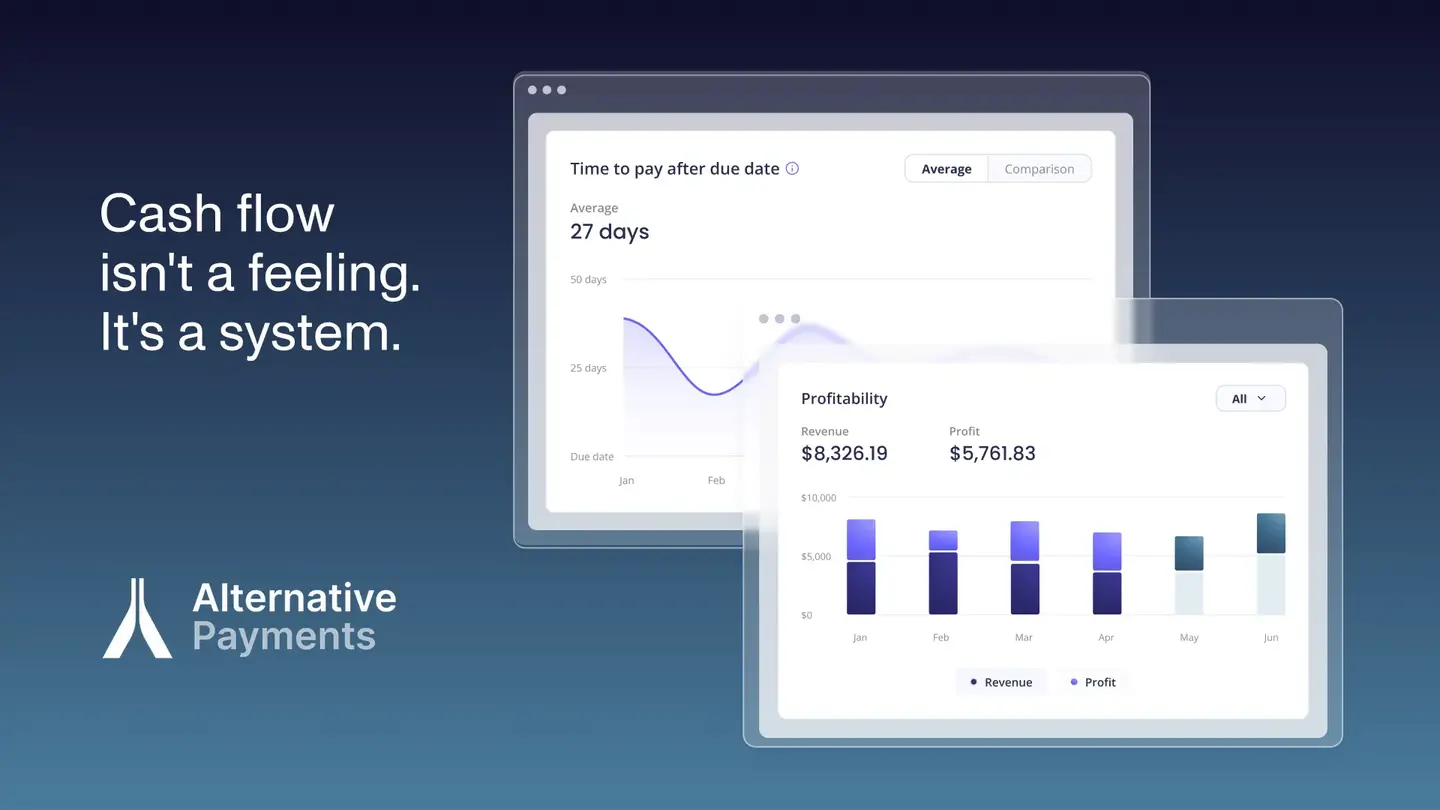
In many managed service providers, the finance function is stuck in survival mode. Invoices are delayed by PSA reconciliation, project billing is manual, ACH collections are inconsistent, and reporting arrives weeks after month-end. Owners review the profit and loss statement hoping the bank balance aligns with it.
In a recent discussion with Craig Beck, Chief Services Officer at MSP+, we explored what changes when finance stops reacting to the past and starts shaping the future. That shift materially influences valuation, investment readiness, and long-term growth.
The Reactive Finance Trap
Craig works with MSPs of all sizes, from owner led shops to private equity backed organizations. What he sees most often is not incompetence, it’s overload.
In smaller MSPs, the owner is still handling the books. In others, there may be a part time bookkeeper who understands accounting but not the MSP operating model. The result is the same. Billing takes too long. Reporting lacks clarity. Cash flow fluctuates unpredictably.
As Craig put it during the session:
“You don’t have the bandwidth or the time of the day to be like, okay, I can stop what I’m doing over here to focus on this problem.” – Craig Beck, Chief Services Officer of MSP+
Most finance teams know what is broken. They simply do not have the time or systems to fix it.
From Chaos to Control: Fixing the Foundations
Turning finance into a strategic asset starts with structure.
Craig emphasized beginning with fundamentals like the chart of accounts. Is recurring revenue separated from project work? Are product margins visible? Can you clearly distinguish agreement revenue from time and materials?
From there, process bottlenecks must be identified:
- Why does invoicing take a week?
- Are time entries entered properly?
- Are vendor reconciliations accurate?
- Are invoices being generated inside the PSA or patched together in accounting software?
In many cases, the underlying issues are not complex or hidden. They are the result of gradual process drift over time. Agreements may be structured correctly, yet project billing operates inconsistently. Invoicing may be technically accurate, but burdened by slow, manual steps that consume unnecessary time.
The objective is not to solve these challenges by adding headcount. It is to eliminate operational friction so the existing team can operate with greater speed, clarity, and control.
When billing cycles shrink from a week to a day, and reconciliation is automated, finance moves from catching up to looking ahead.
Cash Flow Isn’t a Feeling, It’s a System
One of the strongest themes in the discussion was the importance of predictability.
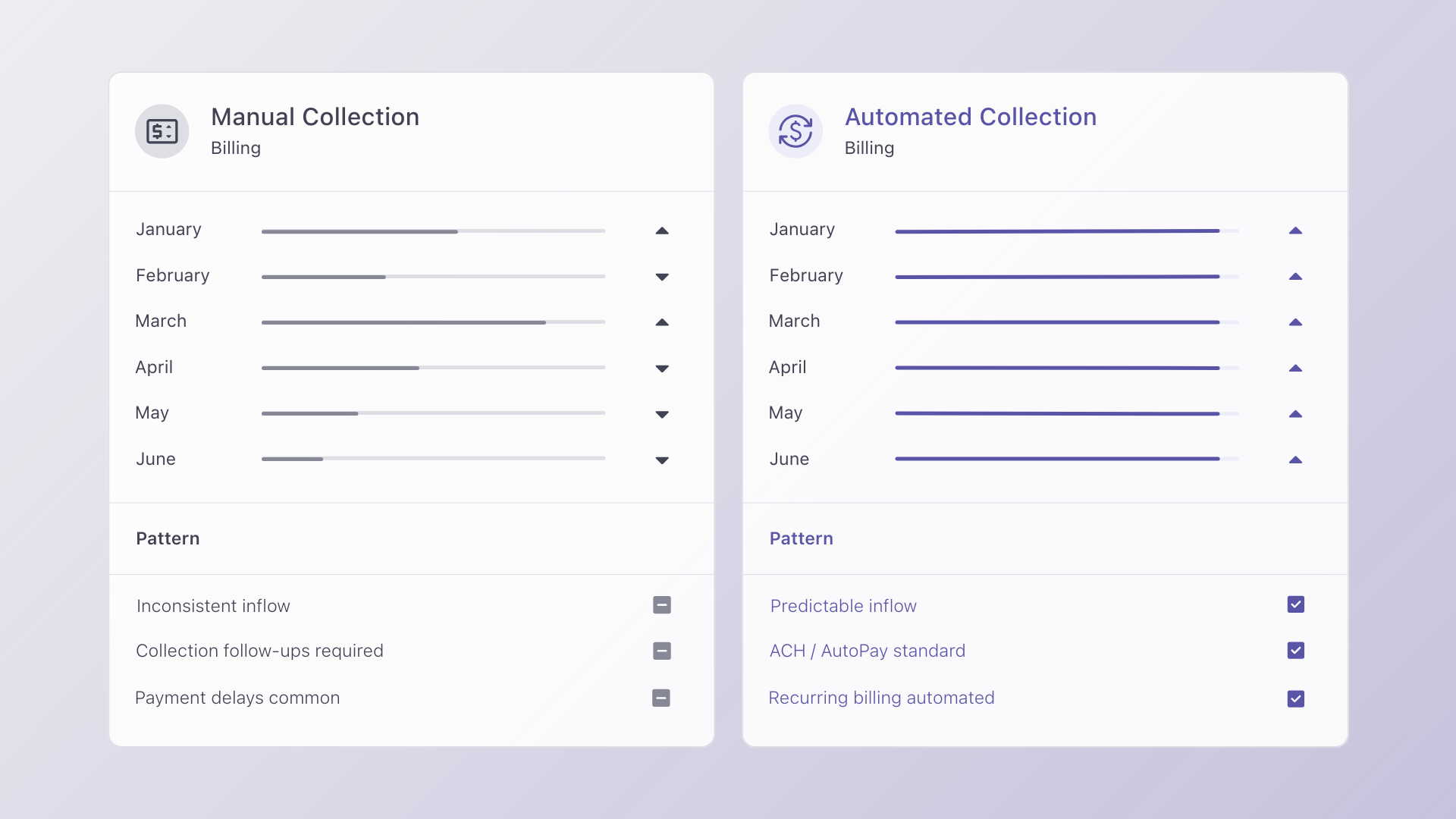
Many MSPs operate with uneven cash flow, experiencing strong months followed by thinner ones, largely because collections rely on relationships and manual follow up rather than structured systems.
Craig emphasized that automation fundamentally changes that dynamic by shifting payment from a reactive activity to a consistent, repeatable process.
Requiring clients to be on ACH or automated payment methods removes the emotional friction from collections. Terms, project down payments, and invoicing cadence all directly influence cash predictability.
Without these systems in place, MSPs become informal banks for their clients.
The impact goes beyond convenience. Inconsistent collections create strategic paralysis. When cash swings month to month, owners hesitate to hire, invest, or pursue acquisitions.
Consistent collections create durable financial confidence, giving owners the assurance that revenue will convert to cash reliably and on schedule.
Executing the System Consistently
Craig drew an important distinction during the session: the challenge for most MSPs is not knowing what to do, but consistently executing it. In most cases, leadership has already defined the right policies and understands the importance of enforcing them.
The strategic intent is not the issue; translating that intent into consistent, repeatable execution is where friction begins.
What breaks down is the infrastructure required to make those policies run predictably every month.
Most MSP financial stacks were originally built around PSA workflows and service delivery operations. Payments and reconciliation were often layered on later as secondary considerations rather than core design elements.
As a result, billing, payments, and accounting frequently operate as loosely connected systems instead of a unified process. When those systems are fragmented, collections inevitably depend on people remembering to follow up rather than on infrastructure running automatically.
It is one thing to require ACH. It is another to ensure invoices are delivered on time, payment details remain current, reminders are consistent, and reconciliation does not create additional manual work downstream.
This is where payment infrastructure becomes strategic. When recurring billing, embedded digital checkout, automated reminders, and real-time reconciliation operate as a single system, execution stops depending on individual follow-up and starts depending on design.
This is the systemic gap Alternative Payments is designed to close within MSP finance operations.
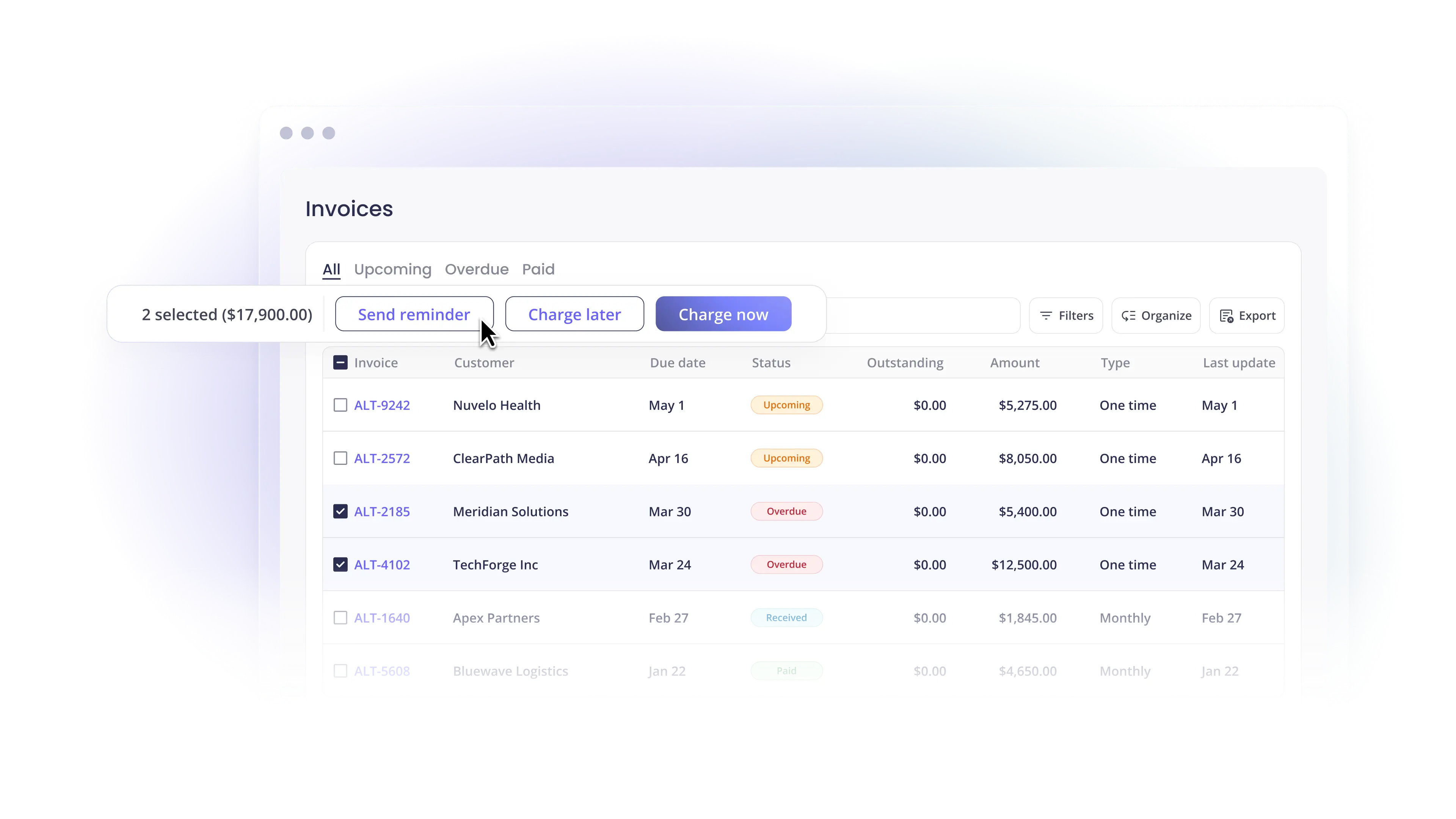
Rather than layering payment collection on top of disconnected billing processes, Alternative Payments integrates directly into the MSP operating model. Recurring agreements connect to automated invoicing. Invoices embed secure digital checkout. Clients enroll in ACH or AutoPay during onboarding. Payments reconcile automatically into accounting systems without manual intervention.
The result is not just faster collections. It is structural predictability.
Predictable cash conversion and disciplined receivables management signal operational maturity to buyers, who underwrite consistency and reduced risk during diligence far more heavily than heroic follow up efforts.
When inflow becomes system-driven instead of follow-up driven, finance teams gain consistency, visibility, and control. That foundation is what allows finance to shift from reactive bookkeeping to strategic planning.
Strategic MSPs build system driven finance that runs on infrastructure and discipline, not personality driven finance that depends on who remembers to follow up.
Visibility Drives Strategy
Looking only at the profit and loss statement is not enough.
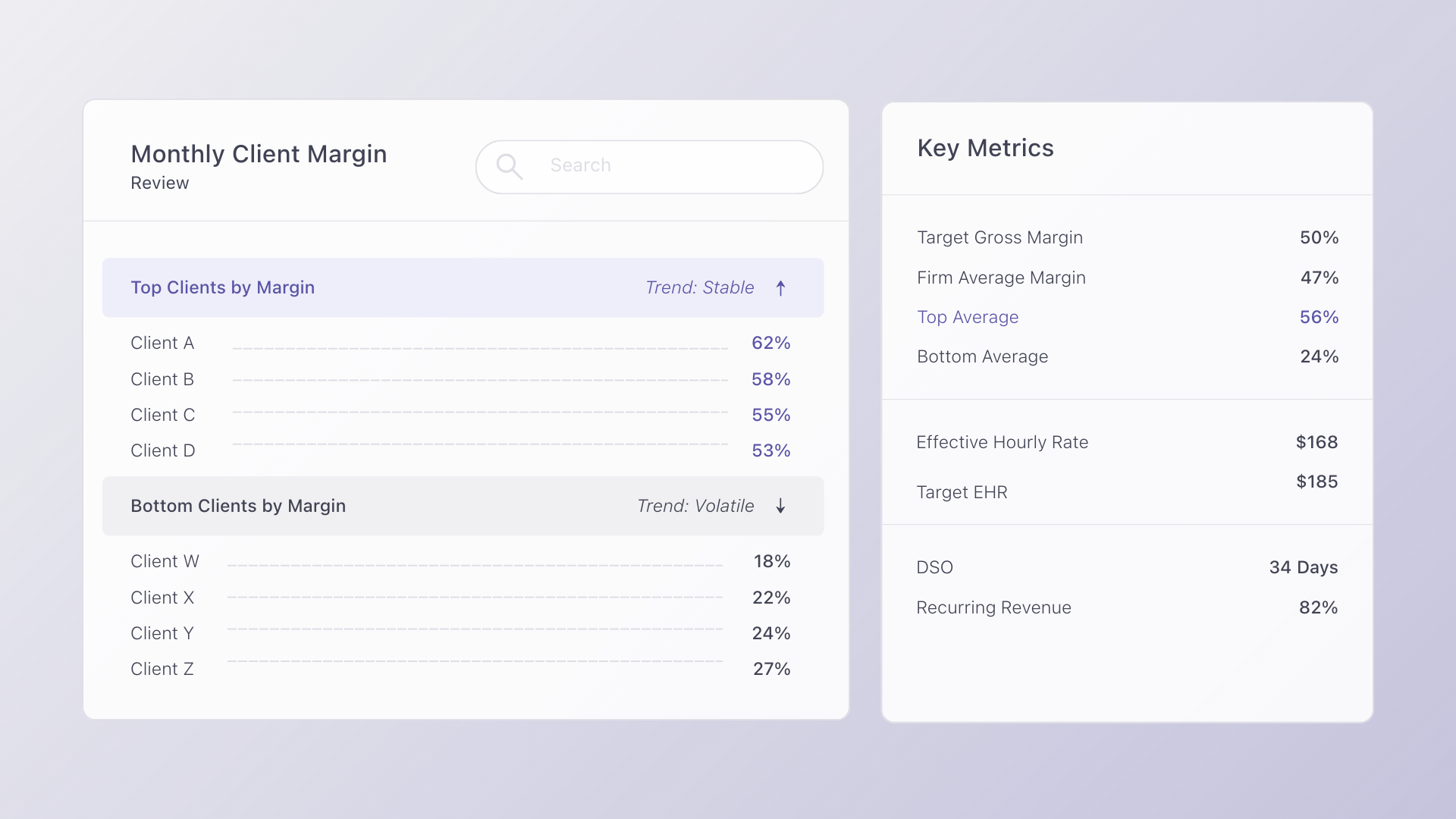
Craig recommends reviewing client level margins monthly. He personally reviews top ten and bottom ten margin accounts with his team every month. That level of visibility reveals critical insights:
- Are agreements priced correctly?
- Are certain clients consuming disproportionate support time?
- Are high margin clients receiving enough attention?
- Is the effective hourly rate aligned with targets?
Without this level of analysis, pricing confidence begins to erode, decisions default to reactive adjustments, and growth becomes accidental rather than the result of deliberate, data driven strategy.
When leadership reviews client-level margin consistently, pricing conversations become strategic instead of defensive.
Forecasting With Intent
Cash flow forecasting is not guesswork. It is disciplined pattern recognition.
Historical seasonality. Agreement renewals. Planned price adjustments. Hiring timelines. Growth targets.
When recurring revenue is automated and predictable, forecasting becomes grounded in real data rather than optimism.
This is where finance truly becomes strategic.
An owner who knows what revenue is arriving next month can plan hiring for next quarter. An MSP preparing for acquisition can demonstrate stable cash conversion. During due diligence, predictable billing and clean receivables aging reduce perceived risk, directly supporting stronger valuation multiples. A family owned business preparing to pass leadership to the next generation can ensure the books reflect a healthy operation.
Strategic finance aligns today’s numbers with tomorrow’s goals.
Lifestyle Business or Growth Engine
Not every MSP wants to scale aggressively. Some owners want steady income and long term stability. Others are building toward exit, acquisition, or private equity investment.
In both cases, clean financial operations matter.
For lifestyle businesses, predictability reduces stress. For growth oriented firms, it increases valuation and attractiveness to buyers.
In Craig’s view, it ultimately comes down to intention. The first question is intentional: what do you want your business to become?
Once that answer is clear, finance becomes the operating system that supports it.
The Shift That Changes Everything
When invoicing is timely, collections are automated, reporting is clear, and margins are visible, the finance function stops being a cost center.
It becomes a strategic lever.
Hiring decisions are based on data, not gut instinct. Pricing changes are supported by margin analysis. Growth plans are backed by cash flow forecasts.
The transformation does not require doubling your accounting team. It requires tightening processes, leveraging automation, and committing to financial clarity.
Finance is not just about closing the books. It is about engineering confidence.
Simplify your customer payments, unlock instant cash flow
Keep reading


AI cash-flow forecasting: how business owners can test assumptions

Can AI financial analysis explain why your margins changed?