•
IT Services
•
Automate Accounts Receivable
December 3, 2025
The Zero Effort Payment Platform Migration
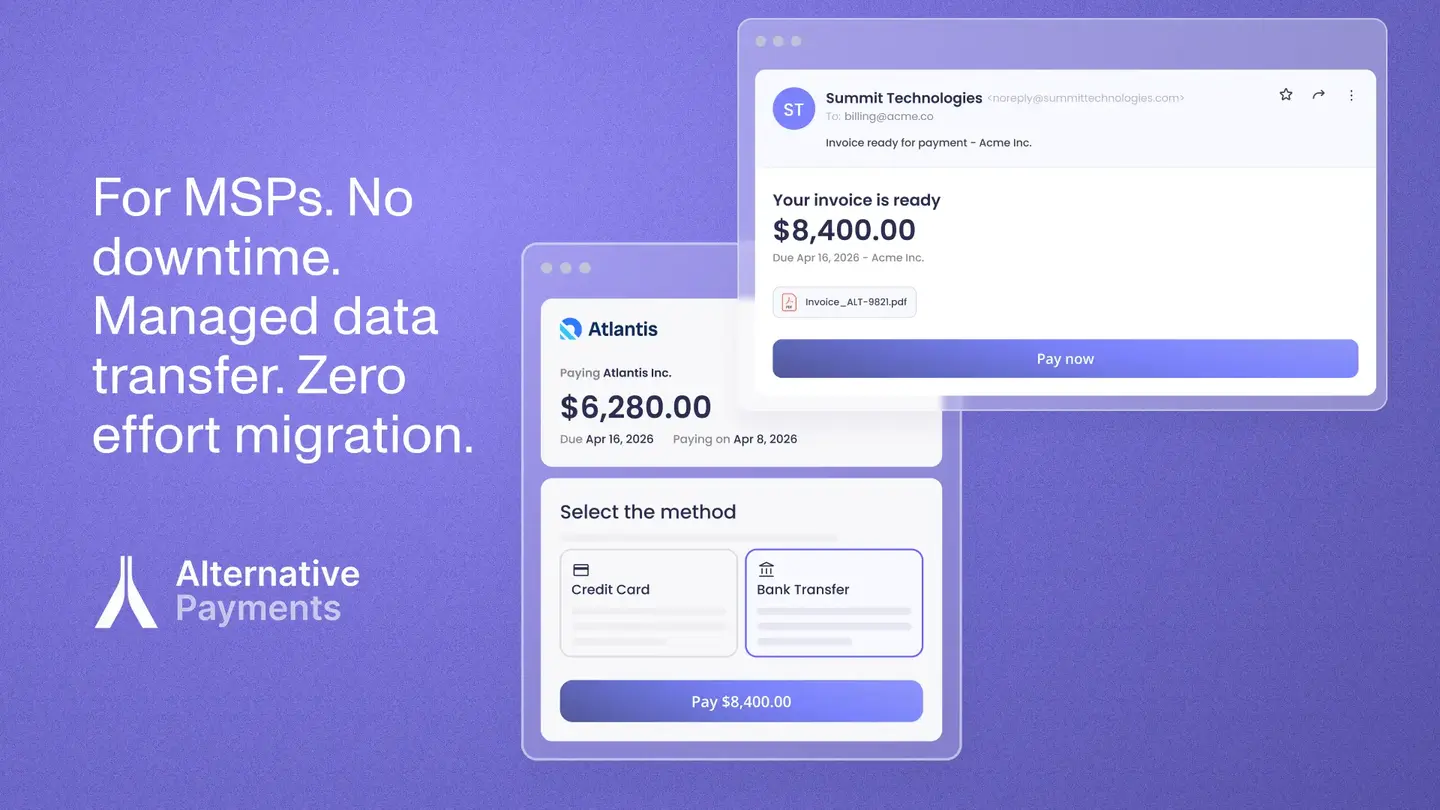
Billing drives renewals, cash flow, and client trust, which means even a small billing failure can trigger a chain reaction: service interruptions, frustrated clients, and hours of corrective work. The fear of breaking something during a billing change is understandable, but waiting comes at a far greater cost. Gartner notes that this fear is one of the biggest reasons companies delay upgrading—even when staying put costs more.
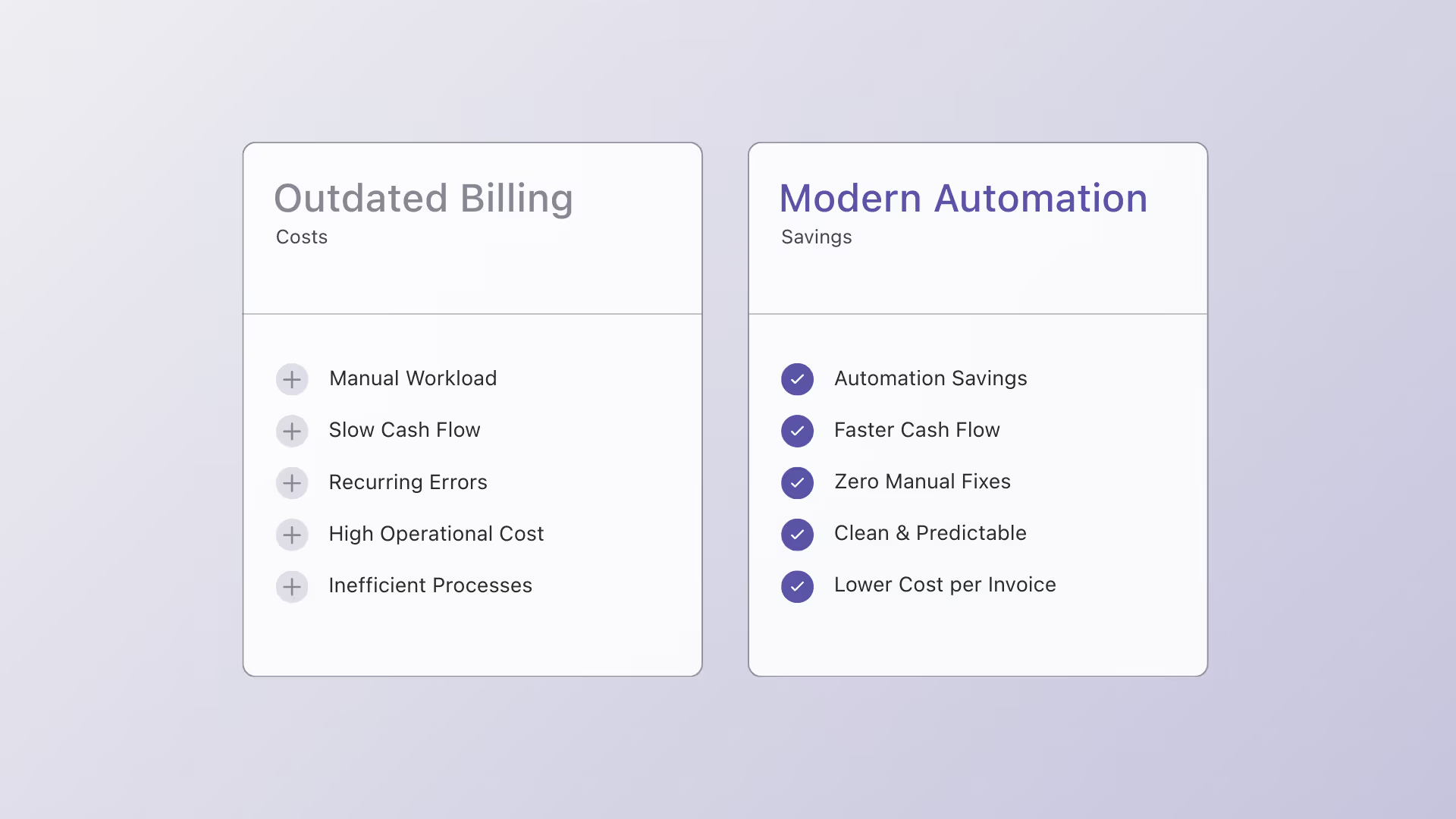
Each month spent on aging billing systems leads to slower cash flow, recurring reconciliation issues, rising operational risk, and a growing backlog of manual work that chips away at margins. A modern billing platform doesn’t just reduce risk. It puts your cash flow, automation, and client payments on autopilot.
This guide outlines how modern billing automation restores stability and removes the uncertainty created by outdated financial workflows. You’ll see how automated recovery tools eliminate preventable delays, how integrated payments reduce billing-related tickets, and how smarter workflows strengthen cash flow overall. Most importantly, you’ll learn how MSPs reclaim hours of repetitive work every month by adopting systems built to run billing end-to-end without the friction or failure points of legacy tools.
The Hidden Cost of Staying with a Broken Billing System
There’s a certain comfort in sticking with the system you already know, even if it frustrates you. But every month you stay with a billing system that is slow, inaccurate, or requires constant manual effort, you are paying for it in ways you probably do not calculate.
You lose hours every week reconciling payments. You lose efficiency because your team has to fix things one by one. You lose cash flow because failures take longer to identify and resolve. And you lose confidence because your data never feels completely clean.
PYMNTS published a report that addresses the core problems that outdated invoicing and payment workflows create: slow cash flow, higher labor costs, and continual reconciliation issues. It explains why legacy billing systems force teams into preventable manual work and error correction. It shows how businesses using modern billing tools collect payments faster and eliminate many of the failure points that consume staff time. Ultimately, the article shows how updated workflows reduce operational drag and strengthen financial performance.
For MSPs, these delays stack up fast. Every manual invoice correction or outdated workflow quietly eats into your margin. The longer you wait to modernize, the more expensive “doing nothing” becomes.
The operational risk of waiting until later to modernize
Every MSP owner eventually says, ‘We’ll deal with migration later.’ The problem is that later often turns into next year, and next year turns into three years. Meanwhile, your billing system keeps adding friction to your daily workflow. You keep working around limitations, patching issues manually, and adjusting your workflow to a system that should be adjusting to you.
A published research from IDC shows that companies relying on outdated financial platforms are more likely to experience reporting errors, operational delays, and data inconsistencies. The study emphasizes that legacy systems create bottlenecks that grow worse the longer you delay modernization.
For MSPs, operational delays show up in small but annoying ways. Contract updates take too long, payment failures go unnoticed until clients complain, and internal reports often fail to match your PSA data. These small cracks create meaningful risk on two fronts. Internally, they distort reporting, slow reconciliation, and make cash flow harder to predict. Externally, they surface as billing inconsistencies that frustrate clients and erode trust. And every day you wait, the gap between what your system delivers and what your business requires grows wider.
Why Modern Billing Migrations Look Nothing Like Old Migrations
If you have been through a migration in the past, you probably picture spreadsheets, long data freezes, nervous cutover, and late-night error fixing. That image is outdated. Modern MSP Billing migrations barely resemble the old version. Today, migrations rely heavily on guided processes, automated mapping, and structured imports that remove almost all the manual pain.
Accenture has written extensively about cloud-based financial migrations and explains that newer methods rely on automated data cleansing and structured data movement that reduces human error and accelerates timelines. Their overview makes it clear that modern migrations happen in controlled steps instead of one massive lift.
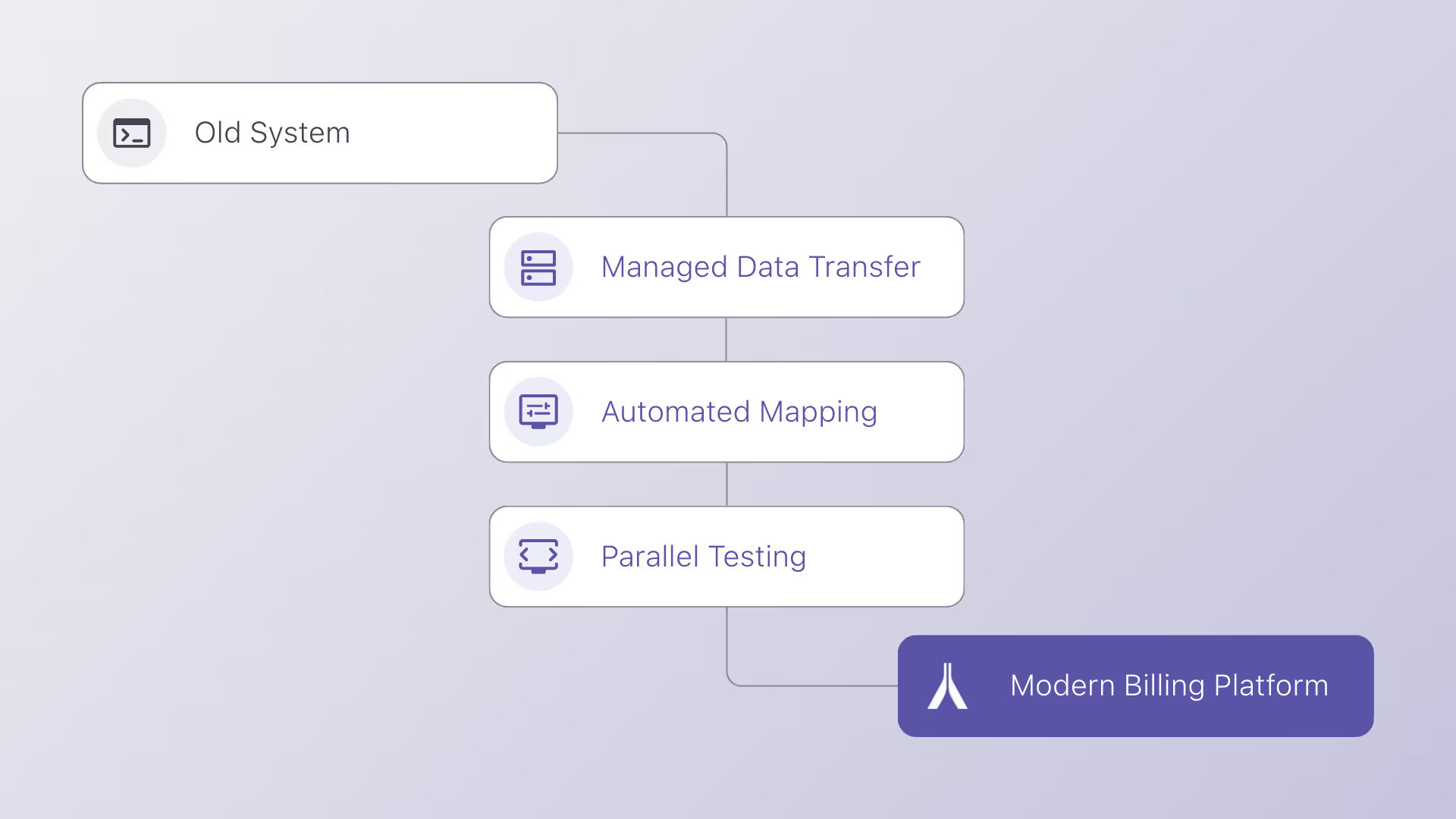
Modern migrations are not about ripping something out and hoping for the best. They happen in parallel with your existing system. Your data is cleaned and transferred automatically. Contracts are mapped. Invoices are imported. And nothing ever needs to shut down. Zero downtime migration is the new standard, and it is changing how MSPs think about switching platforms.
Managed Data Transfer: The New Standard for Safe Migration
One of the biggest reasons MSP owners fear migration is the idea that they will have to move everything manually: client records, contracts, recurring invoices, payment histories, tickets, and more. The assumption is that migration means exporting a thousand CSV files, cleaning them for hours, and then hoping the import works on the first try. That picture is outdated. Modern migrations rely heavily on managed data transfer, which means a migration team does the heavy lifting for you.
Instead of your staff spending hours organizing spreadsheets, the migration team handles data mapping, data cleansing, and structured imports. They prepare your contracts, your billing rules, and even your client payment methods so that the new system is ready before you ever switch it on. You are no longer guessing at what goes where. You are reviewing and confirming the work that has already been done.
McKinsey describes this approach in their research on next-generation finance transformation. They explain that using managed data processes reduces project risk, accelerates timelines, and improves accuracy across financial system transitions. Their insights highlight how guided migrations reduce the cognitive load on internal teams.
When you have a team handling the technical side, you stop worrying about what might break and start focusing on how much cleaner and more automated your billing will be when you go live.
Zero Downtime Migration: How Modern Platforms Prevent Disruption
That Old Picture Is Outdated
Many MSP owners still imagine billing migrations the old way—turning one system off, turning another system on, and hoping nothing breaks in between. That picture made sense years ago, when migrations required downtime, data freezes, and risky cutover weekends. But that legacy model is no longer how modern billing platforms transition businesses today.
Modern Migrations Rely on Parallel Systems
Today’s migration standards are built around parallel operation, where your current billing system continues running while the new platform is configured, tested, and populated with your data. Nothing pauses or goes offline. Clients continue paying, renewals continue firing, and billing workflows remain uninterrupted. Stripe’s public migration documentation shows how businesses maintain continuous processing while switching API connections and workflows—reinforcing that parallel operation has become the industry norm.
You No longer Have to Fear Downtime
For MSPs, this approach removes the most stressful part of switching billing systems: the risk of disruption. You no longer need to plan a high-stakes cutover weekend or worry about gaps in invoicing and payment collection. With parallel migration, you always have a live system running, a fully validated replacement being prepared, and a seamless handoff that ensures continuity. The safety net is built in.
For MSPs, this approach removes the most stressful part of migration. You no longer have to risk downtime. You no longer have to plan a scary cutover weekend. When everything runs in parallel, you are never operating without a safety net.
Dedicated Migration Support: Why MSPs No Longer Go It Alone
Years ago, migrating to a new billing platform felt like a solo mission. Companies gave you a login, a documentation link, and wished you good luck. That is not how modern platforms operate. Dedicated migration support has become a core part of onboarding because vendors finally realized that billing touches too many parts of a business to leave you guessing.
Instead of doing everything yourself, you now get a team that guides you through every step. You review data together. You check contract mappings together. You test billing runs together. You ask questions, and someone actually answers them. Most importantly, you never have to wonder whether you are setting things up correctly because an onboarding specialist is checking your work in real time.
According to Salesforce, structured onboarding is a key driver of customer success because it reduces friction, accelerates learning, and ensures users get value faster. Their documented best practices underscore the impact of expert-led implementation during transitions.
For MSPs burned by past migrations, dedicated support transforms the entire experience. You are no longer carrying the weight alone. Someone is keeping an eye on your settings, your data, and your timeline.
How MSPs Know They Are Ready to Make the Switch
There is always a moment when you realize your current billing system is holding you back more than it is helping you. It usually shows up gradually. Invoices start taking too long to prepare. Reconciliation becomes a weekly headache. Clients ask questions you cannot answer because the data does not match across systems. Your team slowly shifts from focusing on service delivery to fixing billing problems you should not have.
Harvard Business Review wrote about the cost of delaying digital transformation and how companies end up losing time, money, and competitive advantage when they keep outdated systems simply because switching feels uncomfortable. Their article explains that the pain of staying the same eventually outweighs the fear of change.
If billing feels heavy, it is probably because it is. When you see more friction than progress, more manual work than automation, and more guessing than clarity, that is a sign you are ready for something better.
Modern MSP Billing Migration is Safer Than Staying Put
The biggest misconception about billing migration is that switching platforms is a risky leap. In reality, the larger risk comes from staying on a system that slows collections, increases manual work, and makes cash flow unpredictable. Every month on outdated billing tools carry silent costs—in time, revenue, and operational confidence.
Modern migration eliminates those risks because the danger has been engineered out of the process. You receive managed data transfer, so you never shoulder the technical work alone. You get a zero-downtime transition, so nothing breaks while you switch. And you get dedicated support, so every step is validated and transparent. What used to be a stressful, high-stakes transition is now a guided, low-friction upgrade designed to protect your revenue and your clients.
Viewed through that lens, the real question isn’t whether you should migrate. It’s how much longer your business can afford to stay with tools that limit your growth. For most MSPs, the answer becomes clear the moment they see what modern billing automation makes possible.
What to do next?
Review your current billing pain points
Identify where delays, manual steps, or payment failures are slowing down cash flow or creating extra work for your team.
Request a migration readiness assessment
Get a clear picture of your data, your workflows, and the simplest path to a parallel, zero-downtime transition.
Schedule a guided migration walkthrough
See exactly how your move would work, end-to-end. Book your free demo here.
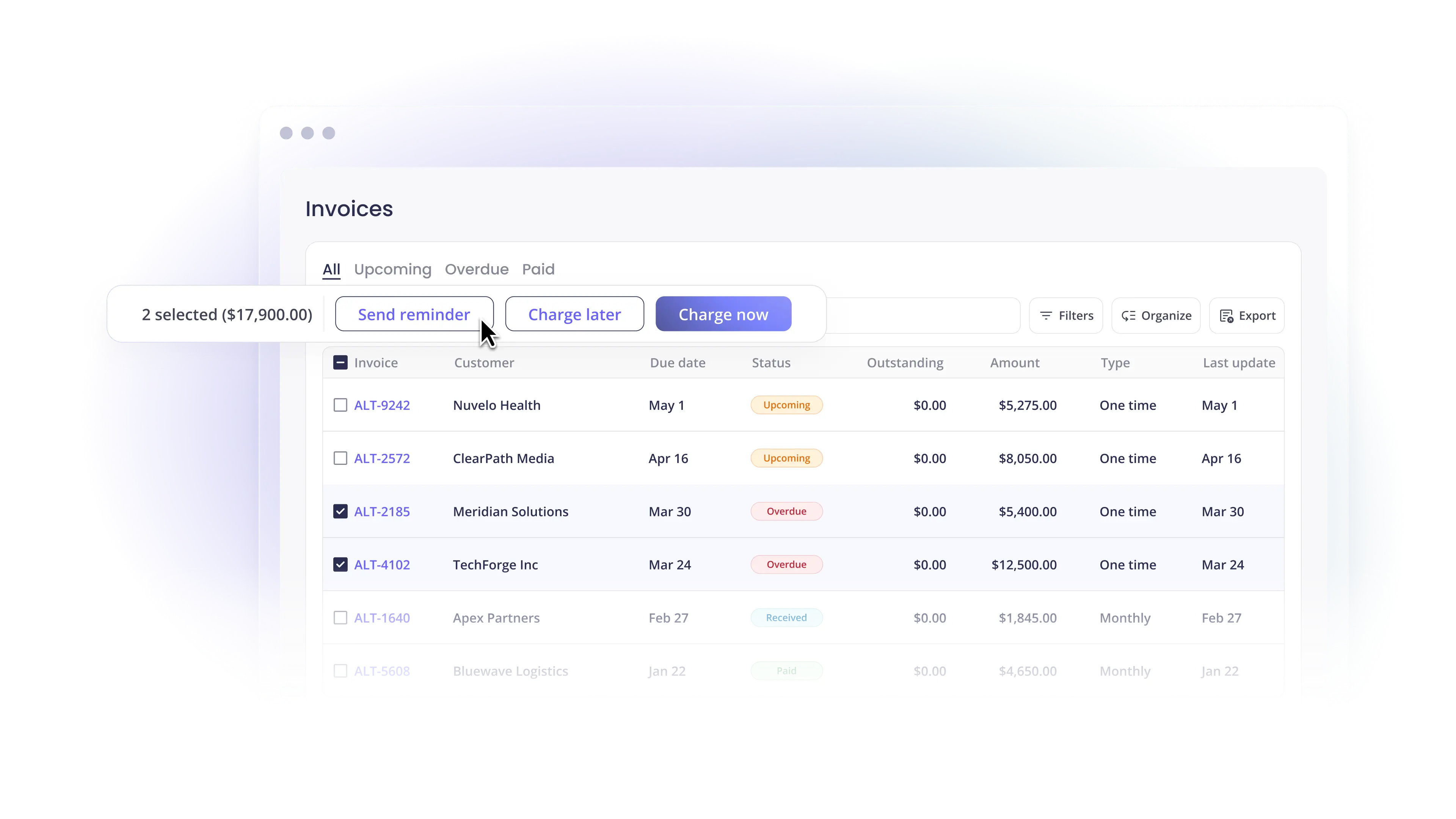
Simplify your customer payments, unlock instant cash flow
Keep reading


AI cash-flow forecasting: how business owners can test assumptions

Can AI financial analysis explain why your margins changed?