•
IT Services
•
Automate Accounts Receivable
•
Mid-market
December 17, 2025
The Next Big Competitive Advantage for MSPs
Have you ever wondered why billing still feels like one of the most frustrating parts of running an MSP, even when service delivery is highly systematized? The problem is rarely a lack of effort. MSP billing is still stitched together across disconnected systems, including the PSA, payment tools, and accounting platform, which creates manual cleanup, mismatched records, and constant reconciliation.
Billing problems rarely appear as a single failure. Instead, they creep in through small inefficiencies that compound over time. An invoice that needs a manual tweak. A payment that doesn’t match cleanly. A reconciliation issue that pushes month-end close back another day. Each issue feels manageable on its own, but together they drain time, confidence, and cash flow.
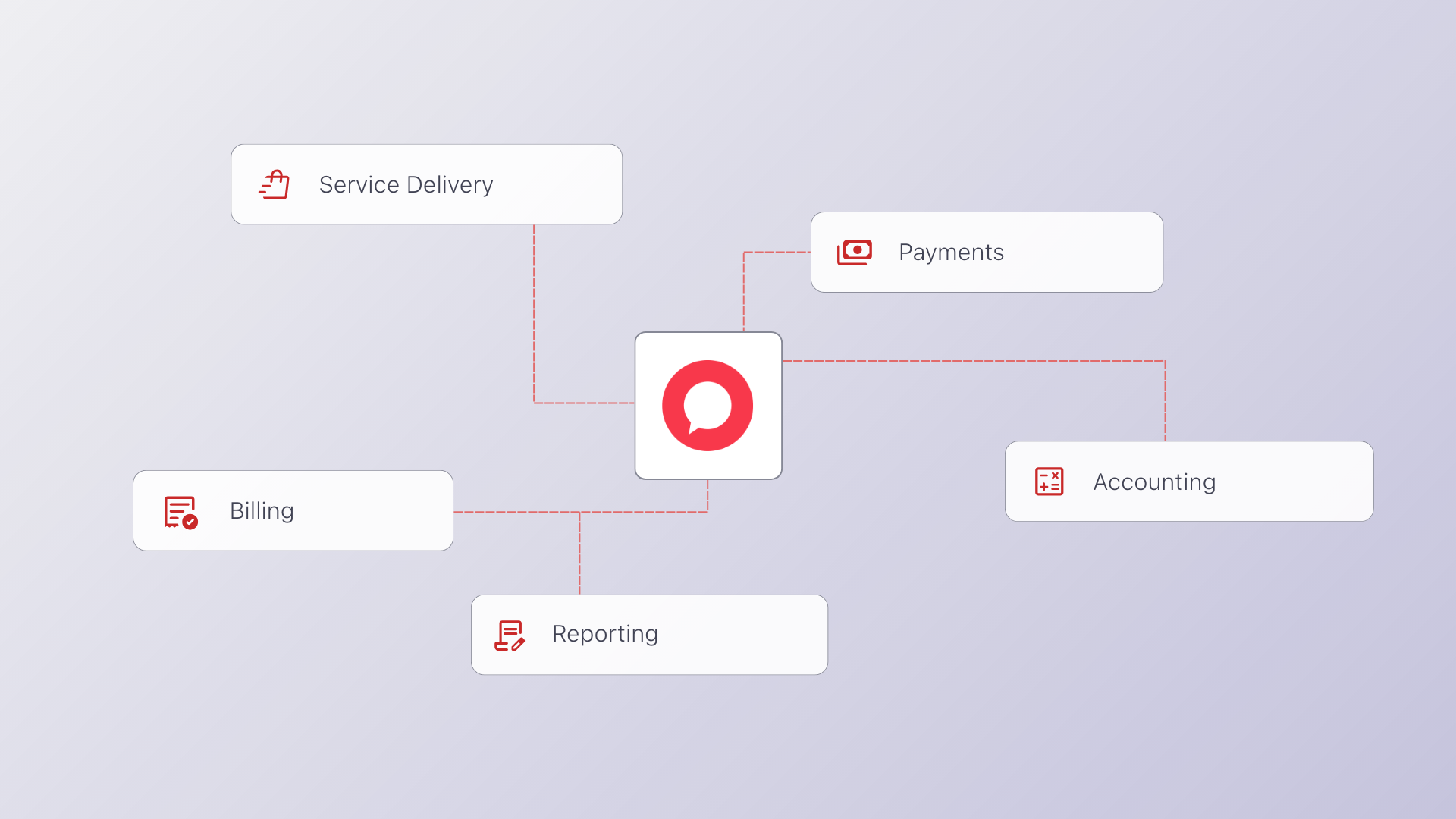
What makes this especially painful is that MSP billing sits at the intersection of multiple systems. Your PSA tracks services. Your accounting platform tracks revenue. Your payment processor moves money. When those systems are not tightly connected, billing becomes a game of translation. Every handoff increases the risk of errors, delays, and confusion.
This pattern came up repeatedly in our recent webinar with Alex Golden, Product Manager at HaloPSA. Here’s what we learned, and how MSPs can apply it to make billing predictable.
The Hidden Cost Of Manual AR In MSP Operations
Manual accounts receivable work does more than waste time. It introduces uncertainty into your entire business, and it is a clear example of how manual accounts receivable slows cash flow. When invoices require human review, payments need to be matched manually, and exceptions are handled case by case, it becomes difficult to answer even basic questions with confidence. Has this client paid? Which service period does this payment apply to? Why does the PSA not match the accounting system?
Most MSPs underestimate how much mental bandwidth this consumes. Operations leaders get pulled into billing questions. Owners step in to resolve disputes. Finance teams spend hours reconciling data that should already align. This is time that could be spent improving service delivery or growing the business, but instead it gets burned on cleanup.
The financial impact shows up quietly. Invoices go out later than they should. Follow-ups are inconsistent. Clients are not nudged at the right time or in the right way. Over months, this stretches payment cycles and creates unpredictable cash flow. Even profitable MSPs can feel cash pressure simply because money moves too slowly through a manual AR process.
One of the most common automation problems MSPs face isn’t capability. It’s prioritization. As Alternative Payments pointed out during the session, most teams don’t struggle because they lack tools. They struggle because they don’t know which process will have the biggest impact.
Alex showed a simple approach inside HaloPSA that starts with reporting. Build a quick report that groups tickets by category and shows volume and time-to-resolution. In minutes, you can identify the requests consuming the most technician time—like new user onboarding, password resets, or recurring access requests.
The takeaway is practical: use PSA data to find your highest-volume, highest-friction work, then automate that first. And don’t automate randomly, map processes against what you’ve promised in your agreements and service expectations, then build automation that supports those commitments.
Proving Billing Automation Value Without Extra Work
One of Alex’s strongest points was that great automation can become invisible—things just “work,” so clients don’t notice the improvement. For billing, this is where reporting turns invisible automation into measurable outcomes. Use HaloPSA data to show what changed: invoices sent on time, fewer overdue accounts, fewer payment exceptions, and less reconciliation time at the month end. When you can point to fewer payment-related tickets and fewer billing exceptions, automation becomes a visible service improvement, not just an internal convenience.
Why HaloPSA Sits At The Center Of MSP Billing Reality
HaloPSA already sits at the center of MSP billing reality because it contains the agreements, contracts, billable items, and invoicing logic that drive recurring revenue. When billing originates inside the PSA, the system that understands what’s contracted and what’s billable, invoicing becomes consistent, defensible, and aligned with service delivery.
The challenge is that billing and payments have historically lived outside the PSA. MSPs often bolt on payment tools after the fact, which introduces duplicate data entry, delayed updates, and reconciliation work. Once billing leaves the PSA, it loses its connection to service reality. That disconnect is where mismatches, missed charges, and reactive cleanup begin.
In the webinar, Alex explained that HaloPSA’s automation works across three distinct layers, each serving a different operational purpose:
- Ticket rules: handle fast, no-code routing and escalation logic (for example, automatically prioritizing after-hours VIP requests).
- Workflows: guide technicians through repeatable processes so escalations, approvals, and handoffs happen consistently.
- Runbooks: operate entirely behind the scenes as API-driven automations that update HaloPSA and connected systems without technician involvement.
In many cases, technicians only see the result—not the automation itself.
When payments are integrated directly into this automation stack, billing becomes part of the same system that governs service delivery. Invoices are generated based on real contract data. Payment requests trigger automatically at the right moment. Status updates flow back into HaloPSA without manual intervention or reconciliation gaps.
This is the point where MSP billing stops being reactive and starts becoming predictable.
Alex made a point that resonated: the best automation is almost invisible. The user requests something, it happens, and they move on. That’s great operationally, but it creates a perception problem. If clients don’t see the effort, they sometimes ask, “What exactly am I paying you for?”
The fix is reporting. HaloPSA captures the data behind every ticket—volumes, resolution time, SLA performance, and repeat patterns. When MSPs translate that data into outcomes (fewer recurring issues, faster resolution, fewer escalations, fewer repetitive requests), clients understand the value of proactive automation instead of assuming “nothing happened.”
What Alternative Payments Changes Inside HaloPSA
The billing side of the MSP is one of the clearest places to apply the same framework Alex taught: identify repetitive friction, automate it, and prove the outcome with clean reporting. When payments are embedded into HaloPSA workflows, billing stops being a manual exception process and becomes a predictable system—invoice creation, client notifications, scheduled reminders, and payment posting happen automatically.
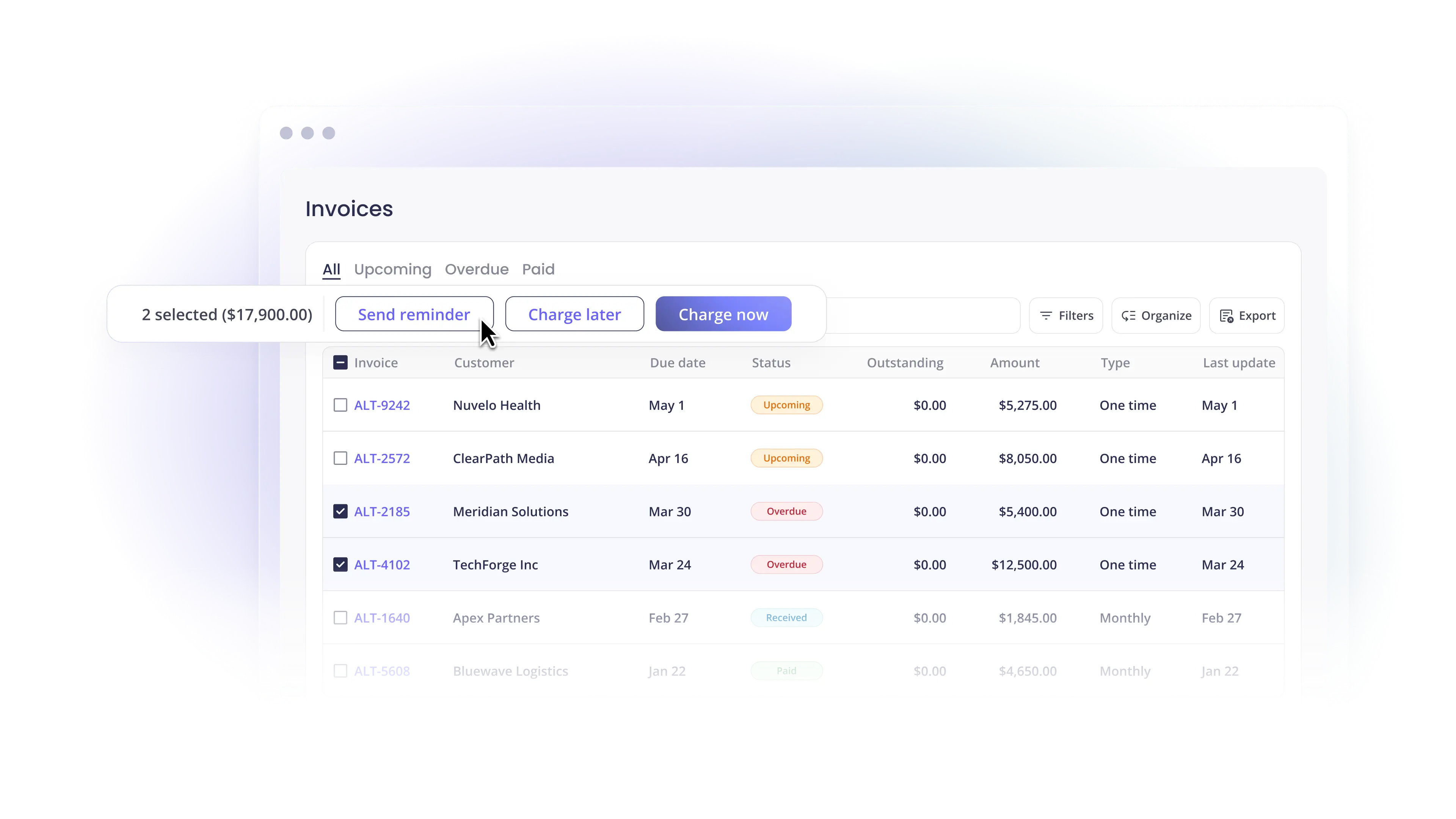
Practically, that means clients can log into a portal, see invoices, update payment methods, enable autopay, and pay without emailing your team. Inside the Halo client experience, they can also see a Pay Now option, removing friction and reducing interruptions for your service desk and finance team.
Here’s what the workflow looks like day to day:
- You create invoices in HaloPSA (nothing new for your team).
- Invoices sync automatically into Alternative Payments.
- Clients receive notifications and can pay through a portal where they can also update payment methods and enable autopay.
- Reminder schedules run automatically, no more manual chasing.
- When a client pays, the payment posts back into HaloPSA automatically, keeping invoice status and records aligned.
- Because HaloPSA is already connected to your accounting platform, month-end close becomes dramatically cleaner.
When paired with accounting platforms like QuickBooks Online, reconciliation becomes significantly easier because transactions are already structured correctly at the source.
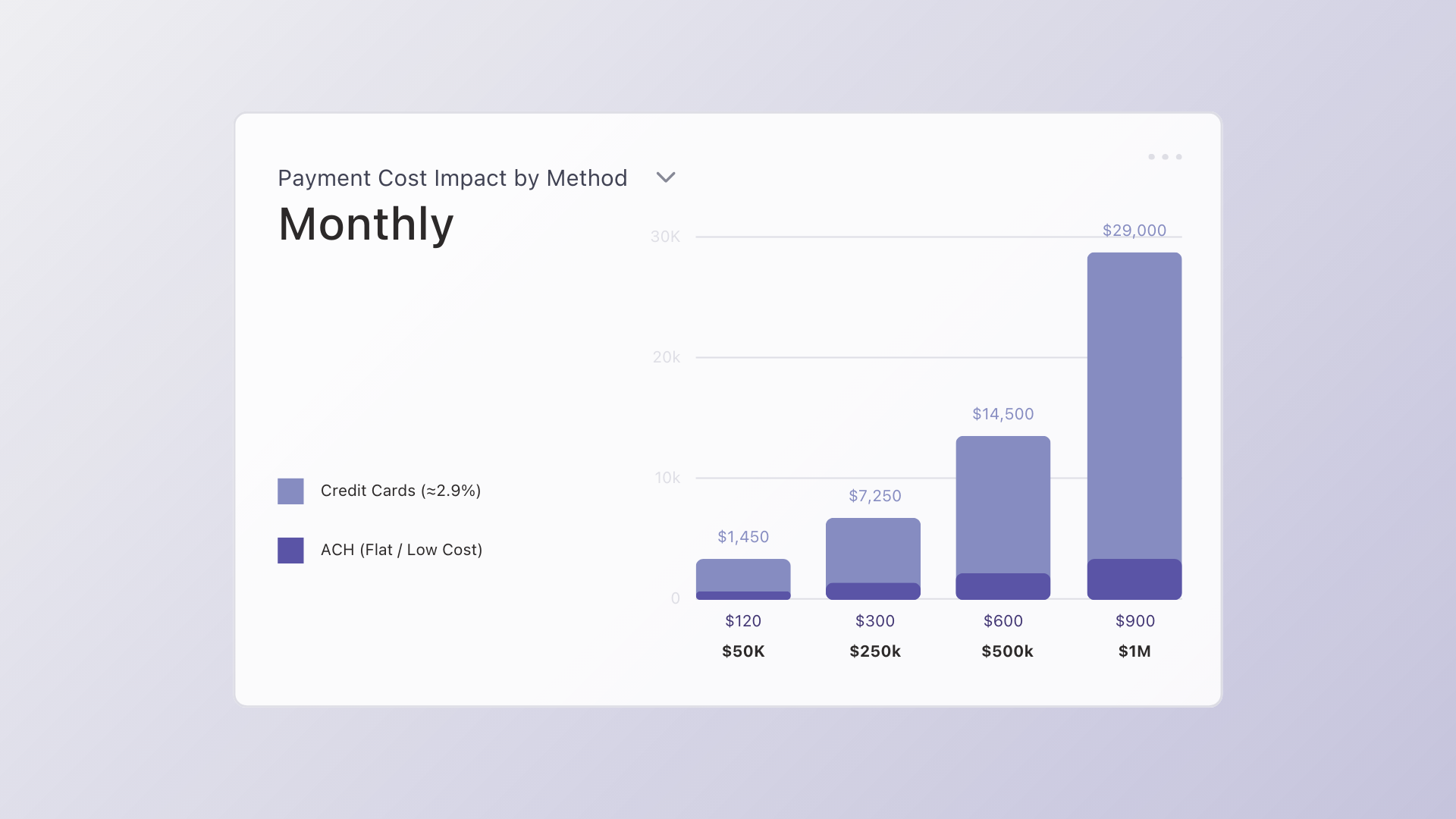
One of the most meaningful outcomes is fee reduction. Credit cards are convenient, but they quietly scale costs as revenue grows. By enabling ACH and bank-based payments as part of the default billing workflow, MSPs reduce processing fees without changing pricing or client contracts. Over time, that savings compound.
Why This Matters To MSP Owners And Leadership Teams
For MSP owners and leadership teams, billing is not just a back-office function. It directly impacts margins, cash flow stability, and decision-making. When billing is predictable, leaders can plan confidently. When it is chaotic, everything feels harder than it should.
Automated billing reduces stress across the organization. Finance teams stop firefighting. Operations leaders regain focus. Owners gain clearer insight into real revenue performance. Importantly, this does not require ripping out existing systems. HaloPSA stays in place. Accounting platforms remain intact. The improvement comes from connecting what already exists.
This is why integrated billing matters at the leadership level. It turns billing from a constant operational concern into a background process that quietly supports predictable recurring revenue for MSPs and long-term growth.
Why The Timing Matters More Than Ever For MSPs
The pressure on MSP billing has quietly increased over the last few years. Contracts are larger. Services are more bundled. Clients expect predictable pricing and seamless billing experiences. At the same time, margins are tighter and operating costs continue to rise. That combination leaves very little room for inefficiency.
When billing is slow or inconsistent, the impact shows up immediately. Cash flow becomes harder to forecast. Leadership teams hesitate on hiring or investment decisions. Finance teams spend more time closing books than analyzing performance. None of this is caused by bad service delivery. It is caused by billing systems that were never designed for modern MSP operations.
This is why timing matters. The longer MSPs wait to modernize billing and payments, the more manual work piles up. What once felt like a minor inconvenience becomes a structural problem that limits growth. Automation is no longer about getting ahead. It is about keeping up with how the MSP business model has evolved.
The Compounding Effect Of Automated Payments
In the webinar, Alternative Payments shared what MSPs typically see after implementing payment automation inside HaloPSA: many partners report eliminating around 80% of manual accounts receivable work through automated notifications, scheduled reminders, and payments automatically posting back into Halo. And when MSPs shift clients toward ACH or pass card fees through, processing costs can drop by roughly 3%, which compounds as revenue grows.
When payment workflows are automated end-to-end, a few key shifts begin happening almost immediately.
- Invoices are generated and sent automatically, which ensures they go out on time every billing cycle.
- Payment requests are triggered consistently, helping clients get used to predictable billing patterns.
- Reconciliation runs in the background, eliminating the need for finance teams to manually match payments to invoices.
- Fewer billing errors mean fewer client questions and less time spent fixing mistakes.
- Billing tasks stop interrupting daily operations, allowing teams to stay focused on higher-value work.
Each of these improvements may seem small in isolation, but together they fundamentally change how the business operates. Time once spent reacting to billing issues is redirected toward planning and analysis. Revenue becomes easier to trust because numbers stay consistent across systems. This compounding effect is what turns billing from a reactive chore into a stable, strategic part of the MSP’s revenue cycle.
Why ACH Adoption Changes The Economics Of MSP Billing
Credit cards have long been the default payment method for MSPs, mostly because they are familiar and easy to set up. But as invoice sizes grow, the economics become harder to ignore. Percentage-based fees scale directly with revenue, meaning the more successful an MSP becomes, the more they pay just to get paid.
ACH and bank-based payments shift that equation. Lower transaction costs, fewer failures due to expired cards, and more predictable settlement timing make ACH a better fit for recurring MSP billing. The challenge has never been ACH’s value. It has been the friction of manual setup and ongoing management. The difference is making ACH the default option inside the HaloPSA billing experience, so setup happens once and payments run without ongoing admin work.
When ACH is embedded into automated workflows inside HaloPSA, that friction disappears. Clients are guided through setup once. Payments run in the background. Fees drop without uncomfortable conversations or pricing changes. Over time, the savings become material, especially for MSPs operating at scale.
What A Predictable Revenue Cycle Really Looks Like
A predictable revenue cycle does not rely on reminders, follow-ups, or end-of-month cleanups. It runs quietly in the background. Invoices are created based on actual service delivery. Payments are collected automatically. Reconciliation happens without manual effort. Month-end close feels routine instead of stressful.
This level of predictability only happens when billing, payments, and accounting systems work together as one. HaloPSA provides the operational context. Payment automation ensures money moves on time. Accounting systems receive clean, structured data from the start.
For MSP leaders, this predictability changes how the business feels. Decisions are made with confidence. Growth feels manageable. Financial reviews focus on strategy instead of cleanup. Billing stops being a constant topic of concern and becomes something you trust.
The Real Fix For MSP Billing Is Integration, Not Effort
“MSP billing isn’t broken because teams aren’t trying hard enough. It breaks when systems don’t share context. Once billing and payments live inside the same workflow as service delivery, everything becomes simpler and more predictable.” — Alex Golden, Product Manager, HaloPSA.
The real fix is integration. When billing and payments are embedded into the same system that manages service delivery, the entire workflow becomes simpler. Automation replaces guesswork. Predictability replaces stress. Billing shifts from being a daily distraction to a background process that supports growth.
This is what modern MSP billing looks like. Not more work, just better-connected systems.
Next Steps
If billing still feels heavier than it should, start by mapping every manual step between “invoice created” and “cash in the bank.” Identify where payments fall out of sync, such as portals, reminders, posting back to Halo, or month-end reconciliation. Then automate the most repetitive AR work first and measure success by fewer payment exceptions, faster collections, and less reconciliation effort.
Simplify your customer payments, unlock instant cash flow
Keep reading


Can AI financial analysis explain why your margins changed?

Autotask QuickBooks integration: choosing a billing and payment operating model