•
IT Services
•
Automate Accounts Receivable
•
Reduce DSO
•
Collections
December 19, 2025
The Human Approach to Late Payments: Automating Follow-Up Without Losing Client Trust
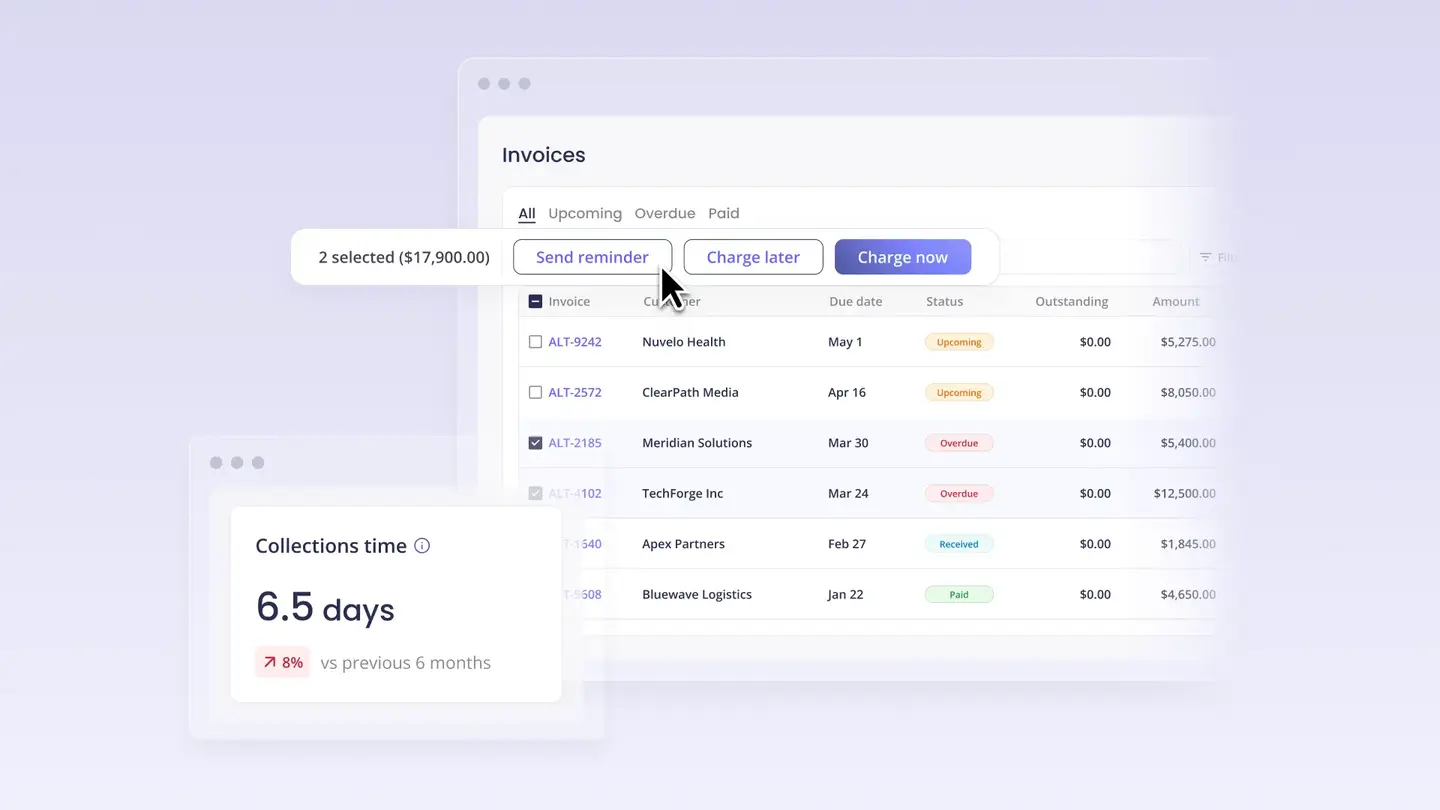
In working with MSP finance and operations teams, one pattern shows up consistently: follow-up breaks down not because of intent, but because people are involved.
Consistency is hard when humans are involved. People forget. They hesitate. They phrase things differently depending on the day. When follow-up is automated, every client receives the same fair treatment. Invoices go out on schedule. Reminders follow a defined cadence. Language stays aligned with your brand and values. No one slips through the cracks, and no one gets singled out.
This becomes especially important as your MSP grows. Automation ensures that growth does not dilute professionalism.
The benefit here is not just efficiency. It is emotional distance. Your team no longer has to play the role of the bad guy. The system handles routine follow-up, and your people step in only when context or conversation is actually needed.
The Real Reason Clients Miss Payments
Late payments are usually a process problem, not a people problem.
Most delays happen because something in the payment flow breaks down, not because a client is avoiding you or unhappy with your service.
Here is what typically causes payment delays in B2B environments:
- Invoices are missed because they land in shared inboxes and get buried under higher-priority emails.
- Clients forget to pay simply because no clear reminder or follow-up is tied to their internal timeline.
- Payment stalls when the person receiving the invoice is not the person who can approve or submit payment.
- Confusion around how to pay or where to log in creates friction that slows action.
- Lack of clear remittance details makes reconciliation harder, which delays approval on the client side.
Businesses consistently prioritize visibility, reconciliation clarity, and efficient processes when it comes to completing payments on time. When any of those elements are unclear, delays increase even in strong client relationships.
When MSPs interpret silence as resistance, they often escalate too quickly. That shift changes the tone from helpful to transactional and can strain an otherwise healthy relationship. A more effective approach is to assume positive intent and design follow-up that removes friction, supports the client’s internal process, and makes paying feel simple rather than stressful.
Automation Helps You Stay Consistent
Is it possible to automate follow-up without damaging client relationships, especially when billing is involved? Yes, but only if you treat it as a communication problem first and a payment problem second.
Here’s the reality most MSPs live with. You can deliver great service, resolve tickets quickly, and keep systems stable, yet one poorly handled payment reminder can undo months of goodwill. Clients do not separate billing from service. In their minds, it is all one experience.
You are not selling a one-time product. You are managing an ongoing relationship built on trust, access, and reliability. Every invoice reminder is a touchpoint, whether you intend it to be or not.
The good news is that modern billing systems enable businesses to remain firm on payment terms while still maintaining a human touch. Automation does not have to mean cold. In fact, when done right, it removes friction instead of creating it.
Pre-Emptive Communication Changes Everything
The most effective billing strategy starts before the invoice is overdue.
When clients know what to expect, they are far more likely to pay on time. Simple steps like advance billing notices, consistent invoice timing, and clear payment instructions reduce confusion and build confidence. Automation makes this possible at scale, without adding work for your team.
You are not chasing money, you are helping clients stay aligned with their agreement. This shift matters, especially for long-term managed services relationships.
Industry research consistently shows that proactive communication increases trust and reduces frustration, particularly in subscription-based services.
When clients feel informed instead of surprised, follow-up feels natural instead of intrusive.
What Client-Friendly Billing Follow-Up Actually Looks Like
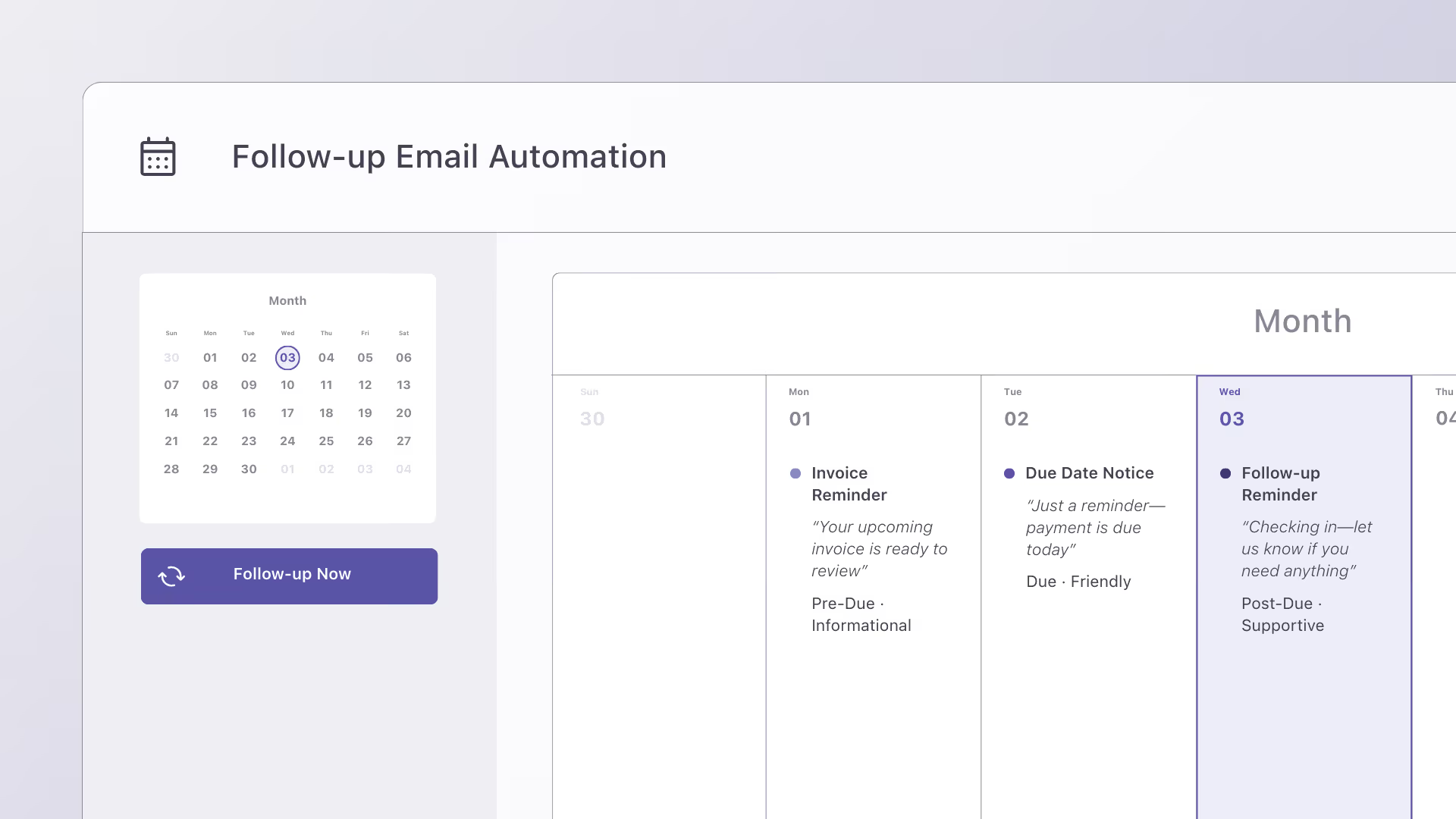
Soft touch automation delivers reminders that sound like they came from a person who understands the relationship. Language matters. Timing matters. Context matters.
Instead of a generic “payment failed” message, a soft-touch reminder acknowledges the situation and offers an easy next step. Instead of escalating immediately, it gives the client space to resolve the issue without embarrassment.
Well-designed automation supports this by adapting messaging based on payment method, invoice status, and client history. For example, an ACH reminder may focus on bank verification, while a card reminder may highlight expiration updates.
This kind of experience aligns with broader trends on how to achieve B2B Customer Experience Excellence, where personalization and clarity consistently outperform rigid workflows.
Imagine an MSP whose finance manager notices a recurring invoice has gone unpaid for a few days past its due date. Instead of drafting an uncomfortable email or looping in the service manager, an automated, friendly reminder goes out, confirming the invoice and offering a quick way to pay. The client responds the same day, apologizes for the delay, and submits payment, with no awkward follow-up and no strain on the relationship.
Why Tone Matters More Than Timing
You can send reminders at the perfect moment and still get it wrong if the tone feels off.
Clients read into language, especially when money is involved. Words like “final notice” or “immediate action required” may be appropriate in extreme cases, but using them too early signals mistrust. Over time, that erodes the partnership.
A human approach to billing respects the relationship while still protecting cash flow. It recognizes that most clients want to pay correctly and on time. They just need systems that make it easy and communication that feels fair.
This is where automation becomes a relationship tool, not just a finance tool. When reminders are consistent, calm, and clear, clients stop feeling monitored and start feeling supported.
By the time payment is due, the groundwork has already been laid. Follow-up becomes a formality, not a confrontation.
Escalation Without Turning Cold
There will always be edge cases. A reminder goes unanswered. An invoice passes its due date. At some point, escalation is necessary. The mistake many MSPs make is treating escalation as a switch from polite to punitive.
Escalation does not need to feel threatening to be effective. The key is consistency and transparency. When clients understand the escalation path ahead of time, they are not caught off guard when it happens. It feels like a process, not punishment.
This means your messaging should evolve gradually. Early follow-ups focus on awareness. Later ones focus on urgency. The language changes, but the respect does not. Even at later stages, reminders should still acknowledge the relationship and offer a clear way to resolve the issue.
Escalation works best when it feels like the next logical step, not an emotional reaction. B2B trust shows that predictable processes reduce perceived conflict, even in financially sensitive situations.
Where Billing Communication Meets Client Experience
Billing communication does not live in isolation. They are part of the broader client experience, just like onboarding, support, and renewals.
When billing communication is smooth, clients perceive your operation as organized and trustworthy. When it is clumsy, they start to question what else might be slipping behind the scenes. This perception matters more than many MSPs realize.
Soft-touch billing reinforces the idea that you run a tight ship without being rigid. It shows clients that you respect their time and processes, which makes them more forgiving when issues arise elsewhere.
In other words, good billing quietly supports retention.
Measuring What Actually Works
If you are going to automate follow-up, you should measure the outcome. Not just whether invoices get paid, but how they get paid and how long it takes.
Metrics like days sales outstanding, payment method success rates, and reminder engagement give you insight into what is working and what needs adjustment. Over time, patterns emerge. You learn which messages perform best and why finance automation reduces delays.
This data-driven approach mirrors best practices in modern finance operations, where visibility and iteration are key drivers of efficiency.
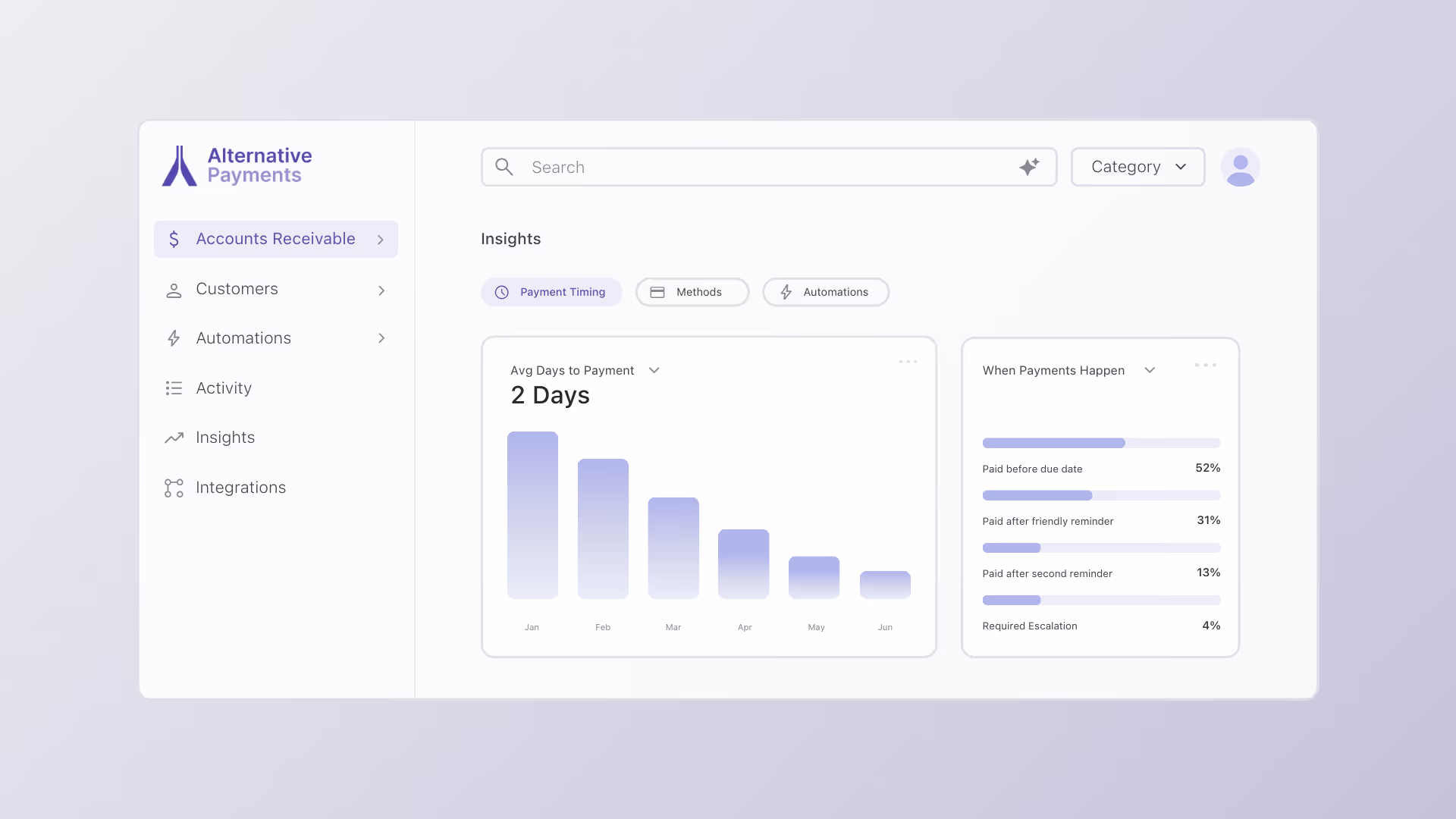
When you measure thoughtfully, automation stops being set-and-forget and starts being strategic.
Next Steps
Before making changes, it helps to break the process down into simple, observable moments.
- Review how billing really happens, including where reminders rely on memory, inbox searches, or manual follow-ups.
- Identify points where conversations feel awkward or reactive, especially when finance or service leaders step in personally.
- Look for patterns that suggest delays are caused by timing, visibility, or payment friction rather than unwillingness.
- Note where consistency breaks down, such as reminders sent late, sent twice, or not sent at all.
- Consider whether the current process supports calm, predictable communication or creates quiet tension.
A short review like this often reveals that the issue is not the client relationship, but the structure supporting it.
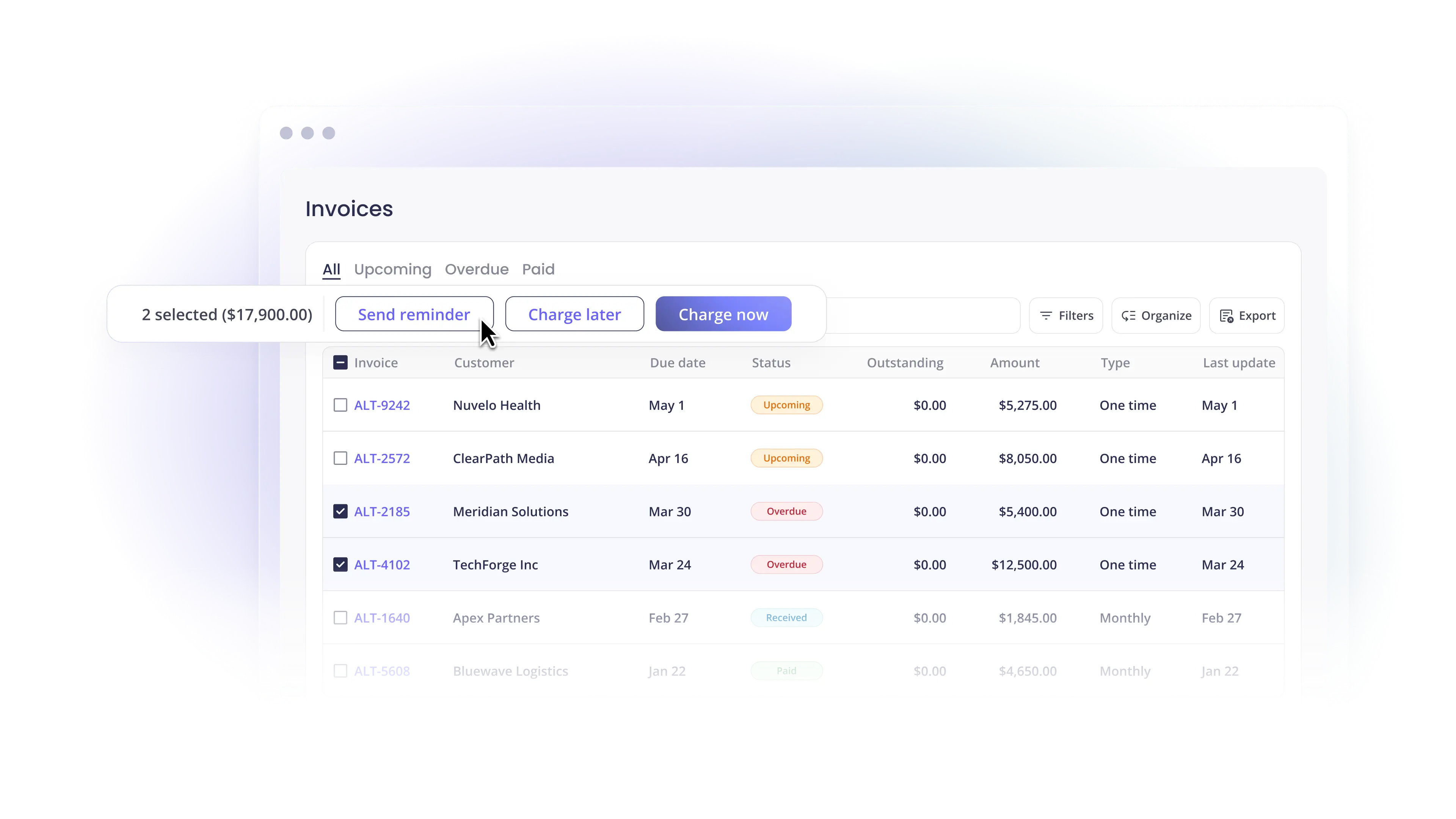
Simplify your customer payments, unlock instant cash flow
Keep reading


Can AI financial analysis explain why your margins changed?

Autotask QuickBooks integration: choosing a billing and payment operating model