•
IT Services
•
Automate Accounts Receivable
•
Automate Accounts Payable
February 17, 2026
The End of Manual Data Entry
For decades, scaling a business meant hiring more people.
More clients meant more invoices.
More invoices meant more reconciliation.
More reconciliation meant more staff.
But today, that equation is breaking down. The traditional headcount-driven model cannot keep pace with modern transaction volume and client expectations.
The volume of transactions has increased. The expectations for speed and accuracy have increased. The talent pool, however, has not.
We are entering the end of manual data entry, not because work is disappearing, but because digital employees and accounting workflow automation are taking over the grunt work.
Manual Work Is the Hidden Bottleneck
Most firms don’t struggle because they lack demand. They struggle because they are operationally constrained.
Teams spend hours:
- Rekeying payment data
- Reconciling transactions
- Sending manual follow-ups for overdue invoices
- Correcting avoidable entry errors
- Moving data between systems
Up to 60% of occupations have at least 30% of activities that could be automated with existing technology.
That means a significant portion of “busy work” is not strategic work.
And yet, many firms are still scaling headcount to handle tasks that software can now perform with greater speed and consistency.
The Talent Shortage Is Structural
This isn’t a short-term hiring issue. It’s structural.
The World Economic Forum’s Future of Jobs Report highlights ongoing labor shortages across professional services, even as rapid digital transformation continues to reshape roles and expectations.
At the same time, younger professionals are far less willing to spend their careers buried in repetitive administrative tasks. When firms rely heavily on manual processes, the consequences show up quickly.
Turnover rises because the work feels transactional instead of meaningful. Morale declines as teams spend their days on low-value tasks. Onboarding slows because new hires must learn outdated workflows. And margins tighten as labor costs increase without a corresponding lift in productivity.
You cannot hire your way out of an efficiency problem. You have to redesign how work gets done.
What Are Digital Employees?
In practice, this is what accounting workflow automation looks like — systems that manage transactions, reconciliation, and collections without constant human intervention.
They quietly handle the repetitive tasks that consume so much of your team’s day. They move data between systems without someone rekeying it. They match transactions automatically instead of relying on manual reconciliation. They trigger workflows, send payment reminders, reconcile entries, and validate information behind the scenes.
They work around the clock. They don’t make keystroke errors. And when volume increases, they scale instantly without requiring another hire.
That’s what a digital employee looks like in action.
This is not about replacing people. It’s about reallocating human capacity toward higher-value work.
Gartner refers to this broader movement as “hyperautomation,” where organizations automate as many business processes as possible using technology.
The firms that embrace digital employees don’t eliminate their teams. They elevate them.
From Headcount Scaling to Capacity Scaling
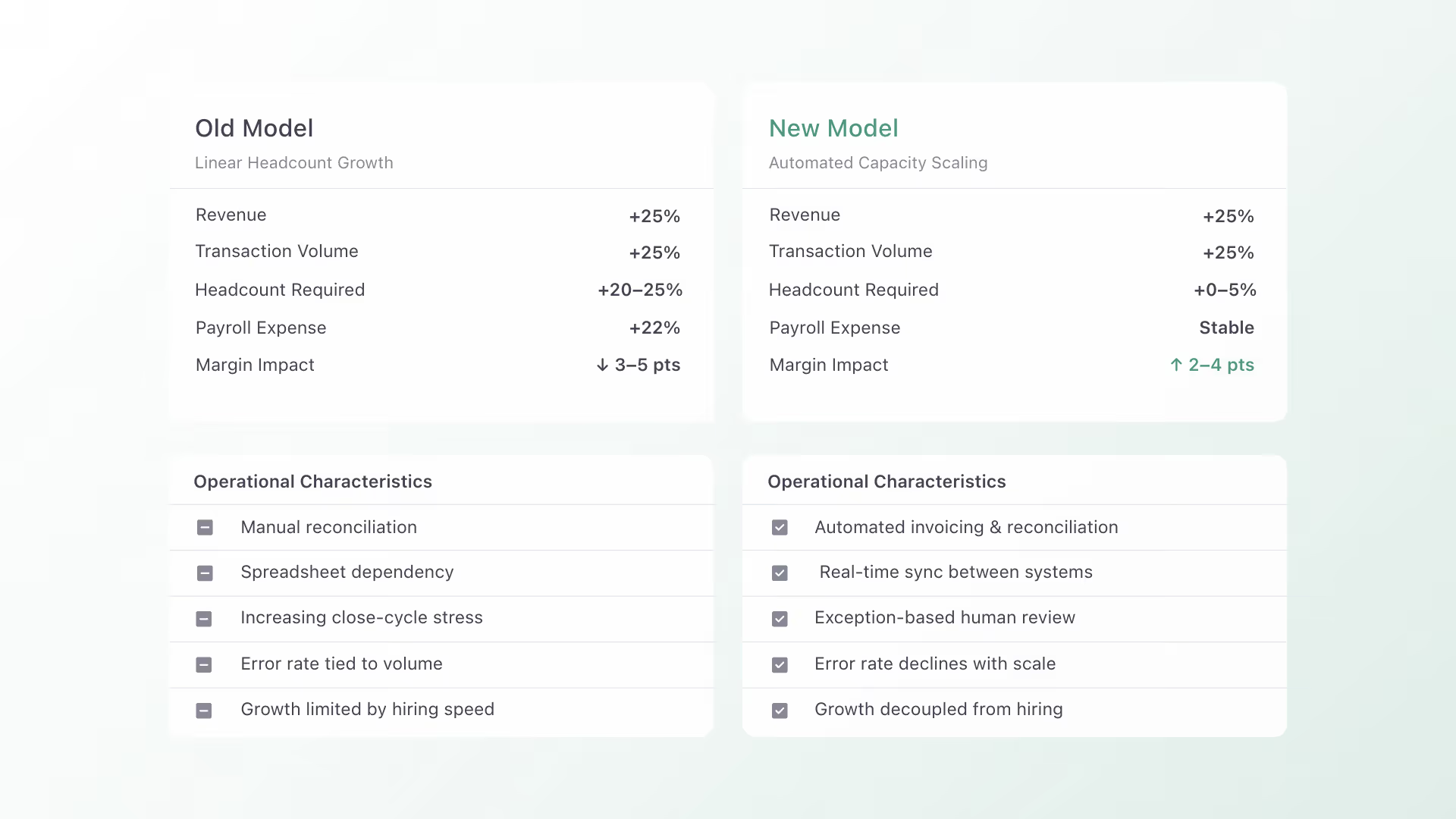
The old model was linear:
More revenue → More transactions → More hires → Higher costs
The new model is leverage-driven:
More revenue → More transactions → Automated workflows → Stable cost base
Instead of hiring simply to keep up with volume, forward-thinking firms are deploying digital infrastructure to absorb it. This shift directly stabilizes margins by decoupling revenue growth from payroll growth.
When repetitive, rules-based work is automated, the role of the human team changes in a meaningful way. Automation takes care of the predictable, the routine transactions, the standard workflows, the processes that follow the same logic every time. It executes them consistently, quickly, and without fatigue.
That frees people to focus where they are most valuable. Humans step in when judgment is required, when something falls outside the norm, or when a client needs clarity and reassurance. They spend more time communicating, advising, solving problems, shaping strategy, and driving growth initiatives.
In other words, they handle the nuanced and relational work that software cannot replicate.
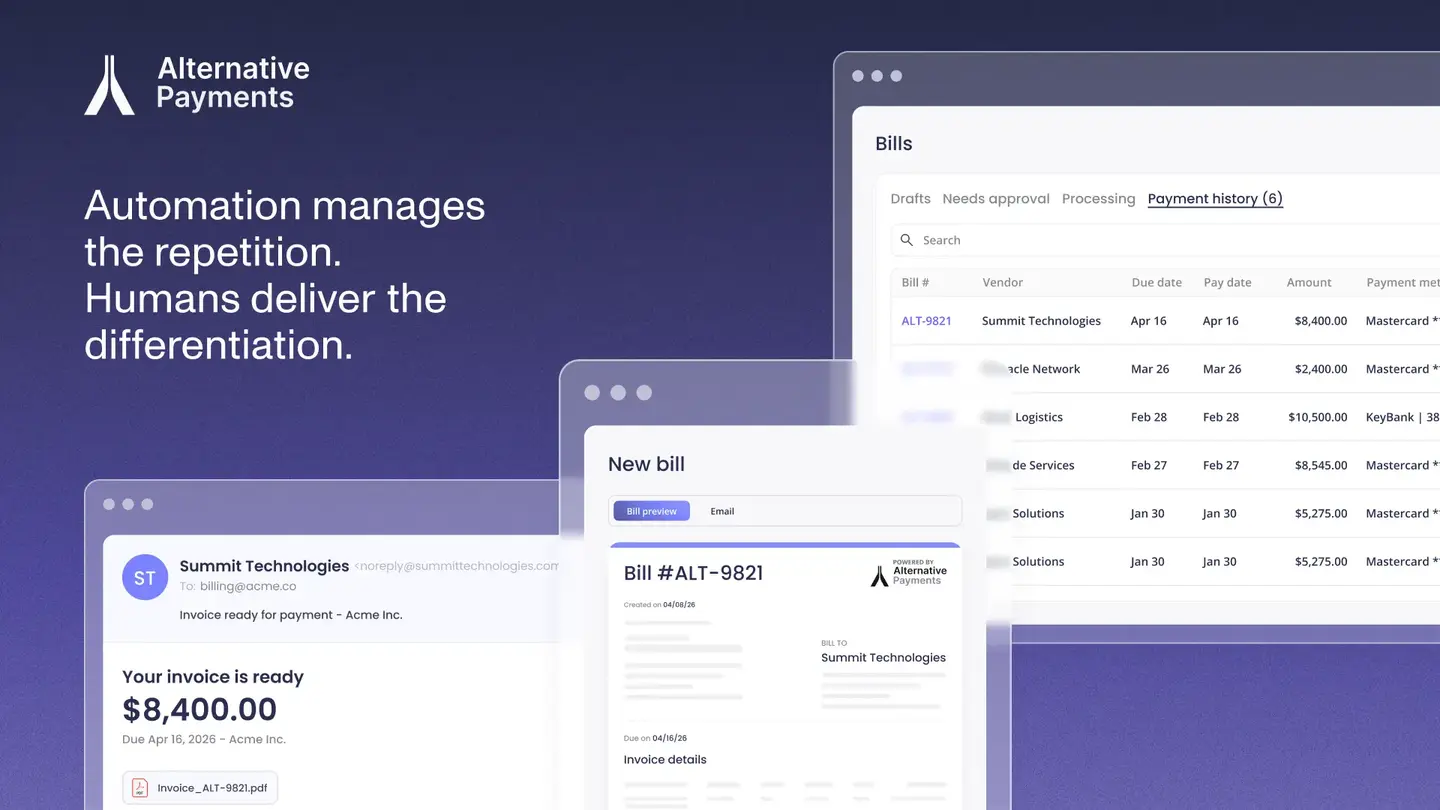
Automation manages the repetition.
Humans deliver the differentiation.
The economic impact is measurable. It is estimated that automation technologies could increase global productivity growth by 0.8 to 1.4 percent annually.
Productivity growth directly impacts margins, valuation, and scalability.
Where Accounting Workflow Automation Delivers Immediate Impact
Nowhere is manual strain more visible than in accounts receivable and payment workflows.
This is where the pressure quietly compounds. Every invoice must be generated, sent, tracked, and recorded. Every payment must be matched. Every discrepancy must be investigated. Every overdue balance requires follow-up. And every reporting cycle depends on the accuracy of that entire chain.
When these steps are handled manually, friction builds quickly.
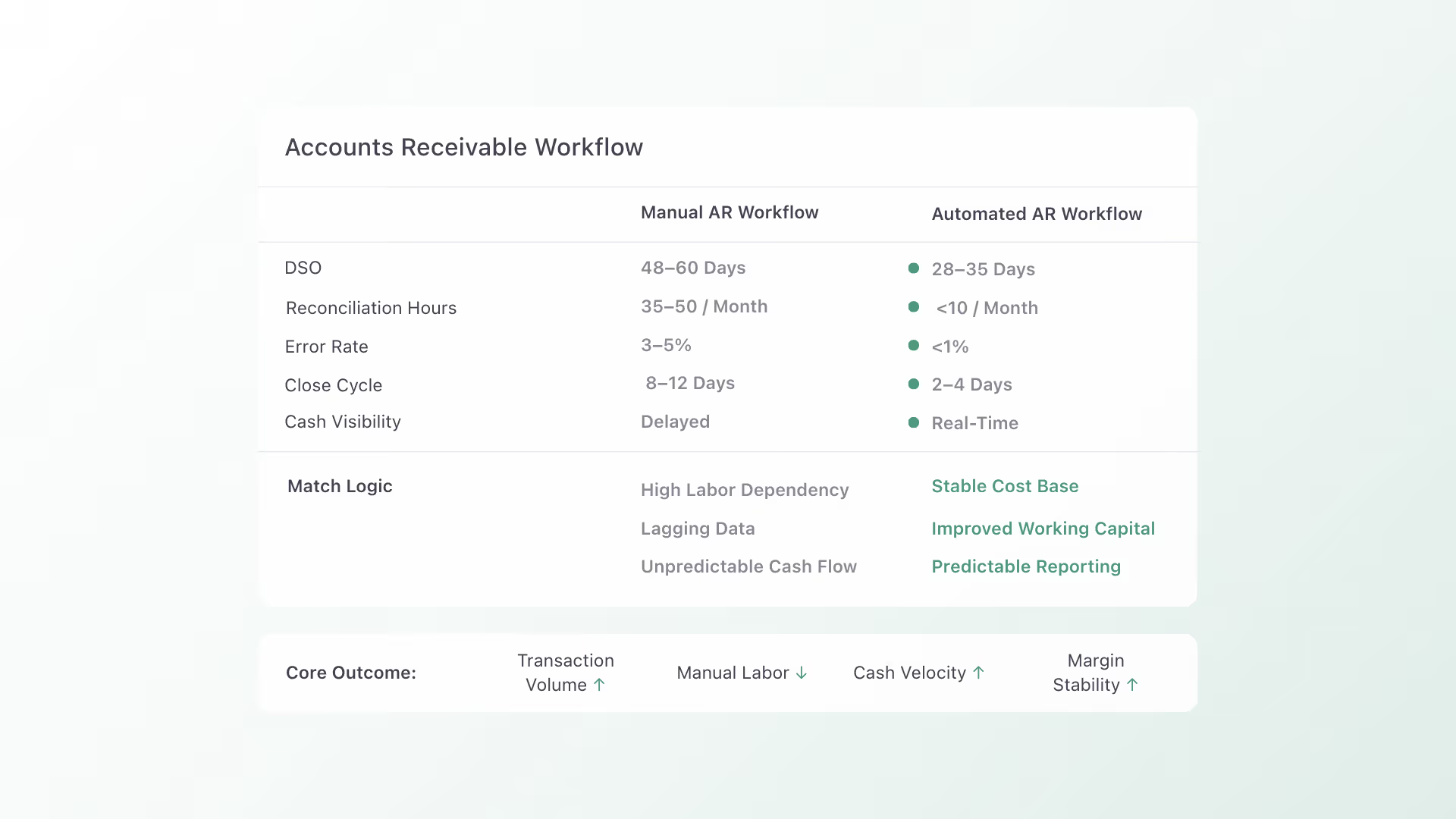
Manual invoicing slows billing cycles. Manual follow-ups create inconsistency in collections. Manual reconciliation introduces errors and delays month-end close. Manual reporting means leadership is often making decisions based on lagging or incomplete data.
Accounts receivable becomes not just an administrative function, but a bottleneck.
This is precisely where digital employees create immediate impact. By automating invoicing, payment tracking, reconciliation, and collections workflows, firms remove friction from one of the most transaction-heavy areas of the business. The result is faster cash flow, fewer errors, cleaner data, and a finance team that can focus on analysis instead of administration.
How Smart Payment Infrastructure Removes AR Bottlenecks
Alternative Payments is a practical example of how modern platforms act as digital employees inside the accounting workflow.
Its platform centralizes B2B payments, invoicing, collections, and reconciliation into one system built to reduce manual effort and accelerate cash flow. Through direct integrations, payments are recorded in real time and reconciled automatically, significantly reducing manual data entry, journal posting, and errors.
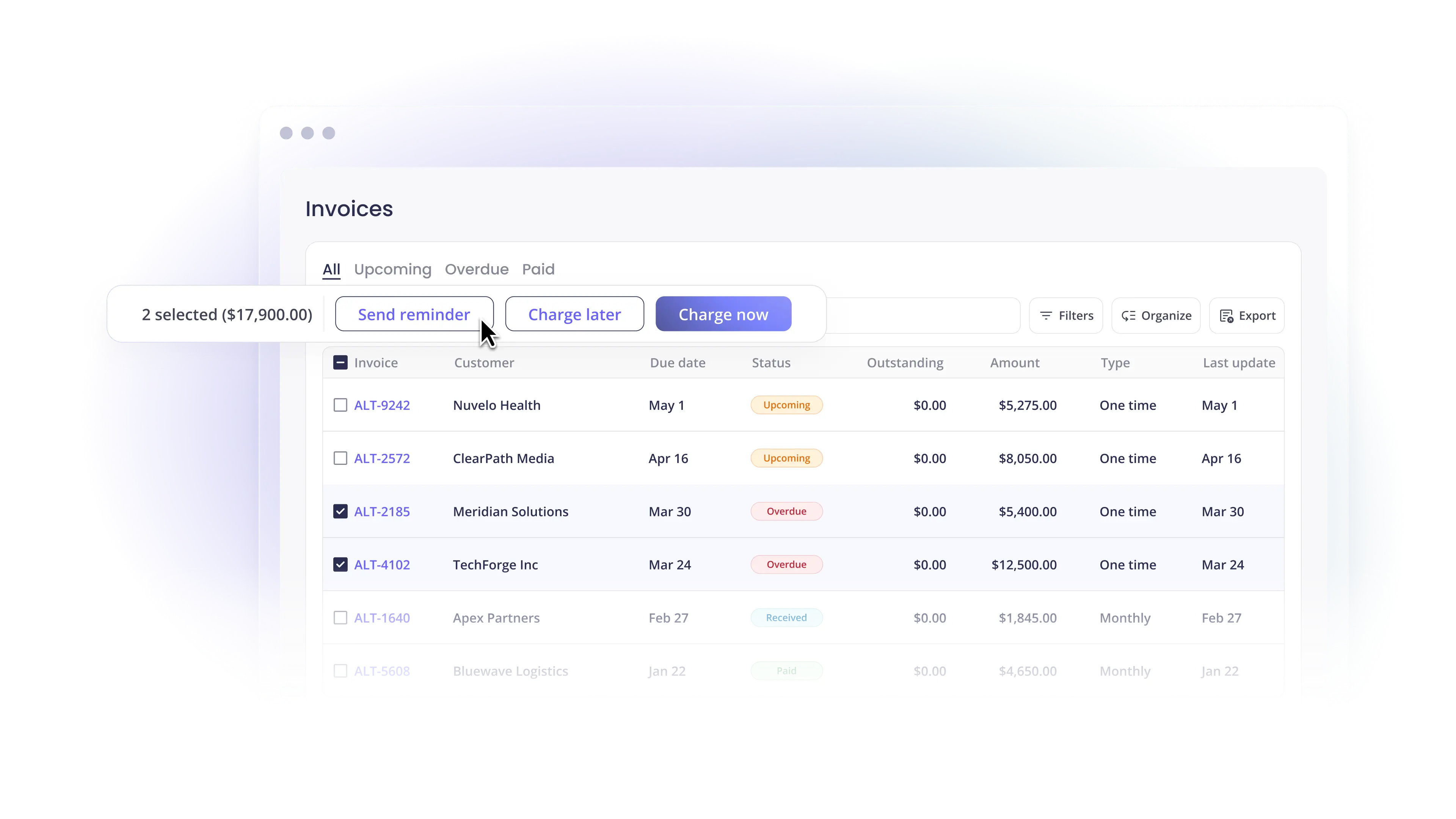
The company’s Collections Assist tool further automates accounts receivable follow-ups, replacing manual chasing with consistent, system-driven outreach so staff only handle exceptions.
Businesses using modern B2B payment automation platforms can significantly reduce time-to-pay cycles and improve working capital performance
Improved DSO does not come from working harder. It comes from redesigning the workflow.
This is digital workforce automation applied to finance.
The Cultural Shift: From Clerical to Cognitive Work
When manual data entry declines, something powerful happens inside an organization.
Teams stop spending their days correcting avoidable mistakes and start analyzing trends. They communicate more proactively with clients. They step into higher-value advisory work instead of getting buried in transaction processing.
Human-machine collaboration improves job satisfaction when routine tasks are automated and professionals can focus on judgment, insight, and problem-solving.
When workflows are automated, financial data becomes more reliable. Cash flow becomes more predictable. Errors decline. Leadership gains clearer visibility, which leads to faster and more confident decision-making.
Operational calm is underrated. But it signals maturity. It demonstrates scalability. It reduces operational risk.
The firms that eliminate manual entry are not simply cutting costs in the name of efficiency. They are elevating their workforce and building infrastructure that allows them to scale without proportionally increasing headcount.
In competitive markets, that becomes a structural advantage.
The End of Manual Data Entry Is a Leadership Decision
Manual data entry isn’t tradition. It’s technical debt.
The firms that thrive in the next decade will not be those that hire the fastest to handle repetitive work.
They will be the ones that:
- Deploy digital employees
- Automate predictable workflows
- Reallocate human talent toward growth
The end of manual data entry is not about replacing people.
It’s about designing a smarter organization.
If you want to explore how accounting workflow automation and modern payment automation can function as digital employees inside your organization, click here to learn more.
Simplify your customer payments, unlock instant cash flow
Keep reading


Can AI financial analysis explain why your margins changed?

Autotask QuickBooks integration: choosing a billing and payment operating model