•
IT Services
•
Mid-market
•
Reduce DSO
December 30, 2025
The 5 Critical Financial Metrics Every Owner Must Monitor In MSP Accounting

MSP Accounting has evolved beyond basic billing.
What once focused on sending invoices and collecting payments now plays a central role in how leadership evaluates performance and plans growth.
This shift becomes clear when you look at how financial metrics show up in daily decisions:
- Financial metrics now influence staffing plans, service expansion, and investment timing, not just month-end close.
- Small inconsistencies, such as delayed payments or unclear reconciliation rules, compound quickly as recurring revenue scales. When those issues are not surfaced clearly, even minor billing failures can distort leadership’s perception of performance and slow decision-making.
- When metrics are consistent and trusted, leadership conversations move faster, and momentum builds.
The underlying change is simple but significant.
Financial data are no longer just backward-looking reports. They are real-time signals that guide strategic direction and determine how confidently the business can move forward.
Why Financial Metrics Matter More Than Ever For MSPs
Does your MSP Accounting tell you the truth about the health of your business, or just produce reports that look complete?
The numbers may appear fine until leadership needs to make a real decision. Growth, hiring, pricing, or investment conversations quickly expose whether financial metrics are reliable or simply familiar. What follows is not about accounting theory. It is about understanding which metrics actually matter, and why their accuracy shapes confidence across the entire organization.
The Cost Of Operating Without Financial Clarity
When billing data is disconnected, leadership meetings turn into debates over whose numbers are correct. Instead of focusing on strategy, teams spend time reconciling reports, explaining discrepancies, or postponing decisions until clarity improves.
This friction shows up emotionally before it ever shows up on a balance sheet. Confidence erodes. Stress increases. Finance teams feel pressure to defend numbers rather than explain insights. Operations leaders hesitate to commit resources when the data feels uncertain.
A common scenario plays out quietly. An MSP leadership team discusses hiring a new engineer or investing in a security offering, but pauses because billing data still needs reconciliation. No one is panicking, but the decision is delayed while numbers are double-checked. That hesitation has a cost, even if it never appears as a line item.
Clarity is not about perfection. It is about trust. Without trust in the numbers, even strong performance feels fragile.
Metric One: Days Sales Outstanding (DSO)
Days Sales Outstanding measures how long it takes to collect payment after an invoice is issued. On paper, it looks straightforward. In practice, it is one of the most revealing indicators of cash flow health in MSP accounting.
A rising DSO does not always mean clients are unhappy or unwilling to pay. More often, it points to friction in visibility, approval workflows, or payment methods. In recurring revenue environments, even small delays repeated across dozens or hundreds of clients can create material cash flow drag.
DSO becomes powerful when it is accurate and timely. If the number is delayed, manually adjusted, or inconsistently calculated, leadership loses its value as a signal. Automation plays a critical role here by ensuring invoices, payments, and posting events are reflected consistently without lag.
Metric Two: Accounts Receivable Aging
Total accounts receivable tells you how much money is outstanding. AR aging tells you how risky that money is.
In MSP Accounting, AR aging reveals patterns that raw totals hide. A healthy AR balance can still mask growing exposure if invoices are quietly slipping into older aging buckets. The longer a balance sits unresolved, the harder the conversation becomes, even when client relationships remain strong.
Many MSPs rely on intuition here. They assume long-standing clients will pay eventually. While that is often true, AR aging is not about suspicion. It is about visibility. Knowing where balances sit allows teams to address issues early, before tone shifts or trust erodes.
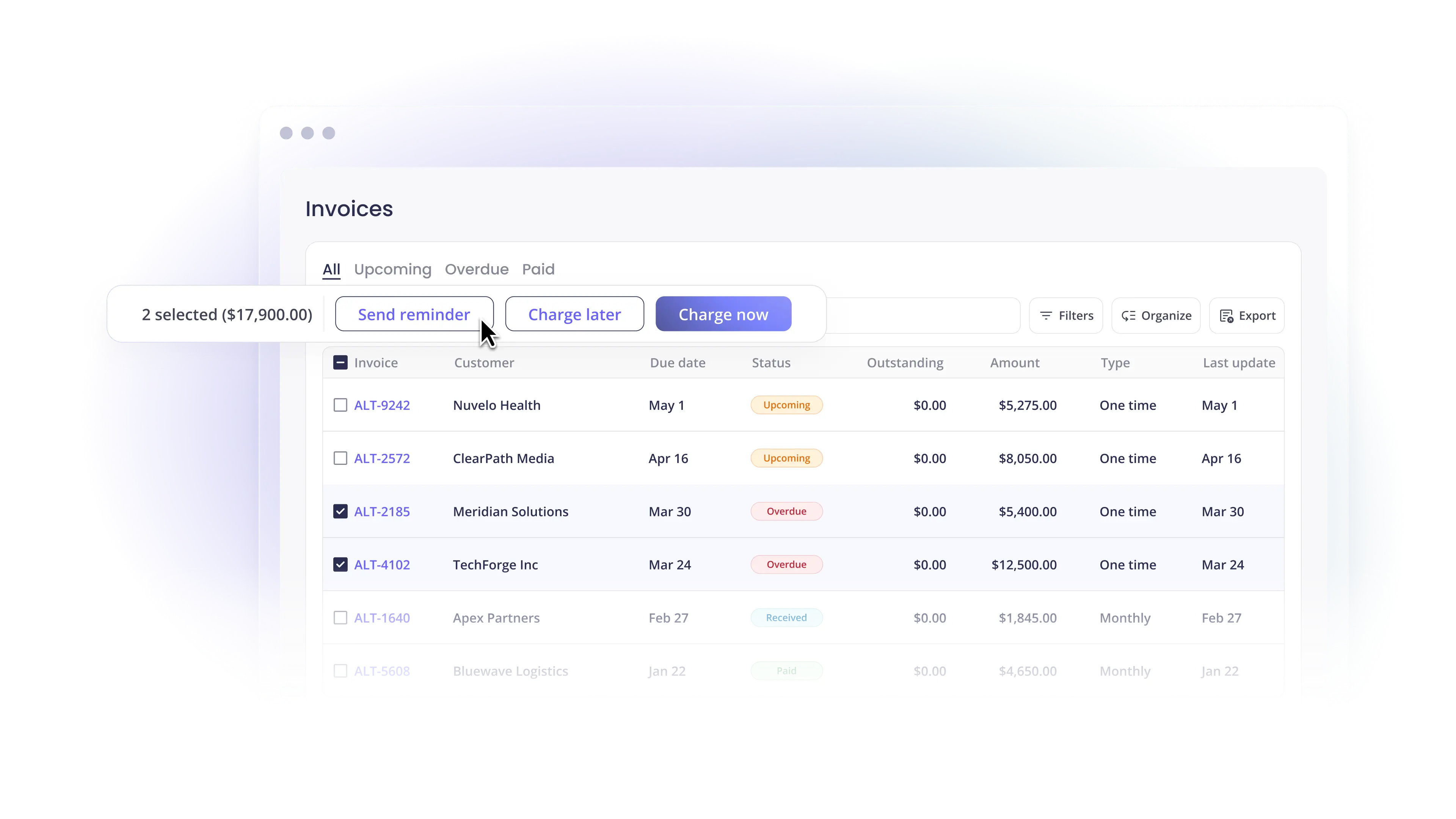
Automation ensures aging data stays current without manual intervention. When invoices, reminders, and payments are tracked consistently, AR aging becomes a planning tool rather than a reactive report.
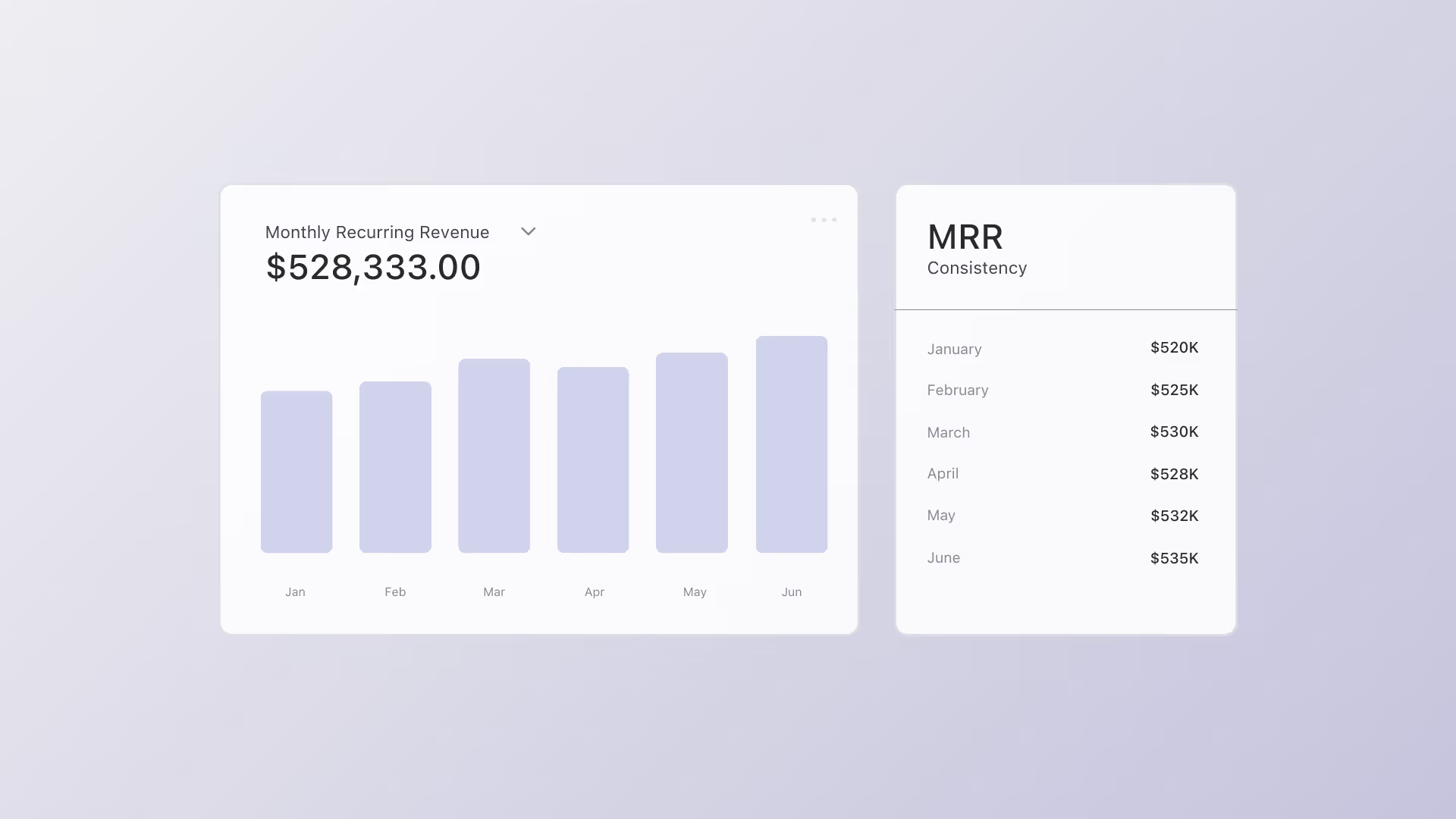
Metric Three: Monthly Recurring Revenue (MRR)
MRR is often treated as a growth metric, but its real power lies in predictability. Accurate MRR allows leadership to forecast, invest, and plan with confidence.
The challenge is that not all MRR is equally reliable. Booked revenue that fails to collect on time, or at all, creates a false sense of stability. When payment failures or delays are not immediately visible, MRR reports can drift away from reality.
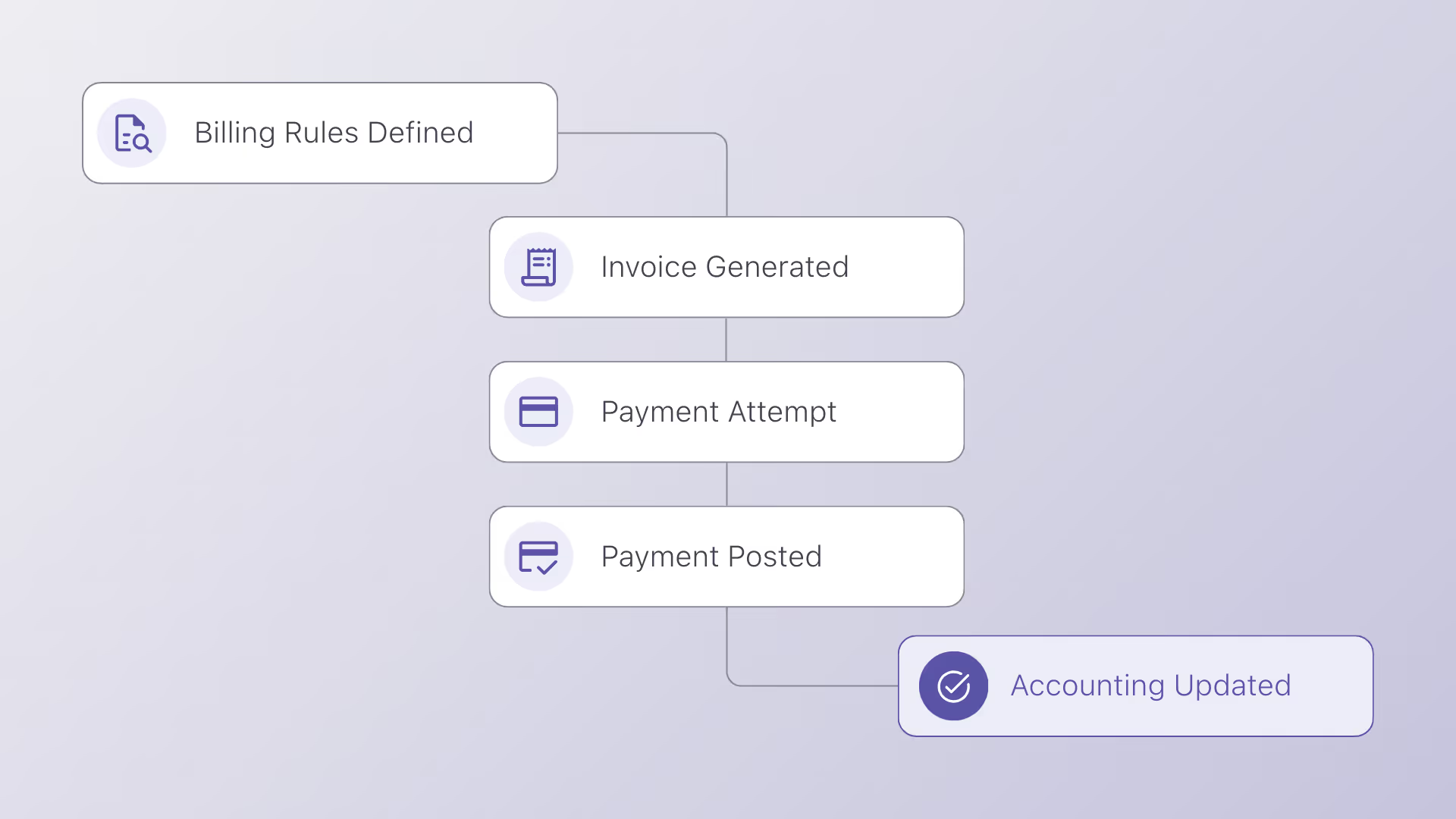
Clean Monthly Recurring Revenue depends on tight alignment between billing events and actual payment outcomes. Automation helps close that gap by ensuring recurring charges, retries, and posting events stay synchronized. When MRR reflects what is actually collectible, leadership can trust it as a foundation for future decisions.
Metric Four: Revenue Forecast Accuracy
Revenue forecasts are only as strong as the data feeding them. In MSP Accounting, forecasting breaks down when billing systems lag behind reality or require manual correction before numbers can be trusted.
When historical billing data is clean and consistently updated, forecasts stop being theoretical. Leadership can see patterns in renewals, expansions, and seasonal fluctuations without questioning whether the underlying numbers are current. That confidence changes how far ahead teams are willing to plan.
Forecast accuracy improves dramatically when billing and payments move in lockstep. Automation ensures that paid, pending, and failed transactions are reflected consistently, which means forecasts are based on collected reality, not assumptions. This is where finance shifts from reporting what already happened to helping shape what happens next.
Metric Five: Billing Exception Rate
One of the most overlooked indicators in MSP accounting is the billing exception rate. This includes failed payments, manual adjustments, credit reissues, and invoices that require follow-up outside the normal process.
A high exception rate rarely feels catastrophic. It shows up as small interruptions, extra emails, or quiet reconciliation work. Over time, those interruptions add operational drag and create hidden risk. More importantly, they distort every other metric leadership relies on.
Tracking billing exceptions forces clarity. It highlights where systems are brittle and where human intervention is compensating for process gaps. Automation reduces exceptions by design, not by effort, which stabilizes the entire financial picture.
The Emotional Impact Of Trusted Financial Data
There is an emotional side to MSP accounting that rarely gets discussed. When numbers are reliable, leadership feels calm. When they are not, even good performance feels uncertain.
In working with MSP finance and operations teams, we consistently see the same pattern. Unclear data increases stress, slows conversations, and creates hesitation around decisions that should feel routine. Clear data removes friction and restores confidence across departments.
Consistency matters here. Automation removes variability from billing and payments so every client is treated fairly, and every report reflects the same rules. The benefit is not just efficiency. It is emotional distance. Teams stop playing defense and start operating with clarity.
Strategic Decision Making Depends On Clean Metrics
Once emotional friction is reduced, financial metrics can do their real job. They enable strategic decisions.
When MSP accounting data is accurate, leadership can evaluate pricing changes, service mix, and expansion opportunities without second-guessing the foundation. Hiring plans feel grounded. Investments feel intentional. Risk becomes measurable instead of speculative.
A common example is growth pacing. Without trusted metrics, leadership may delay hiring or capital investments while numbers are reconciled or explained. With clean, automated data, those same decisions move forward with confidence because the underlying story is clear and shared.
This is where metrics stop being operational artifacts and become strategic tools.
Financial Metrics Create Future Optionality
The outcome of reliable MSP Accounting is optionality. Clean metrics give businesses choices.
When data is trusted, MSPs can pursue partnerships, financing, or acquisition opportunities from a position of strength. Valuations are easier to defend. Due diligence becomes faster. Conversations stay focused on opportunity rather than cleanup.
Optionality also matters internally. Teams can experiment, refine offerings, and adjust strategy without fear that the numbers will lag behind reality. Automation makes this possible by ensuring that growth does not introduce complexity faster than systems can handle.
Strong metrics do not just describe the business. They expand what the business can do next.
Next Steps: Strengthening Your MSP Accounting Foundation
These steps are designed to help assess whether current metrics truly support confident decision-making.
Consider starting with the following:
- Review which financial metrics leadership actually trusts during planning discussions.
- Identify where manual reconciliation or explanation is still required before decisions are made.
- Evaluate how billing automation could reduce exceptions and improve forecast accuracy.
- Align finance and operations around a shared definition of clean, reliable data.
The goal is not to add complexity or chase perfection. It is to ensure that MSP accounting metrics tell a clear, consistent story that leadership can act on with confidence. When metrics are clear and consistent, leadership stops questioning the numbers and starts using them.
Simplify your customer payments, unlock instant cash flow
Keep reading


Can AI financial analysis explain why your margins changed?

Autotask QuickBooks integration: choosing a billing and payment operating model