•
IT Services
•
Automate Accounts Receivable
December 11, 2025
The 3 Biggest Tax Headaches Your MSP Accounting Software Should Be Solving Automatically
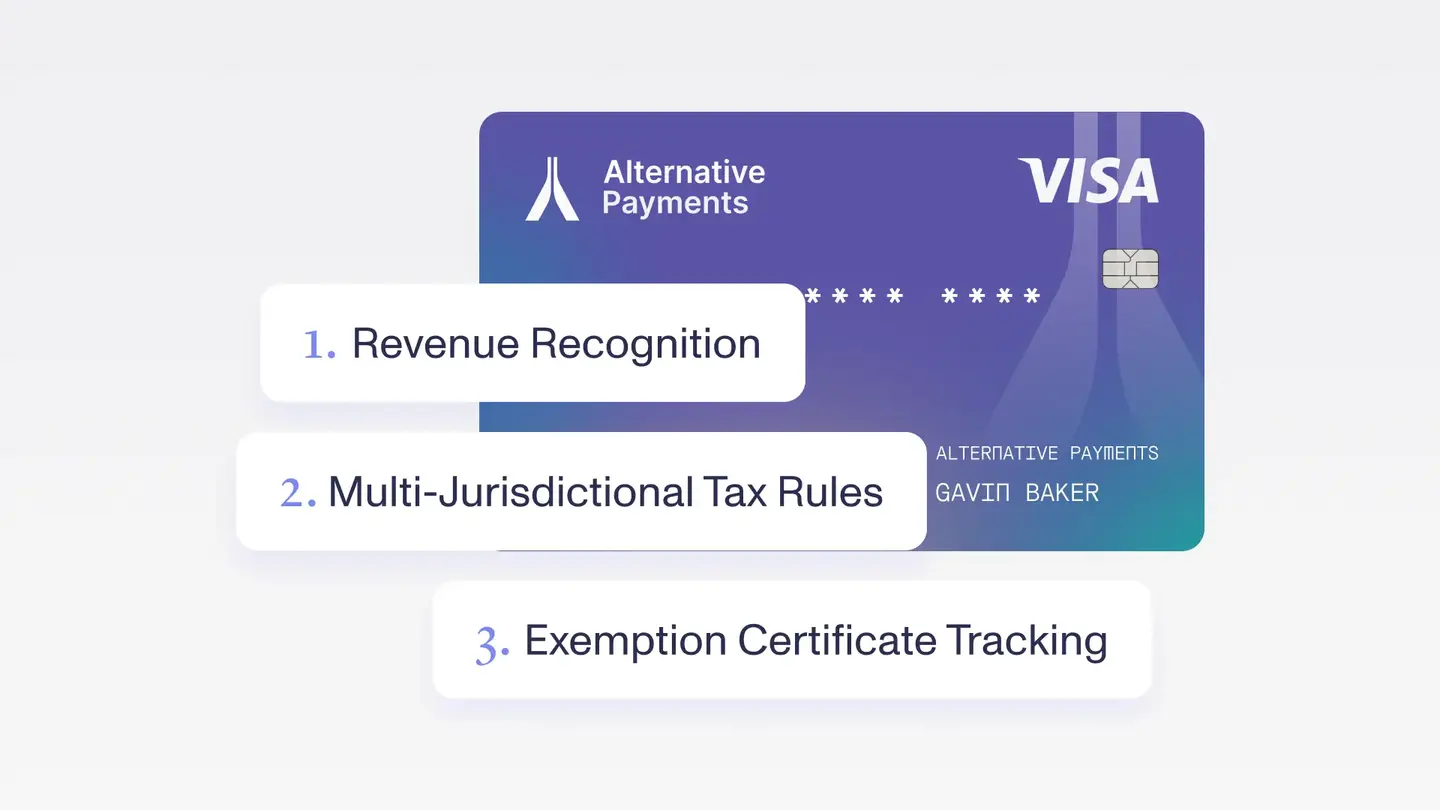
Billing shouldn’t create tax surprises, yet MSPs often find themselves caught off guard. Even when you follow the rules, tax obligations shift based on where clients are located, how services are packaged, and when revenue is recognized, making it easy for unexpected liabilities to appear. A recent Avalara report notes that tax complexity has increased sharply for service-based businesses as states continue adjusting digital service tax rules, and this variability is a major source of confusion for MSPs.
If you’ve ever questioned whether you used the right tax rate, handled an exemption correctly, or recognized revenue in the proper month, you’re not alone—and the issue isn’t operator error. It’s the limitations of manual workflows and legacy accounting tools. Automation reduces compliance risk, streamlines revenue recognition, and removes the guesswork that creates costly surprises. This guide breaks down where the biggest headaches come from and how automated MSP accounting eliminates them.
Tax Headache #1: Revenue Recognition For Recurring Services
Recurring revenue is the heartbeat of an MSP, but it’s also one of the biggest sources of accounting headaches. The core issue is simple: MSPs often bill upfront for long-term contracts, but under ASC 606, revenue cannot be recognized all at once. It must be recognized when the service is delivered, not when the invoice is sent. That means a 12-month contract billed today still has to be recognized month by month.
This is where the confusion starts. Revenue timing becomes complex because billing and delivery rarely occur on the same timeline. Deloitte highlights this challenge in their research on recurring-service businesses, noting that many organizations misalign revenue recognition when relying on manual processes, making compliance difficult and errors more likely. Their perspective is relevant because MSPs operate in the same recurring-revenue model that Deloitte identifies as high-risk for timing mistakes.
Spreadsheets feel manageable at first, but they create room for over-recognition, under-recognition, version control errors, and audit inconsistencies. Small misalignments compound quickly, and during audits, they become glaring problems.
Automation eliminates those failure points. By aligning billing, delivery, and recognition rules inside a single system, automated MSP Accounting ensures revenue is deferred accurately every month without manual intervention. The result is cleaner books, fewer audit risks, and a workflow that scales as your recurring revenue grows.

Why Manual Revenue Recognition Fails MSPs
Manual revenue recognition is risky because it forces you or your team to track timing, contract terms, and deferral schedules by hand. Even if you are careful, humans simply cannot manage large volumes of recurring revenue with perfect precision every month.
The Journal of Accountancy warns that fragmented or inconsistent accounting practices create timing discrepancies and introduce audit risk, especially when key processes depend on disconnected spreadsheets and manual workflows. Their recent report underscores how gaps in recognition and documentation can lead to financial statements that fail to fully reflect the services an organization has delivered.
For MSPs, errors in revenue recognition are not just accounting issues, they affect your business story. They distort how profitable you appear, they confuse lenders or investors, and they make forecasting harder. Automation prevents these problems by spreading revenue recognition correctly across your service period without you having to touch anything.
Tax Headache #2: Multi-Jurisdictional Tax Rules
Once revenue recognition is handled correctly, the next major tax challenge MSPs face is navigating multi-state tax rules.
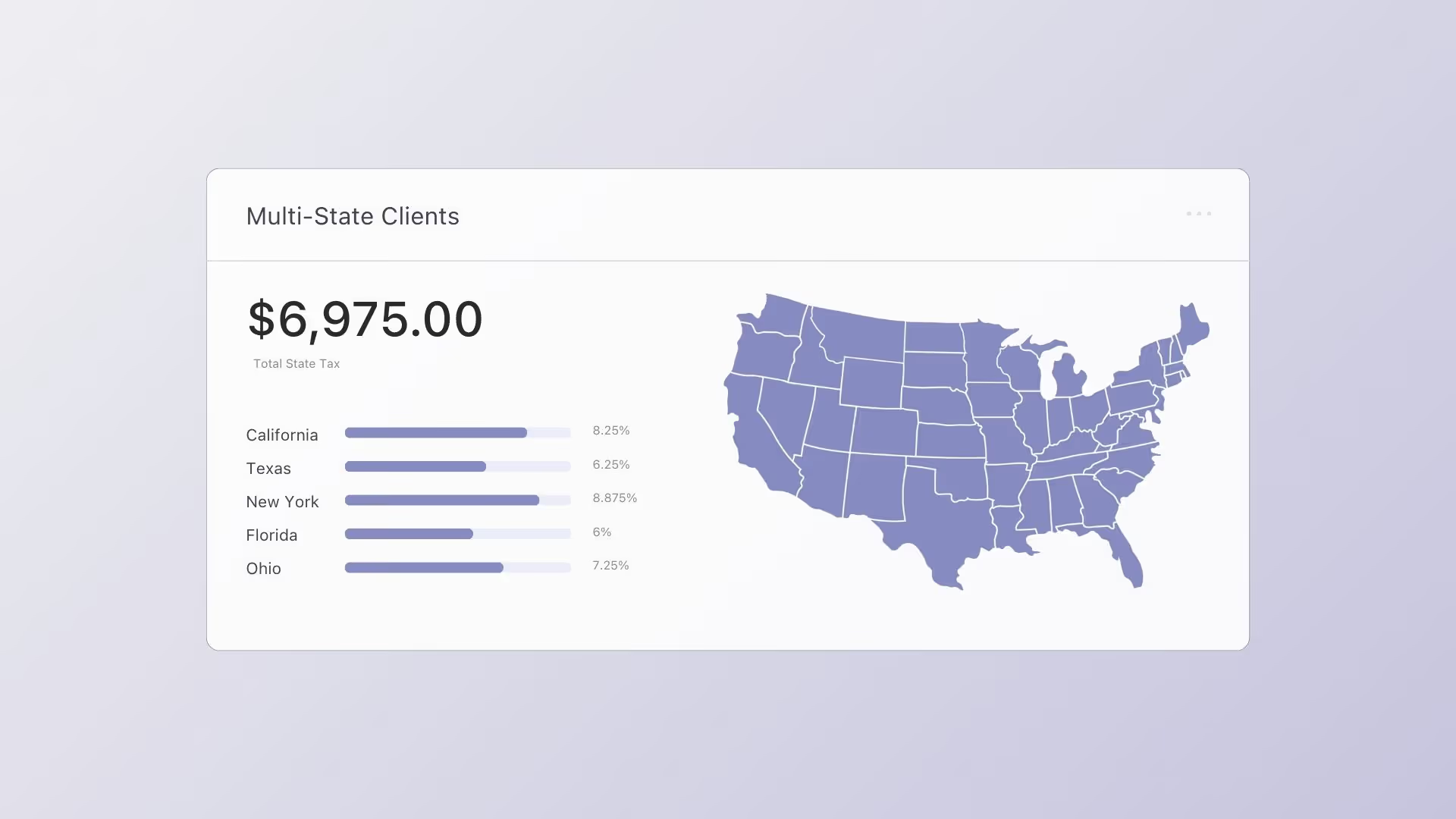
Tax compliance quickly becomes one of the biggest hidden headaches for MSPs because invoices are not taxed the same way across all clients. Each state has its own rules for digital services, IT labor, and bundled offerings, which means a service fully taxable in one state may be partially taxable or exempt in another.
The core problem is that these rules change frequently, and once an MSP operates across multiple states or crosses an economic nexus threshold, manual tax tracking becomes nearly impossible to manage accurately.
Avalara’s digital services guidance highlights why this matters: recurring-service businesses face growing compliance risk as state-by-state requirements change year over year, making manual tracking unreliable. Their insight is relevant to MSPs because the tax rules affecting digital services mirror the same conditions MSPs operate in: high frequency, varying jurisdictions, and recurring billing.
Once you begin operating across multiple states or cross economic thresholds that create a nexus, your team must maintain updated rates, reclassify services correctly, and store exemption documentation with absolute accuracy. Spreadsheets and manual lookups make it easy to apply the wrong tax rate, miss a rule change, or misclassify a service, all of which leave compliance gaps that become costly during audits.
Automation solves the problem by removing the guesswork. A modern tax engine applies the correct rules for every state automatically, updates rates as regulations change, and ties tax calculation directly to each invoice. Instead of chasing moving targets, MSPs get consistent, compliant tax treatment at scale without the risk that manual processes inevitably introduce.
Why MSPs Struggle To Manage Tax At Scale
Once an MSP grows beyond a handful of local clients, tax complexity increases without warning. It starts small, usually with one out-of-state contract or a single client opening a second office. But behind that simple change sits a maze of shifting tax rules that vary by region, by service type, and sometimes even by delivery method.
Many MSPs do not realize they have created a tax nexus in a new state because the threshold for economic presence is often lower than they expect. As you expand, the number of tax codes you need to apply increases, along with the potential penalties for getting them wrong. One manual override quickly turns into dozens of inconsistent tax applications as your client base expands.
Thomson Reuters reinforces this challenge in its analysis, noting that 44 percent of businesses struggle with multi-state tax compliance because regulatory changes outpace the internal processes meant to manage them. Their research makes the same point seen across under-resourced tax teams: manual methods simply do not scale once an organization operates across multiple jurisdictions. For a deeper look at why reactive workflows create risk as complexity grows, check out the multi-state compliance overview from Thomson Reuters.
This is why MSPs often feel blindsided. Growth should make things easier, but in tax compliance, it usually does the opposite. Without automation, you are always guessing whether you applied the correct tax, which is not a sustainable way to operate.
Tax Headache #3: Exemptions And Client-Specific Tax Rules
Even after managing multi-jurisdiction complexity, MSPs encounter a third tax challenge: client-specific exemptions.
Managing tax exemptions becomes a major headache for MSPs because not every client is taxed the same way. Nonprofits, schools, resellers, and government agencies often qualify for partial or full exemptions, which means your MSP must track different certificates, expiration dates, and eligibility rules for each. The complexity grows quickly when you support a mix of client types, each with its own documentation requirements.
This challenge exists because exemption rules vary widely across jurisdictions, and every certificate must be valid, current, and tied to the correct transaction. Avalara’s guidance on exemption certificate management is especially relevant here: they note that expired, incorrect, or missing certificates are one of the most common triggers for tax assessments and penalties. Their analysis reinforces what MSPs already experience: manual methods make compliance fragile.
And that’s where manual processes fail. Most MSPs store certificates in shared folders or scattered email chains, hoping they can retrieve them during an audit. But if you can’t produce the correct documentation on demand, the liability falls on you, not the client. Back taxes, penalties, and strained relationships are the predictable outcome of a system held together by ad hoc storage.
Manual tracking breaks down because exemption certificates must be valid, up to date, correctly classified, and tied to the proper transaction. Shared folders, email threads, and ad-hoc storage make it almost guaranteed that something gets lost, mismatched, or applied incorrectly.
Automation solves this by keeping exemption data complete, organized, and always up to date. A structured ECM system validates certificates, tracks expirations, stores documents centrally, and applies them accurately to each invoice. Instead of chasing paperwork across inboxes and folders, MSPs get consistent, audit-ready compliance that scales with their growth.
How Automation Eliminates Tax Mistakes Before They Happen
After understanding the three main tax headaches MSPs face, the solution becomes clear: automation must handle these rules before they become problems.
Modern MSP accounting tools are built to eliminate these tax challenges long before they turn into problems. Instead of manually entering tax rates, your system pulls accurate data from updated tax tables. Instead of guessing whether a client is exempt, the software stores certificates, applies them automatically, and alerts you when they are expiring. And instead of reapplying tax rules every month, the system assigns the correct codes based on jurisdiction and service type with no extra effort.
Research from Salesforce reinforces this shift, showing that automation strengthens compliance by improving data accuracy, eliminating human error, and ensuring rules are applied consistently across every transaction. Their findings highlight why automated systems outperform manual workflows when organizations rely on precise, repeatable financial processes such as tax calculation and revenue recognition. When tax rules are applied automatically, your billing becomes more accurate, your audits become easier, and your team spends less time fixing issues. Automation doesn’t just prevent mistakes, it removes the uncertainty that comes from manually managing tax rules.
When tax rules are applied automatically, your billing becomes more accurate, your audits become easier, and your team spends less time fixing issues. Automation doesn’t just prevent mistakes, it removes the uncertainty that comes from manually managing tax rules.
How To Evaluate Whether Your MSP Is Ready for Automation
Determining readiness for billing, tax, or accounting automation often becomes clear once you examine how much of your workflow still depends on manual effort. If you’re relying on spreadsheets to track revenue deferrals, applying tax codes by hand, or emailing clients for exemption certificates, it’s a sign your system is doing too little—and your team is doing too much.
For MSPs, the indicators are even easier to recognize. When routine billing tasks become stressful or error-prone, automation moves from a convenience to a necessity.
Common Signs Your MSP Is Ready for Automation
- Revenue reports never tie out cleanly
- Billing rules require manual verification
- Tax season becomes a scramble
- Service delivery and finance are disconnected
- Your team spends too much time fixing mistakes
Automation in this context isn’t about convenience, it’s about protecting accuracy, reducing operational burden, and ensuring clients experience a reliable, consistent billing process.
Why Modern MSP Accounting Software Must Solve These Challenges
Tax complexity is one of the easiest problems to underestimate because it hides behind everyday billing tasks. You send an invoice, you renew a contract, you support a client in another state, and suddenly, your tax responsibilities shift. When you combine recurring revenue, multi-jurisdiction rules, and exemption tracking, the burden can overwhelm even well-organized MSPs.
Modern accounting platforms eliminate these risks by handling tax rules automatically, recognizing revenue correctly, and keeping compliance airtight. When the system does the hard work for you, you get predictable financials, cleaner audits, and far fewer surprises.
Ready to Eliminate Tax Headaches? Here’s Where to Start
What To Do Next
To identify where tax automation will have the biggest impact in your MSP, start by reviewing the areas where manual work creates the most friction. Think about where you override tax settings, where you chase down certificates, or where you fix revenue timing by hand. Those are the cracks that automation fills immediately. Once you see how much time and accuracy you gain, upgrading your MSP accounting workflow becomes an easy decision.
Simplify your customer payments, unlock instant cash flow
Keep reading


Can AI financial analysis explain why your margins changed?

Autotask QuickBooks integration: choosing a billing and payment operating model