•
IT Services
•
Automate Accounts Receivable
•
Set Up Subscription Billing
January 30, 2026
The 100% Touchless Payment Automation Goal
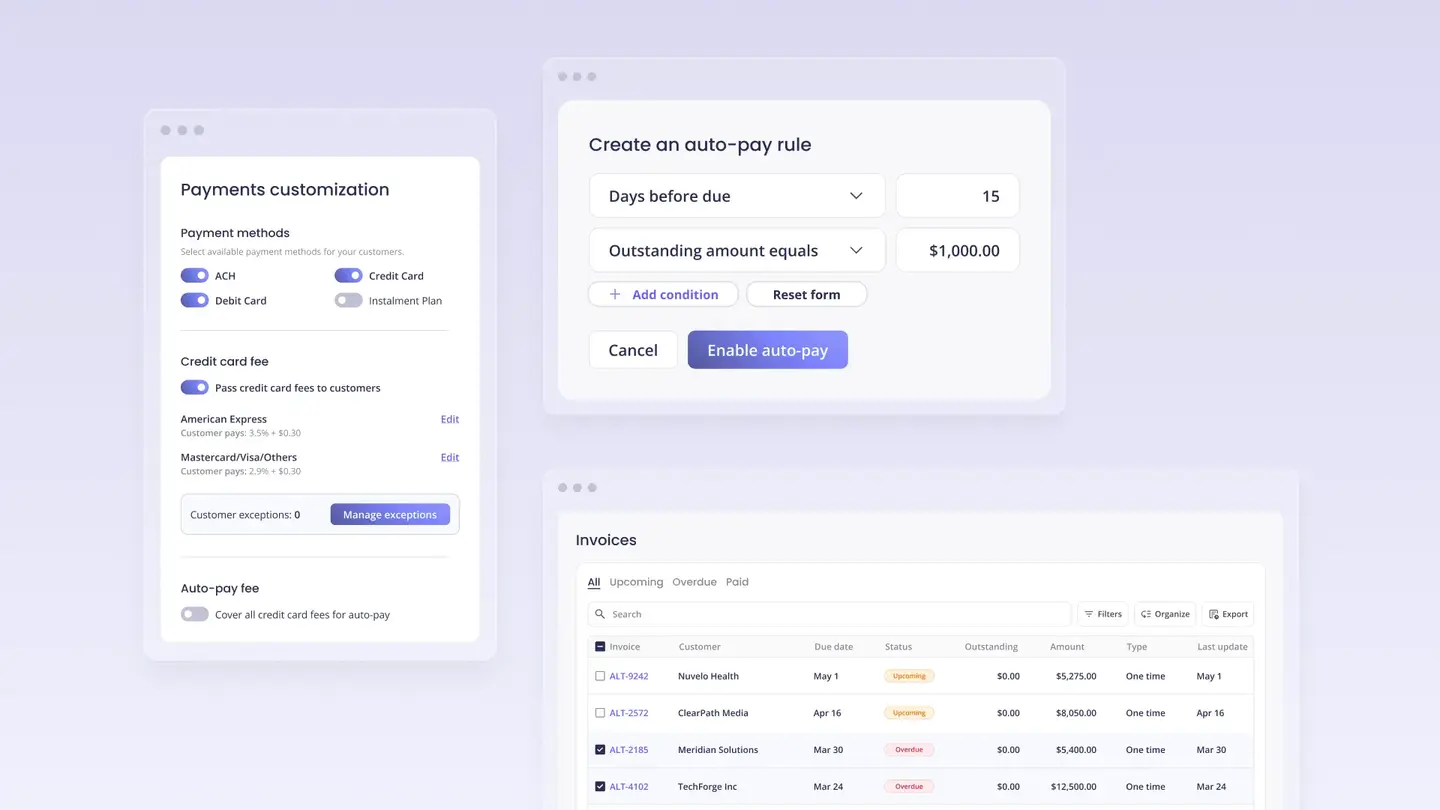
The most dangerous aspect of manual financial work is that it rarely presents itself as a single, large problem, but rather as a series of “micro-distractions” that erode executive focus. Every time a CFO has to pause their strategic planning to sign a batch of checks or verify a vendor’s bank details, they are paying a cognitive switching cost that far exceeds the time spent on the task itself. These interruptions fragment the deep work required for high-stakes decision-making and talent development. We see this as an invisible thief that steals the firm’s most expensive resources for the lowest-value activities.
The Invisible Thief Of Executive Focus
How many hours of your professional life are currently being surrendered to the repetitive cycle of manual payment processing? For many firm owners and CFOs, the burden of reviewing invoices, authorizing transfers, and correcting entry errors has become an accepted “cost of doing business,” but this perspective ignores the massive opportunity cost of fragmented leadership focus. We believe that the ultimate goal of Payment Automation is not merely a technical upgrade, but a strategic reclamation of human capital. Aiming for a 100% touchless environment, leadership can stop acting as the “glue” holding disparate systems together and start functioning as the architects of firm growth.
Defining The 100% Touchless Standard
To achieve a meaningful return on your time, we must establish a rigorous definition of what “touchless” actually means in a professional services context. A process is only truly touchless when a transaction moves from the initial client commitment to the final ledger reconciliation without a single manual keystroke or human intervention. This requires a seamless integration where the PSA, the payment gateway, and the accounting software communicate in a closed loop. If your team still needs to “check the sync” or “upload a CSV” at any point, you have not reached the touchless standard; you have simply moved the manual work to a different platform.
Quantifying The Human ROI Of Reclaimed Hours
The business case for Payment Automation becomes undeniable when you move beyond software costs and calculate the literal dollar value of reclaimed leadership time. If an owner or CFO spends just five hours a week on payment-related oversight, that equates to over 250 hours a year, effectively six full weeks of executive capacity lost to administration.
When we quantify this “Human ROI,” we find that the investment in automation pays for itself almost instantly through the recovery of high-value labor.
Implementing a uniform structure allows us to visualize the impact of these reclaimed hours:
- Executive Capacity: The ability for leadership to reallocate 200+ hours annually toward mergers, acquisitions, or high-level client strategy.
- Administrative Leaness: Reducing the need to hire additional back-office staff even as the firm’s transaction volume doubles.
- Error Mitigation: Eliminating the “correction cycle” where staff spend time fixing mistakes created by previous manual entries.
- Focus Restoration: Protecting the “flow state” of key decision-makers by removing the need for daily, low-level financial approvals.
- Training Efficiency: Simplifying the onboarding process for new finance staff because the “system” manages the rules, not the individual.
The overall narrative here is clear: you are not just buying software; you are buying back the mental bandwidth of your most expensive employees. This shift allows the firm to scale its impact without scaling its stress.
Eliminating The “Decision Fatigue” Of Daily Approvals
Leadership is a finite resource, and every minor approval requested by the finance department consumes a portion of a CFO’s daily decision-making budget. This “decision fatigue” is a primary cause of executive burnout and can lead to lower-quality choices in other areas of the business, such as hiring or long-term budgeting. Automating the approval workflows based on pre-defined risk thresholds, we remove the constant “nagging” of the back office. This allows the system to handle the 95% of transactions that are routine, leaving leadership to focus only on the 5% of exceptions that truly require human judgment.
The Velocity Of Trust In Client Relationships
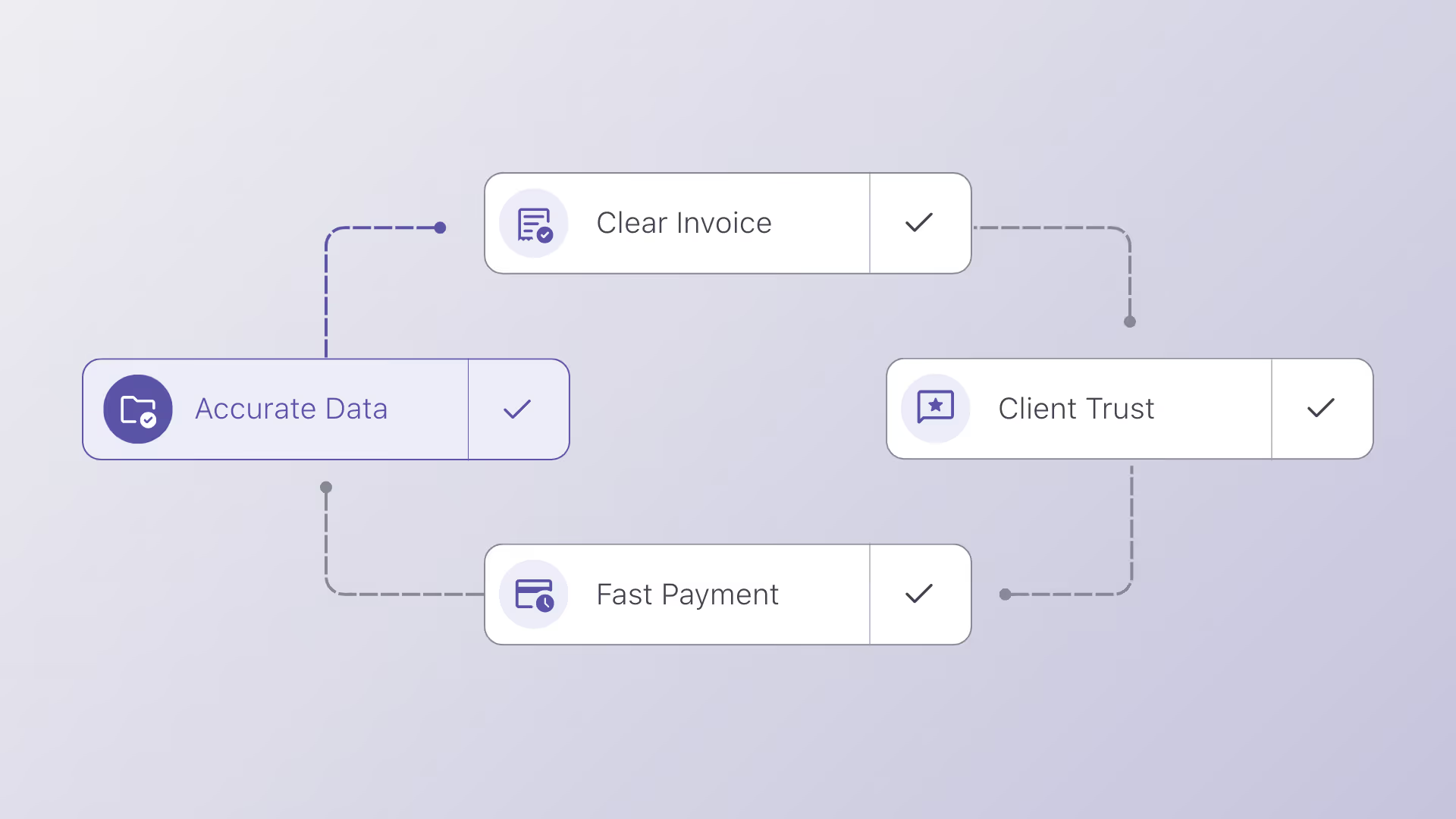
Removing human intervention from the billing cycle does more than save time; it fundamentally changes the “velocity of trust” between the firm and its clients. When a billing process is manual, errors, such as incorrect license counts or double-applied credits, are inevitable, and each error requires a trust-eroding conversation to fix. These “correction calls” create friction and stall the momentum of actual project work. With automated precision, the client receives a perfect invoice every time, which reinforces the firm’s brand as a high-tier, professional organization that is as disciplined with its finances as it is with its technical delivery.
Reallocating Internal Talent To Revenue-Generating Roles
The transition to a touchless environment creates a unique opportunity to redefine the roles of your existing back-office staff. When your finance team is no longer tethered to the repetitive labor of data entry and payment matching, they can be reallocated to roles that directly impact Payment Automation efficiency and firm growth. This shift transforms a traditional cost center into a value-driven department capable of performing proactive contract audits and vendor negotiations. Instead of spending forty hours a week looking backward at what happened, your team can spend those hours looking forward to optimizing future margins.
The Data Integrity Dividend For Strategic Planning
Automated systems provide a level of data integrity that manual processes simply cannot match, creating what we call a “data integrity dividend.” When every payment is captured and categorized in real-time, the firm’s financial reports become an accurate, live pulse of the organization rather than a delayed historical record. This precision is vital for long-term strategic planning, as it allows leadership to model future scenarios based on perfect historical data. According to the 2025 B2B Payments Survey by Deloitte, firms that achieve high levels of automation report a 40% increase in the accuracy of their cash flow forecasting.
Reducing The Operational Fragility Of Key-Person Risk
One of the most significant risks to a professional services firm is “key-person dependency,” where critical financial knowledge lives only in the head of a single office manager or partner. If that person is unavailable, the entire payment cycle can grind to a halt, creating a state of operational fragility. Embedding your financial rules and workflows into a touchless system, you transfer that knowledge from an individual to the institution. This ensures that the firm’s cash flow remains consistent and protected, regardless of staffing changes or unexpected absences.
Enhancing Enterprise Value Through Process Maturity
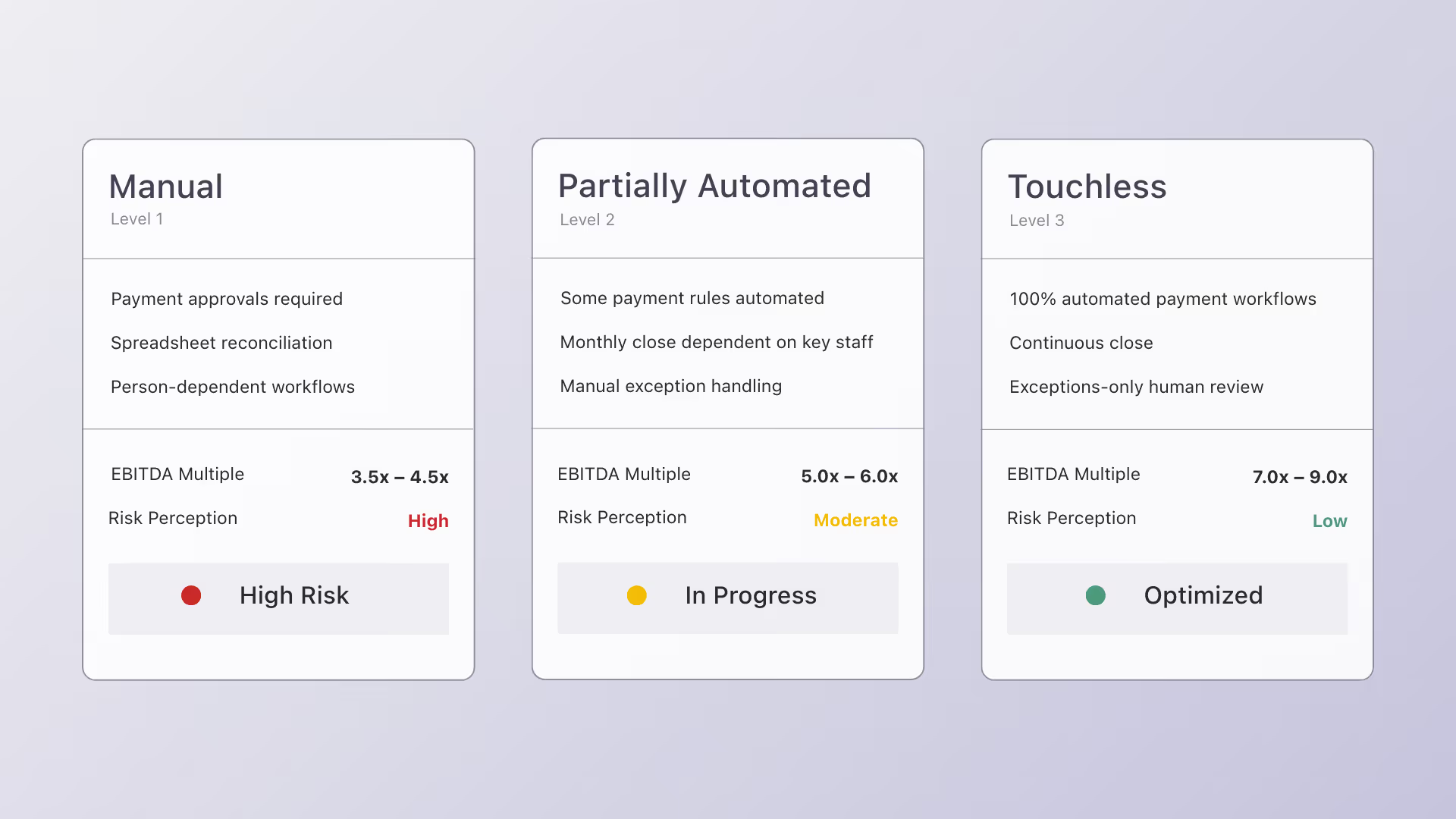
From the perspective of an outside investor or potential acquirer, a firm with 100% touchless Payment Automation is significantly more valuable than one reliant on manual oversight. Sophisticated buyers look for “process maturity” because it indicates that the business is a scalable machine rather than a collection of individual efforts. A touchless back office proves that the firm can handle a massive influx of new business without a corresponding spike in overhead. Documenting and automating your financial life cycle, you are effectively “de-risking” the business and justifying a higher valuation multiple during an exit or merger.
The Transition Roadmap To A Touchless Future
Moving toward a 100% touchless goal is a journey that requires a shift in both technology and culture. It begins with the realization that “checking the work” is often a low-value habit that can be replaced by “monitoring the system.” As your firm adopts this mindset, you will find that the stress of the back office begins to dissipate, replaced by a quiet, automated efficiency. The ultimate conclusion of this transition is a business where the owner and CFO are no longer required to participate in the payment cycle at all, allowing them to focus entirely on the visionary work that built the firm in the first place.
Next Steps For Achieving Touchless Automation
Reclaiming your time starts with a clear-eyed assessment of where your current manual bottlenecks exist. We recommend focusing on the “Human ROI” by identifying the specific tasks that currently require your personal authorization or review.
Establishing a touchless foundation involves several deliberate phases of optimization.
Consider the following actions to begin buying back your executive capacity:
- Conduct a “Time Audit” for one week to track every minute you spend on payment approvals, sign-offs, and billing questions.
- Review your PSA-to-accounting integration to ensure that data flows automatically without the need for manual CSV exports or imports.
- Identify your top five most frequent payment types and set up automated rules for their reconciliation and ledger entry.
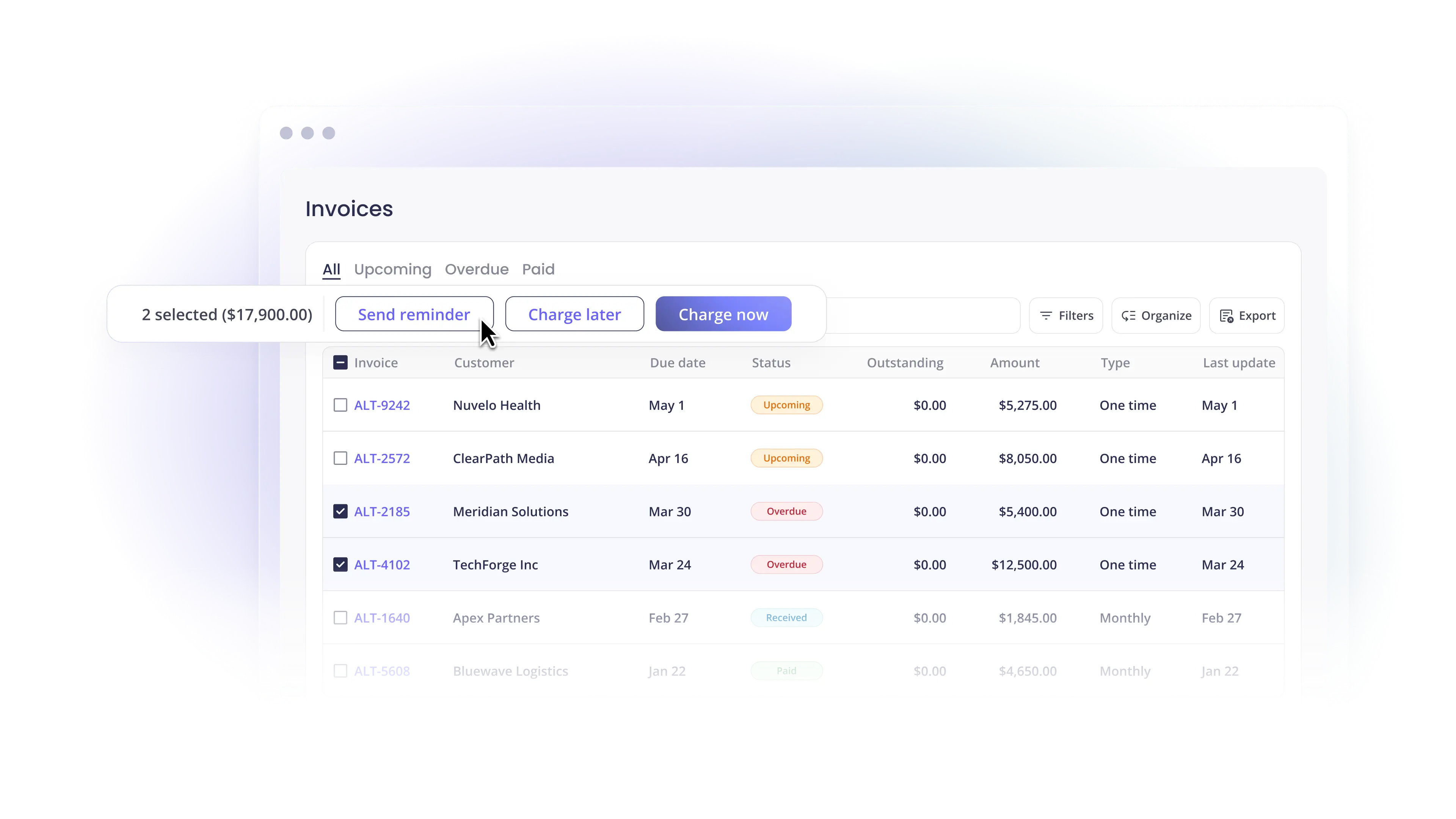
- Transition your clients toward a unified payment portal that handles authorization and settlement in a single, integrated step.
- Empower your finance lead to manage “exceptions only,” removing yourself from the approval chain for all routine transactions under a certain dollar threshold.
Implementing these steps, you move closer to the 100% touchless goal and ensure that your focus remains where it belongs: on the future of your firm.
Simplify your customer payments, unlock instant cash flow
Keep reading


ConnectWise QuickBooks integration: what a complete payment workflow should cover

NetSuite payment gateways: an enterprise MSP buyer's framework