•
IT Services
•
Automate Accounts Receivable
•
Enterprise
•
Mid-market
January 27, 2026
Standardizing MSP Accounting For Scale
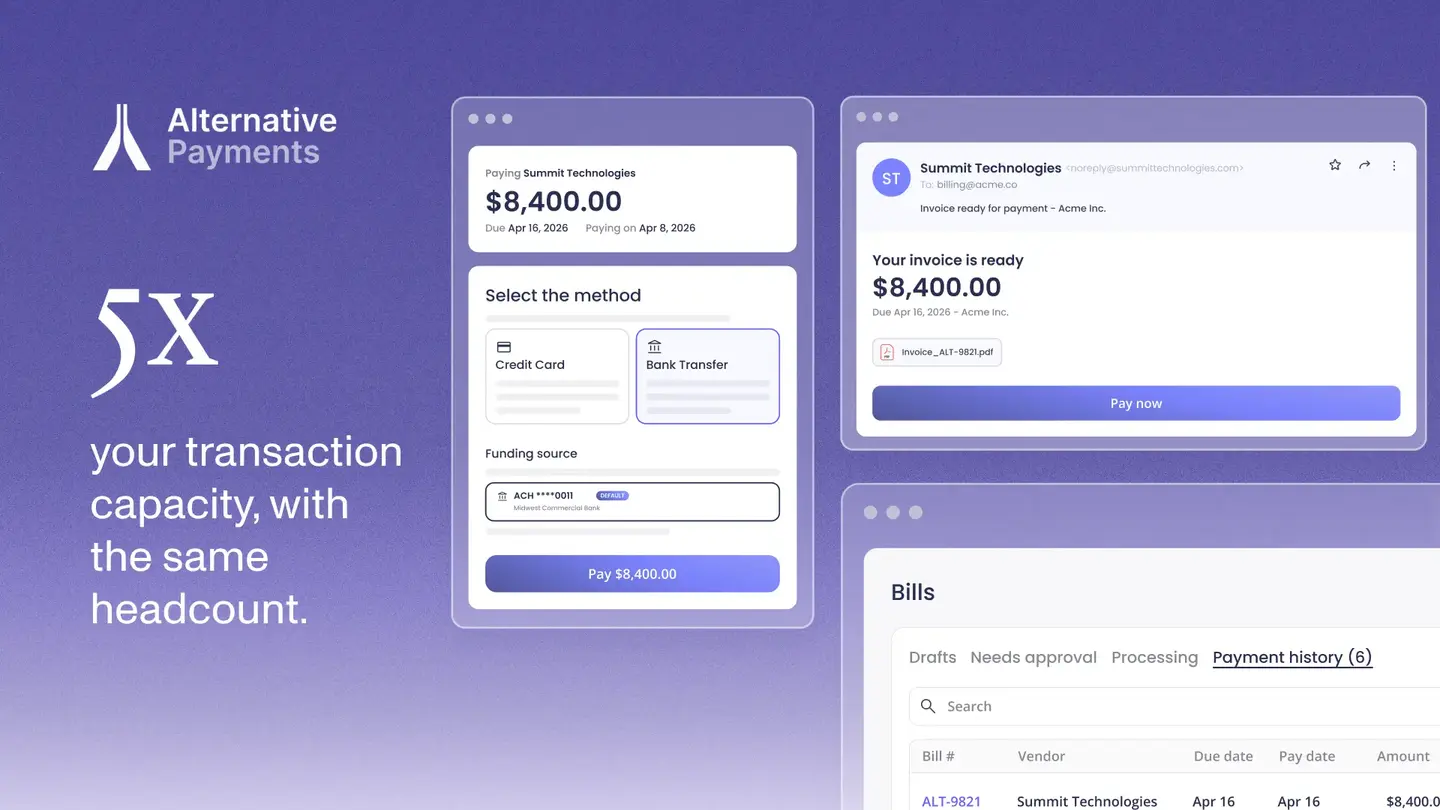
To scale a back office effectively, companies must transition from person-dependent tasks to system-driven workflows. By standardizing financial operations, you ensure that administrative capacity grows alongside revenue, breaking through operational ceilings without requiring a proportional increase in headcount.
Standardizing your financial structure addresses the following critical constraints:
- Scalability & Future-Proofing: Most workflows are built for a business’s current size, lacking the structural integrity to support a company five times larger. Standardization provides the infrastructure needed to prevent operations from fracturing under the weight of growth.
- Eliminating Tribal Knowledge: Relying on the memory of key employees or bespoke workarounds creates “knowledge silos.” Formalizing these processes mitigates the risk of single-point-of-failure dependencies and ensures seamless transitions during turnover.
- Decoupling Labor from Revenue: Without standardized SOPs, the time spent on billing and accounting tends to grow faster than the revenue itself. Implementing uniform systems reduces this administrative burden, allowing you to scale efficiency rather than just staff.
Establishing these repeatable processes allows your team to focus on strategic growth rather than manual reconciliation.
The Administrative Ceiling Of Custom Workflows
Many growing firms inadvertently create a “person-dependent” financial model where specific billing rules are stored in the heads of staff members rather than in a documented system.
This lack of uniformity creates a natural growth cap, as every new contract adds a layer of complexity that requires manual intervention to resolve. When your accounting processes are non-standard, you are forced to add administrative headcount at the same rate you add clients, which effectively plateaus your profit margins.
Enforcing a strict policy of standardized workflows, we ensure that the effort required to process one hundred invoices is nearly identical to the effort required to process one thousand.
Beyond pure efficiency, this consistency provides leadership with a “single source of truth” and real-time financial visibility. When data is predictable and structured, executives can make high-stakes decisions with total confidence and the speed necessary to capture market opportunities.
Defining The Chart Of Accounts For Industry Benchmarking
A standardized Chart of Accounts (COA) is the prerequisite for any meaningful analysis of business health. In the world of MSP Accounting, your ledger must be structured to distinguish clearly between hardware sales, recurring service revenue, and project-based labor.
Without this categorization, you cannot accurately compare your performance against industry standards or identify which areas of your business are underperforming. We recommend aligning your COA with recognized industry frameworks to ensure that your financial data is not just an internal record but a strategic tool for benchmarking.
The Role Of Financial SOPs In Reducing Cognitive Load
Standard Operating Procedures (SOPs) for the finance department are just as critical as technical SOPs for the help desk. When every step of the billing and collections cycle is documented, it removes the “guessing game” from the back office and allows junior staff members to execute complex tasks with high accuracy. This reduction in cognitive load is what enables a small team to handle a massive increase in volume.
By creating a repeatable “playbook” for every financial event, from onboarding a new client to handling a disputed charge, we protect the firm’s senior leadership from being pulled into low-value administrative tasks.
When a senior billing coordinator at a growing MSP went on unexpected leave during the year-end close, the firm avoided a crisis because their billing reconciliation was documented in a standardized SOP. Instead of the CEO stepping in to hunt down unbilled project hours, a junior admin followed the playbook to successfully trigger invoices, ensuring cash flow remained uninterrupted without leadership intervention.
Eliminating The Month-End Scramble Through Continuous Close
The traditional “month-end close” is often a period of high stress and late nights, but it is actually a symptom of a reactive accounting model. A mature firm moves toward a “continuous close” mentality, where reconciliations and data true-ups occur on a daily or weekly cadence. This shift ensures that the financial data you view on the 15th of the month is as accurate as the data you view on the 30th.
Moving to a continuous cadence requires a commitment to specific weekly disciplines.
- Financial accuracy is maintained by reconciling bank statements and merchant accounts every Friday.
- Vendor license counts should be verified weekly to prevent a backlog of true-up tasks at the end of the billing cycle.
- Disputed invoices must be addressed within forty-eight hours to keep the aging report clean.
- Weekly “health checks” on the PSA-to-ledger sync ensure that data discrepancies are caught before they compound.
By smoothing out the workload, we eliminate the end-of-month bottleneck and provide leadership with the real-time visibility needed to make agile decisions. This transition transforms MSP Accounting from a historical post-mortem into a live pulse of the business.
Mapping The Data Flow Between PSA And Accounting Software
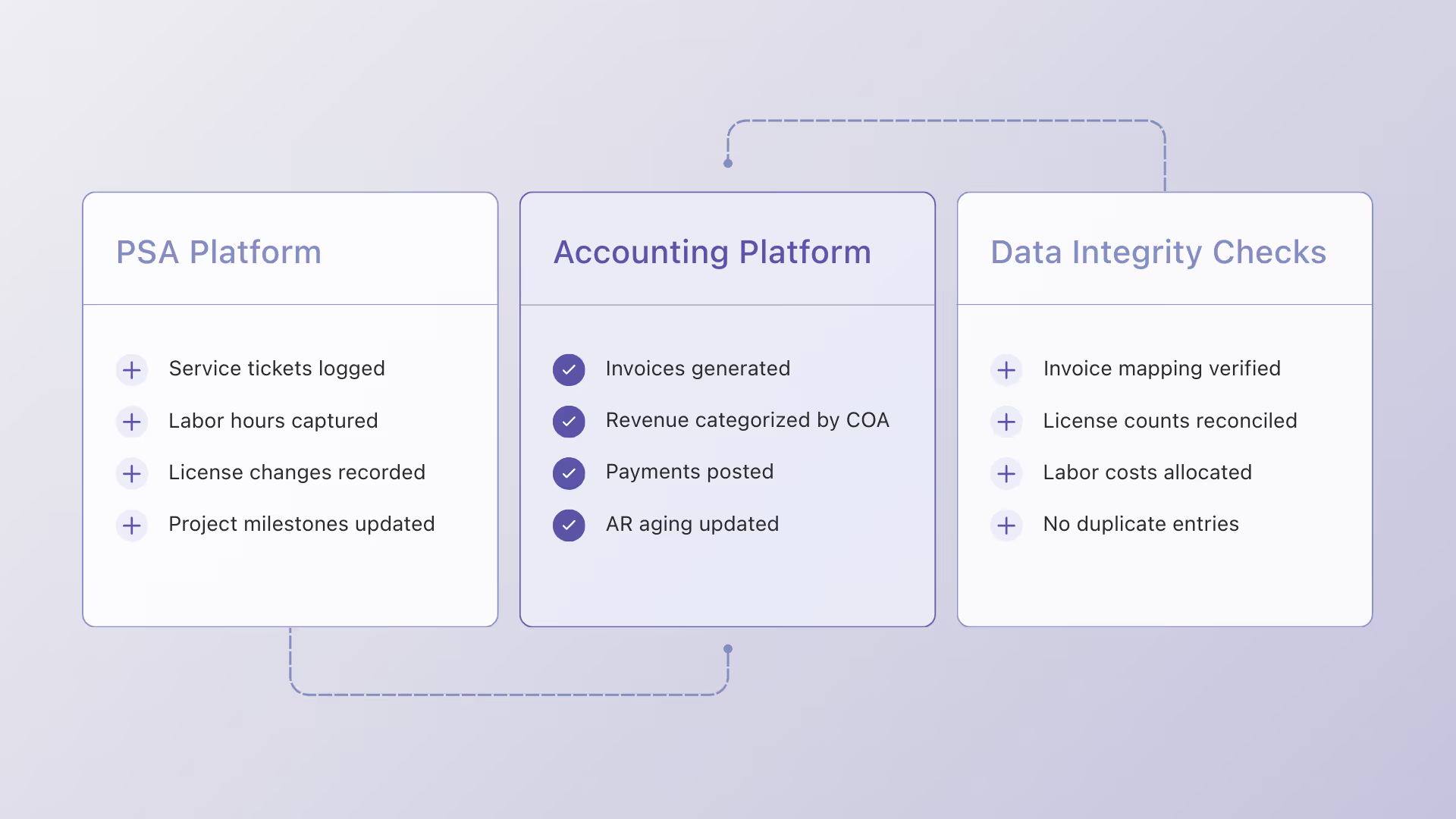
The connection between your Professional Services Automation (PSA) tool and your accounting software is the most critical link in your financial chain.
If this data flow is not perfectly synchronized, your finance team will spend a disproportionate amount of time performing manual data entry and “cleanup” work. High-performing firms ensure that every service entry, license change, and project milestone in the PSA triggers an automated and accurate update in the ledger.
A clean, automated sync is the only way to maintain data integrity as you scale into high-volume service delivery.
Standardization As A Tool For Error Reduction
In a non-standardized environment, errors are often treated as isolated incidents, but in reality, they are usually the result of a flawed process.
When MSP Accounting lacks uniformity, simple tasks like applying a tax exemption or processing a credit memo become opportunities for data corruption. By implementing a standardized “one-way” workflow for these adjustments, we eliminate the “phantom” balances that frequently appear on aging reports. Uniformity ensures that if an error does occur, it is easy to trace back to the specific step in the SOP that was missed, allowing for a quick correction rather than an exhaustive forensic audit.
The Impact Of Standardized AR On Cash Flow Predictability
Predictable cash flow is the byproduct of a standardized accounts receivable (AR) process. Many MSPs suffer from inconsistent “feast or famine” cash cycles because their collections efforts are sporadic or handled only when the bank balance gets low.
A standardized AR SOP dictates exactly when an invoice is sent, when the first automated reminder goes out, and at what point a human being intervenes for a direct conversation.
Leveraging Automation For License And SaaS True-Ups
One of the most labor-intensive tasks in MSP Accounting is the monthly reconciliation of vendor licenses. For a firm with hundreds of clients and dozens of SaaS vendors, manually checking that every seat is being billed correctly can take days of work. We recommend an SOP that utilizes automated direct-to-vendor API connections to handle this task. This not only removes the manual labor but also eliminates the “leakage” that occurs when an MSP forgets to bill for a newly added user.
Automation ensures that your cost of goods sold (COGS) and your revenue are always perfectly aligned.
Preparing The Back Office For Multi-Entity And M&A Complexity
If your goal is to grow through acquisition or expand into multiple geographic territories, system-driven execution is not optional.
When you acquire another company, the speed at which you can integrate its financials into your own determines the success of the merger. A standardized accounting framework acts as a “universal plug,” allowing you to map the new entity’s data onto your existing COA in a matter of days.
Without this structure, you risk inheriting a mess of bespoke spreadsheets that can obscure the true performance of the new branch for months.
Building An “Audit-Ready” Business Culture
The ultimate goal of repeatable systems is to create a business that is “audit-ready” at all times.
Whether you are preparing for a tax audit, a bank loan application, or a high-value exit to private equity, having clean, standardized records is what proves the professional maturity of your firm. Investors and buyers pay a premium for “clean” businesses because it reduces their risk and proves that the company’s growth is sustainable. By treating MSP Accounting as a high-precision discipline, you are not just keeping score; you are actively increasing the enterprise value of your organization.
Next Steps
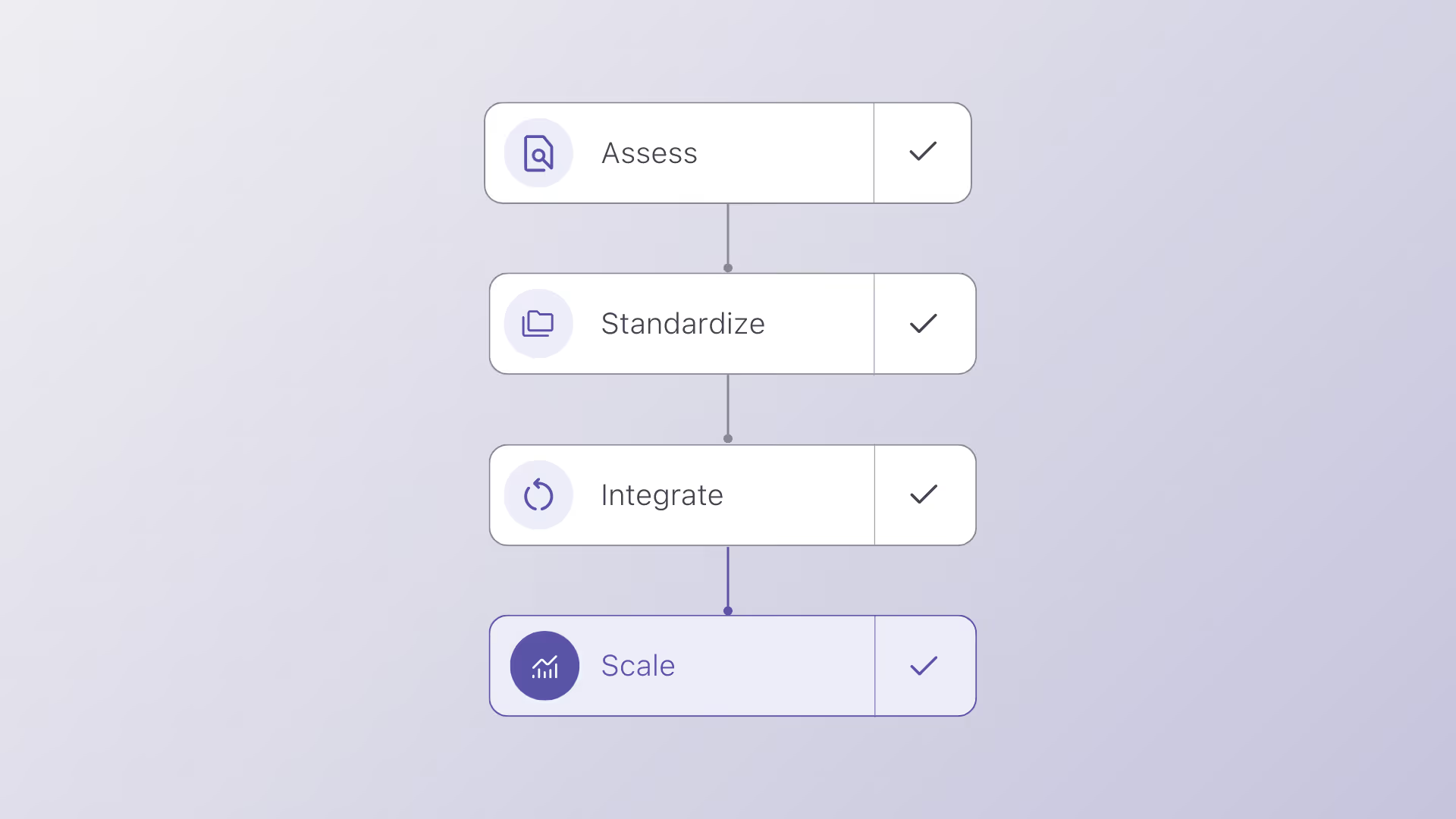
Scaling your back office requires a transition from reactive work to a culture of documented, repeatable processes. We suggest starting with these specific actions to build a foundation for 5x growth.
- Conduct a “process audit” by documenting exactly how an invoice moves from your PSA to your client’s inbox to identify manual bottlenecks.
- Review your current Chart of Accounts to ensure it aligns with industry standards for service-level reporting and margin analysis.
- Set a recurring “Continuous Close” schedule where bank and merchant reconciliations are performed every Friday afternoon without exception.
- Identify the top three manual data entry tasks your finance team performs and research API-based automation tools to replace them.
- Create a formal SOP for accounts receivable that triggers automated reminders at specific intervals to maintain cash flow velocity.
Taking these steps transforms your finance department from a bottleneck into a scalable engine that supports, rather than hinders, your growth trajectory.
Simplify your customer payments, unlock instant cash flow
Keep reading

How Seamless PSA Integration for MSP Payments Is Changing MSP Operations
ConnectBooster vs. Alternative Payments: Which MSP Payment Platform Fits Your Billing Workflow?