•
IT Services
•
Automate Accounts Receivable
•
Security
December 5, 2025
Non-Negotiable Checklist for Payment Platform Support
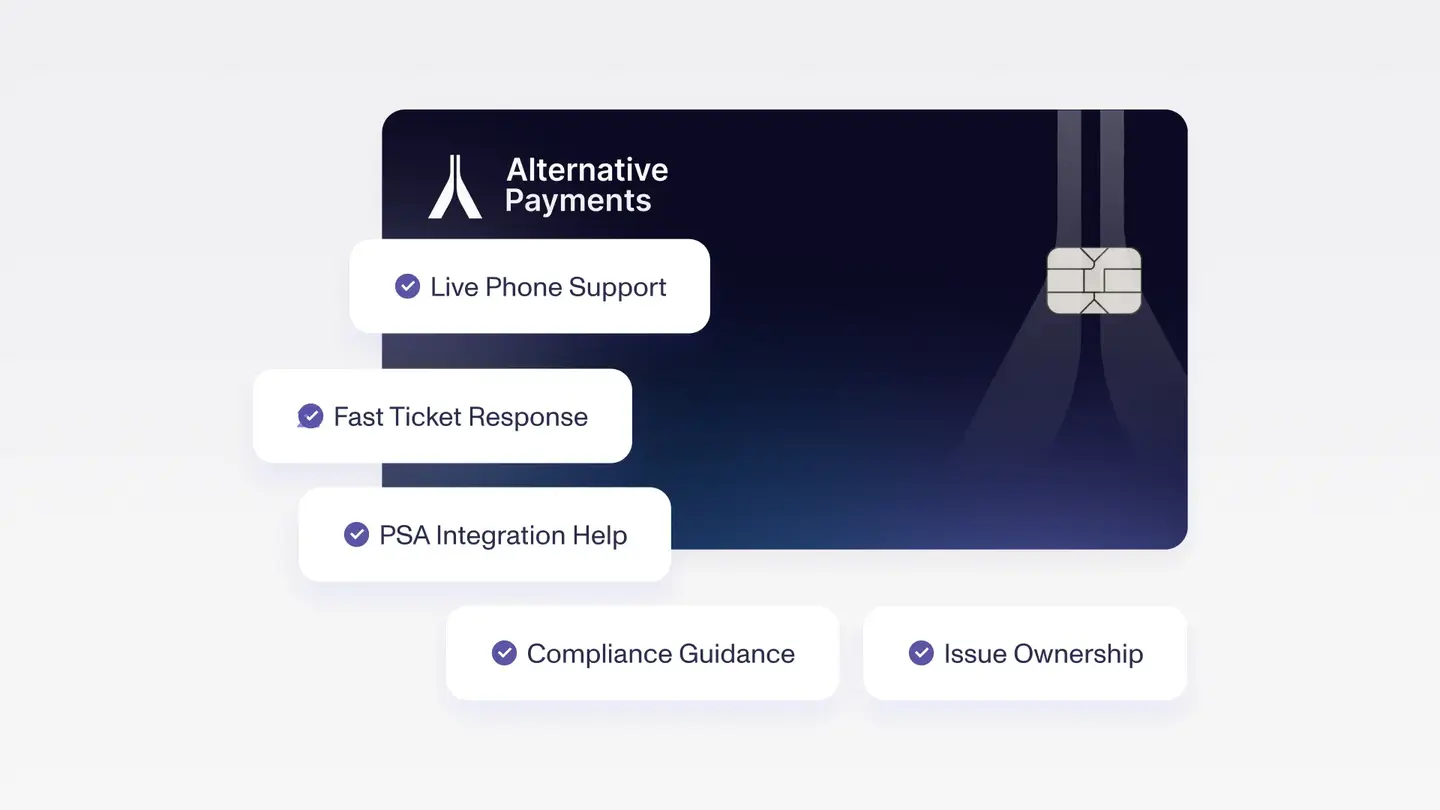
Have you ever reached out to a payment platform for help and felt like you were talking to a wall? If you have ever been stuck talking to a chatbot, waiting hours for a response, or digging through a self-service portal trying to fix a billing issue that should have taken five minutes, you already know how frustrating poor support can be. What should be a simple fix turns into a time sink that impacts cash flow, renewals, and client trust.
Many MSPs choose payment platforms based on features or price, and support barely enters the conversation until something breaks. Once a payout is delayed or a client card is stuck in an error loop, support suddenly becomes the most important part of your payment stack. The problem is that by the time you reach that moment, you are already dealing with disruption, lost time, and annoyed clients. That is why this checklist exists. It helps you evaluate support before you commit, not after you start losing hours to a platform that never picks up the phone.
What Happens When Support Fails: Real Risks to Your Business
When support falls apart, it hits your business in ways that are not obvious at first. You lose time chasing answers. You lose revenue when payment issues go unresolved. You lose trust with clients when they experience billing delays or failed payments. These problems add up fast and create stress you should not have to deal with.
To illustrate how support issues escalate, PayPal highlights the hidden problems merchants face when payment platforms fail at communication or support. They specifically call out issues like delays in settlement, poor transparency during disruption, and limited access to real humans. These problems quickly become operational issues.
Poor support also slows down onboarding new clients or resolving simple billing questions. When your team cannot get quick answers, your clients feel the friction too. It creates a ripple effect where your team wastes time troubleshooting issues the platform should have resolved instantly.
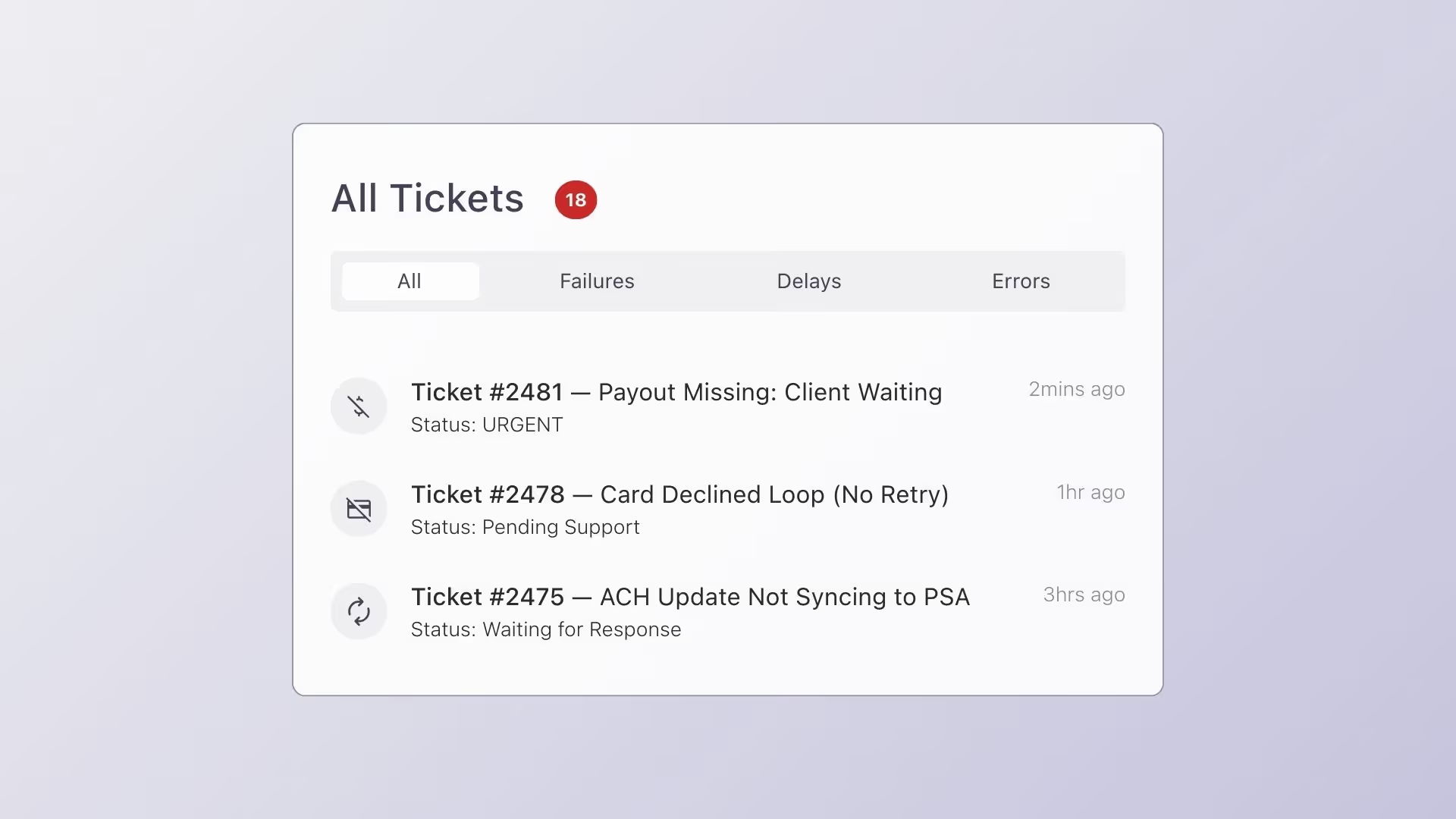
Core Support Features Every MSP Should Expect
There is a clear difference between a payment platform that claims to offer support and one that actually delivers support you can count on. MSPs deserve providers that offer real people, real responsiveness, and real guidance instead of pushing you into a chatbot or a knowledge base when the issue involves your money.
SeamlessChex explains that strong customer support is a core requirement in payment processing because issues involving funds or billing are time sensitive and cannot be handled through automated replies alone. Their article highlights that businesses depend on human expertise for resolution, especially when revenue is on the line.
In real terms, this means you should expect live phone access when needed, a dedicated account manager if your volume or business model requires it, clear response time expectations, and access to someone who understands MSP-style billing. It also means you should have onboarding help, integration support, and humans who step in quickly when something goes wrong. Anything less than this puts too much pressure on your internal team to resolve issues that are the platform’s responsibility.
How to Evaluate a Payment Platform’s Support Before You Commit
One of the smartest things you can do before choosing a payment platform is to test their support the same way you would test any other mission-critical tool. You can learn a lot about a company by reaching out to its support team before you sign anything. Ask a question late at night. Reach out during peak hours. Pay attention to how fast they respond, how clear their answers are, and whether you can reach a human who understands what you are doing.
NMI published guidance on what strong support looks like in the payment processing industry, explaining that consistent communication, clear escalation paths, and knowledgeable agents make the difference between a stable merchant experience and a frustrating one. As NMI Support Manager Cristi VanNest notes, “Most people would prefer to solve their own problem than to go through support,” underscoring how proactive onboarding and accessible resources reduce future friction. Collectively, these practices create predictable resolution paths, faster time-to-answer, and a support environment that stabilizes the merchant experience instead of adding to their workload.
You can also check how transparent the company is. Do they clearly list support hours? Do they offer written SLAs? Can you find positive reviews about their responsiveness, or do you mostly see complaints from customers who never received replies? These signals tell you exactly what kind of relationship you are walking into. When it comes to MSP Payments, support needs to be reliable long before you need it during an emergency.
The Support Checklist: What “Must-Have” Really Looks Like
Every MSP deserves a payment partner that treats support as a core service, not an afterthought. Great support is a combination of responsiveness, expertise, and real ownership. Here’s what that looks like in practice:
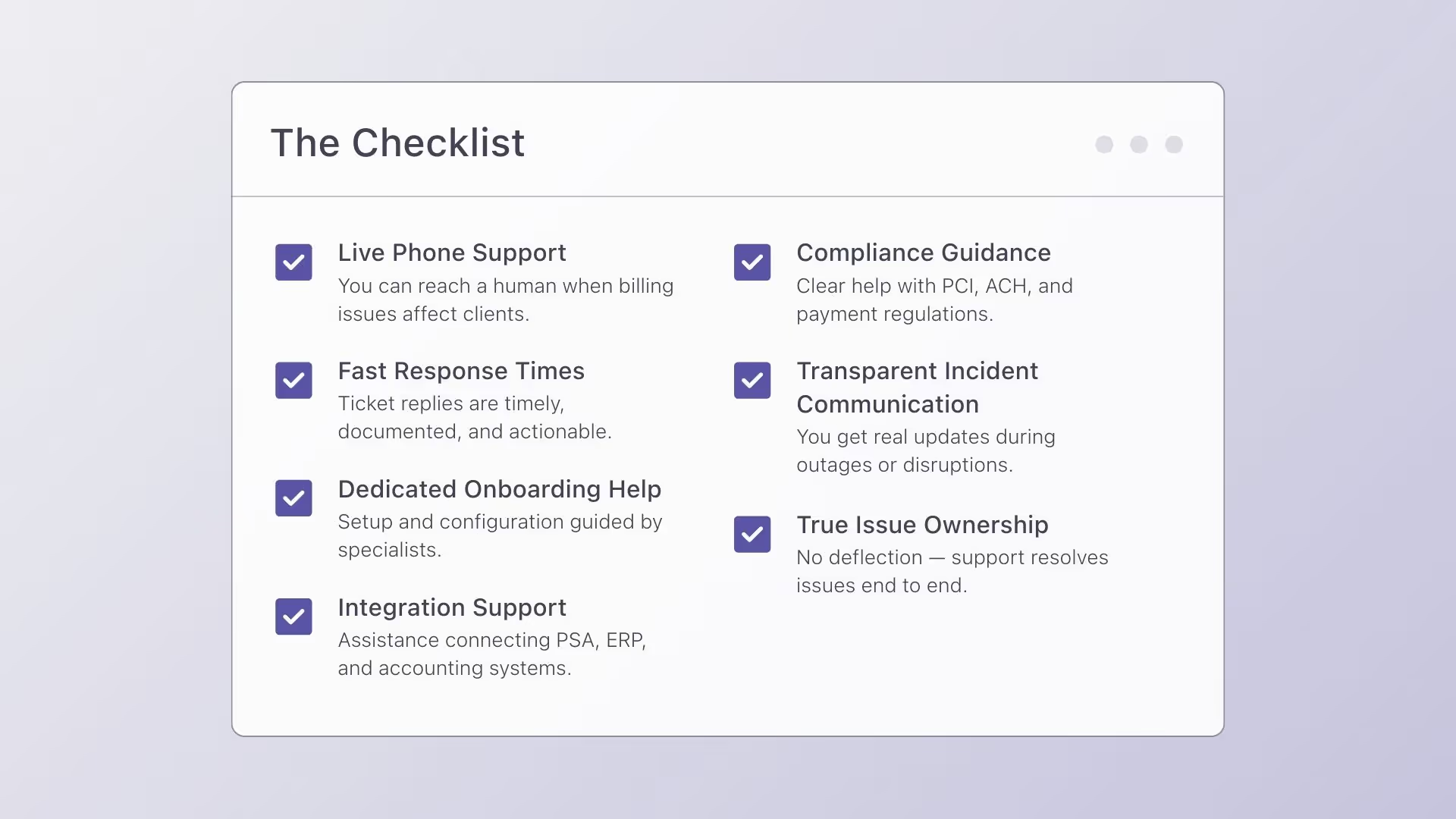
Must-Have Support Checklist
- Live Phone Support
You can reach a real person when an urgent billing or payment issue impacts your clients. - Fast Ticket Response Times
Support requests receive timely, documented responses—not automated delays or generic replies. - Dedicated Onboarding Assistance
Specialists help configure your system correctly so MSP Payments run smoothly from day one. - PSA / ERP / Accounting Integration Help
You get technical guidance connecting your billing system to your PSA, ERP, or general ledger, avoiding misconfigurations. - Compliance & Regulatory Guidance
Experts clarify PCI, ACH, and bank transfer considerations so you avoid unnecessary risk. - Transparent Incident Communication
You receive clear updates during outages or disruptions, so you’re never left guessing. - Issue Ownership, Not Deflection
Support staff take responsibility for resolving problems fully rather than passing you between departments.
Why Strong Support Reduces Churn and Strengthens MSP Payments
Strong support reduces churn because it stabilizes the parts of your business that clients never see but immediately feel when they fail. When support resolves payment exceptions quickly, prevents invoice discrepancies from escalating, and keeps billing workflows consistent, it protects the operational rhythm your clients depend on. A reliable support function becomes an extension of your service delivery, reducing the friction points that often trigger dissatisfaction long before a client ever cancels.
NMI explains in their guidance on protecting payment operations that consistent communication, accurate issue resolution, and proactive support directly impact business stability. Their article highlights how poor support creates hidden friction behind the scenes that slowly erodes confidence.
When support is strong, your billing feels predictable. When billing is predictable, your client experience feels stable. And when clients trust your billing, they trust your service. It all works together.
What to Avoid: Red Flags That Signal Unreliable Payment Support
Certain patterns reveal structural weaknesses in a provider’s support organization. Limited or unclear contact channels can indicate understaffed teams. Heavy dependence on automated responses may signal that frontline issues are not triaged by technical experts. Outdated or inconsistent documentation often reflects gaps in internal processes rather than poor writing. Public reviews pointing to unresolved cases or inconsistent follow-through are usually signs of overloaded support queues, not isolated incidents. These signals, taken together, reveal operational fragility that tends to surface when billing volume increases.
PayPal outlines several hidden problems that come from poor payment support, including delayed settlements, unclear incident communication, and unresolved technical issues. Their article gives you a clear picture of how support failures create real operational risk.
If a platform does not support you during the sales process, that is a preview of what it will be like after you are a customer. MSPs need more than a portal and a chatbot. You need a partner you can reach immediately when your revenue depends on it.
How to Negotiate Support Terms Before You Sign
Negotiating support is ultimately about clarity and governance. MSPs benefit from confirming how accountability works: who owns escalations, how service levels are measured, and what happens when response times slip. Contracts should capture the structure of the support relationship, not just the hours of availability. Understanding how incidents are handled, how communication flows during disruptions, and how responsibilities are divided between your team and the provider ensures you have a predictable framework—not informal promises.
NatPay explains that customer support quality is a key factor in choosing a payment provider, emphasizing the importance of clear expectations regarding communication and issue resolution.
Think of this step as a form of insurance. If the platform hesitates to commit to support expectations before you sign, it is unlikely they will step up when your billing is on the line.
Support Is Not Optional for MSP Payments
Support is foundational because MSP billing operates inside time-sensitive, contract-driven environments. When issues arise, the quality of support determines how quickly your business returns to a steady state. Strong support gives MSPs continuity, predictable operations, and assurance that payment exceptions won’t cascade into service problems. This guide provides a clear framework for evaluating whether a provider’s support organization can meet those expectations. Use it to set standards during your assessment process and to validate whether a platform’s support capabilities align with the operational demands of MSP billing.
Next Steps
If support quality affects revenue flow, this checklist helps you evaluate it with discipline rather than guesswork. Compare your current provider’s responsiveness, clarity, and follow-through against the standards outlined here. Then use your observations to determine whether the platform can support the long-term stability your billing operations require. Your MSP payments deserve more than generic portals and delayed replies. Choose a platform that treats your revenue like it matters.
Simplify your customer payments, unlock instant cash flow
Keep reading


AI cash-flow forecasting: how business owners can test assumptions

Can AI financial analysis explain why your margins changed?