•
IT Services
•
Automate Accounts Receivable
•
Collections
•
Reduce DSO
March 17, 2026
How Payment Behavior Predicts Client Churn
Why Financial Behavior Often Reveals Client Dissatisfaction Months Before Service Metrics Do
Client churn rarely happens overnight. In most Managed Service Providers, the signs appear months before the client officially leaves.
However, many MSP leaders focus primarily on service delivery metrics while overlooking a more revealing source of intelligence: financial data inside their accounting platform.
Shifts in payment behavior often represent the earliest and most reliable indicator that a client relationship is deteriorating. Slower payments, recurring credit card failures, and growing accounts receivable balances frequently appear long before a cancellation conversation takes place.
For MSP leaders who understand how to interpret financial signals, MSP Accounting becomes more than bookkeeping. It becomes a predictive tool for protecting revenue and identifying client risk early.
Instead of reacting to churn after it happens, financial data allows MSPs to detect warning signs while the relationship can still be repaired.
Why MSP Accounting Data Reveals Client Health Earlier Than Service Metrics
Most MSPs monitor operational performance carefully. Ticket response time, SLA compliance, and system uptime are reviewed regularly because they reflect service quality.
Service metrics measure operational performance.
But they don’t reflect client commitment.
Financial behavior often shifts earlier.
Indicators such as ticket response time, resolution speed, and SLA compliance show how well services are being delivered, but they do not necessarily reveal how a client feels about the long term value of the partnership.
A client may continue submitting support tickets and participating in regular meetings while privately evaluating alternative providers.
During this period, operational metrics can remain stable because the technical environment still requires support, making the account appear healthy on the surface.
Financial behavior, however, often begins to change earlier. Shifts in how quickly invoices are paid, how payment methods are maintained, or how frequently billing questions arise can reflect a growing hesitation in the relationship.
These financial signals often appear before dissatisfaction becomes visible through operational metrics, making them an important early indicator of potential churn.
Payment timing reflects how clients prioritize vendors within their business operations. When an MSP is viewed as essential, invoices are paid promptly and payment methods remain current.
When confidence begins to weaken, those financial behaviors start to change. This is why your billing system data often reveals client dissatisfaction earlier than operational metrics.
Slower Payments Are a Leading Indicator of Churn
One of the clearest warning signs inside the payment platform is a gradual slowdown in invoice payments.
Clients rarely announce declining satisfaction directly. Instead, the shift often appears in payment timing.
Businesses tend to pay vendors according to priority. The vendors perceived as most valuable or mission critical are typically paid first. When an MSP begins to slip in that priority order, payment timing starts to stretch.
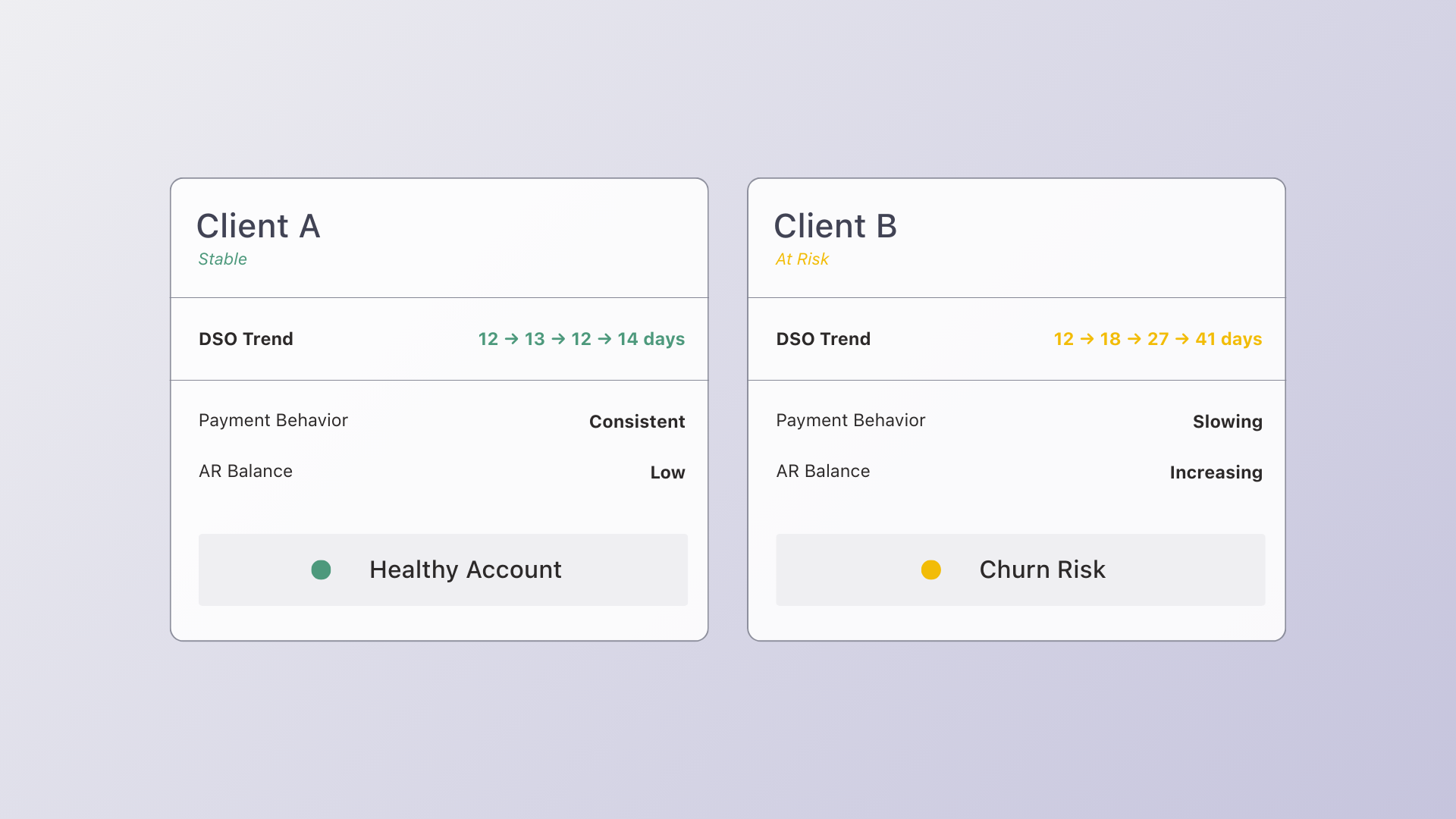
What begins as a minor delay can gradually evolve into a larger and more consistent pattern. A payment that arrives five days later than usual may initially seem insignificant, especially if the client has historically paid on time.
However, that small delay can slowly extend into ten days, and over time the gap may widen to thirty days or more. As the pattern continues, invoices that were once paid automatically may begin requiring reminders or follow up from the finance team before payment is completed.
Within MSP Accounting reports, this pattern appears as rising Days Sales Outstanding (DSO) or increasing accounts receivable balances.
These trends often indicate more than simple billing delays. They may signal that the client is reassessing the relationship or comparing alternative providers.
Monitoring payment timing trends therefore becomes an important retention strategy.
Credit Card Failures Often Signal Relationship Instability
Another often overlooked signal within payment platform workflows is recurring credit card payment failures. While a single declined transaction may not be unusual, repeated failures can reveal important changes in client behavior.
A payment can fail for several legitimate reasons. Credit cards may expire, banks may block transactions through fraud protection systems, or spending limits may temporarily interrupt processing.
In many cases, these issues are resolved quickly once the client becomes aware of the problem.
However, when payment failures occur repeatedly, they often indicate a different pattern. Clients who intend to maintain a stable relationship with their MSP typically update their payment information quickly because uninterrupted service remains important to them.
Clients who delay updating payment details or repeatedly ignore failed payment notifications may be showing a lower level of urgency toward maintaining the relationship.
This situation creates operational strain for the MSP. Finance teams must spend time manually following up on failed payments, confirming updated payment details, and ensuring invoices are eventually settled.
At the same time, these signals can provide an early indication that the health of the client relationship may be shifting.
Within well structured billing environments, repeated payment failures should therefore be treated as a meaningful warning signal rather than a routine administrative issue.
The Financial Signals That Often Appear Before Client Churn
Payment behavior rarely changes in isolation. Churn risk typically emerges through a combination of financial indicators.
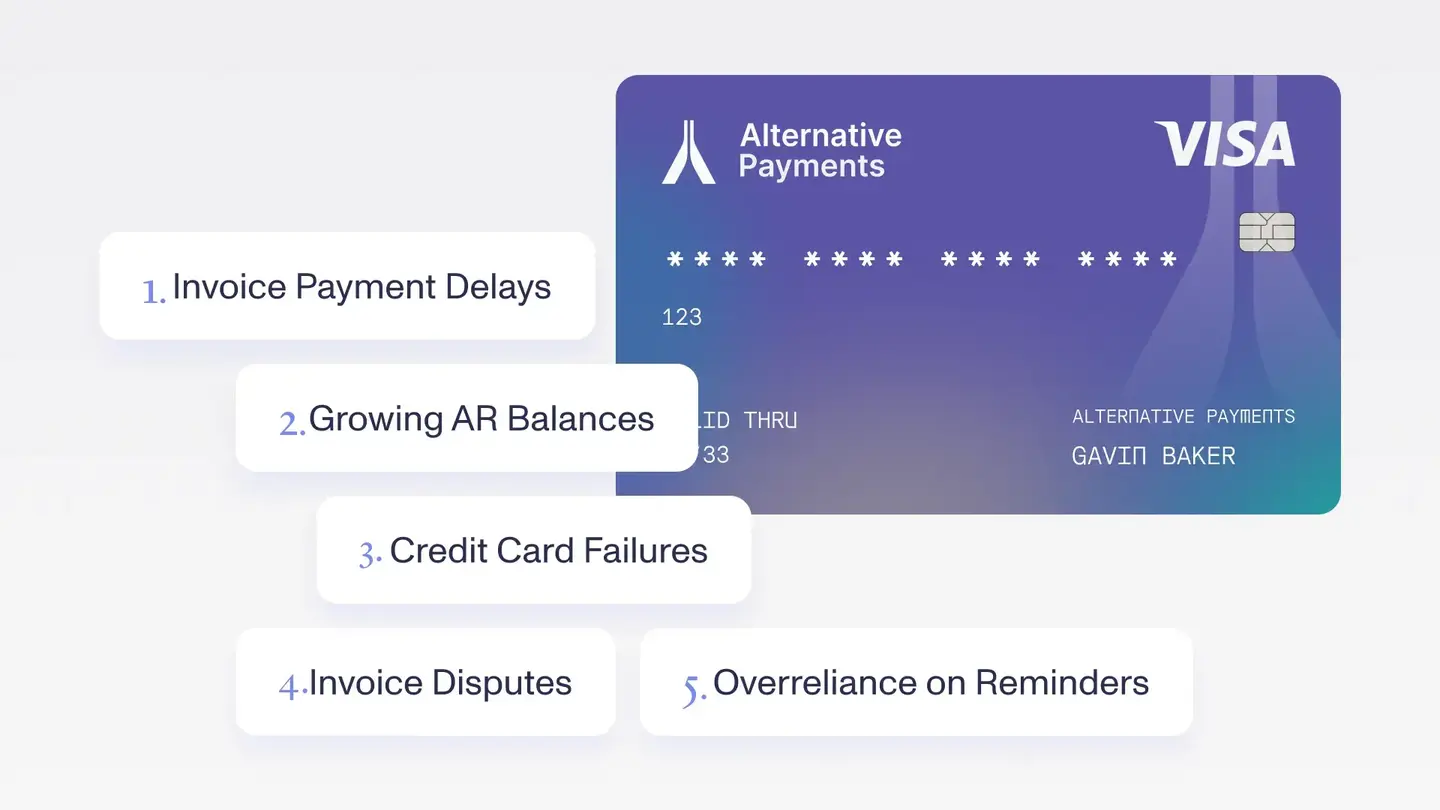
MSPs should regularly monitor the following patterns within their accounting and billing systems.
- Increasing invoice payment delays compared to historical patterns
- Growing accounts receivable balances
- Frequent credit card failures or expired payment methods
- Repeated invoice disputes or clarification requests
- Greater reliance on payment reminders before invoices are settled
When these signals appear together, the likelihood of client churn increases significantly.
For this reason, strong finance tools should include regular financial trend analysis rather than simply recording transactions.
Why Many MSPs Miss These Early Financial Signals
Despite the value of financial data, many MSPs still struggle to detect churn signals early. In most cases, the challenge is not the availability of data but the way billing and payment systems are structured.
Billing workflows are often spread across multiple platforms. Invoice generation may occur inside a PSA system, while payments are processed through a separate gateway and accounting reconciliation takes place in a different financial platform. Because these systems operate independently, it becomes difficult to gain a clear and unified view of client payment behavior.
As a result, finance teams frequently spend most of their time reconciling transactions and resolving discrepancies rather than analyzing trends in payment activity. By the time a payment issue becomes obvious or accounts receivable balances begin to grow, the underlying relationship risk may already be well advanced.
This is where modern payment infrastructure can significantly improve visibility within MSP Accounting by bringing billing, payments, and reconciliation into a more connected workflow.

How Modern Payment Infrastructure Helps MSPs Address Slower Payments and Card Failures
The modern billing system requires better visibility into billing and payment behavior.
Alternative Payments provides payment infrastructure built specifically for MSP environments, connecting invoicing, payment collection, and reconciliation into a unified financial workflow. By integrating invoicing, payment processing, and reconciliation workflows, MSPs gain a unified view of client payment activity.
This visibility allows finance teams to identify changes in payment patterns much earlier.
If certain clients begin paying invoices later than normal, those trends become visible across reporting dashboards. Finance leaders can investigate and engage the client proactively rather than waiting for accounts receivable balances to grow.
The platform also addresses the operational friction caused by payment method failures.
Automated card update workflows, secure payment portals, and streamlined payment authorization processes help ensure that client payment methods remain current. When issues occur, automated notifications allow problems to be resolved quickly without manual follow ups.
Because payment data connects directly with accounting systems, MSP leaders gain stronger insights into financial trends within their MSP Accounting environment.
Instead of treating payment data as a back office task, it becomes a valuable signal for understanding client health.
MSP Accounting Is a Predictive Intelligence System
Many MSPs still treat accounting primarily as a historical reporting function. Financial reports are often used to understand what has already happened rather than to identify emerging risks that could affect future revenue.
In reality, MSP Accounting often contains some of the earliest signals of client retention risk. Changes in financial behavior can reveal shifts in client sentiment long before those concerns appear in service conversations or operational metrics.
Payment delays, recurring credit card failures, and rising accounts receivable balances frequently develop several billing cycles before a client formally cancels their service agreement. These patterns create a financial trail that suggests the relationship may be weakening.
When MSP leaders learn to interpret these signals, accounting data becomes more than a back office requirement. It becomes a strategic tool that provides early visibility into the health of client relationships.
By monitoring financial behavior trends and modernizing billing infrastructure, MSPs can identify churn risk earlier, intervene sooner, and protect recurring revenue. In many cases, clients reveal their intentions through financial behavior long before they say it directly. The question is whether your MSP accounting systems are structured to recognize those signals in time to act.
Simplify your customer payments, unlock instant cash flow
Keep reading