•
IT Services
•
Automate Accounts Receivable
January 2, 2026
How MSPs Eliminate 10+ Hours a Week of Billing and Payment Admin Work
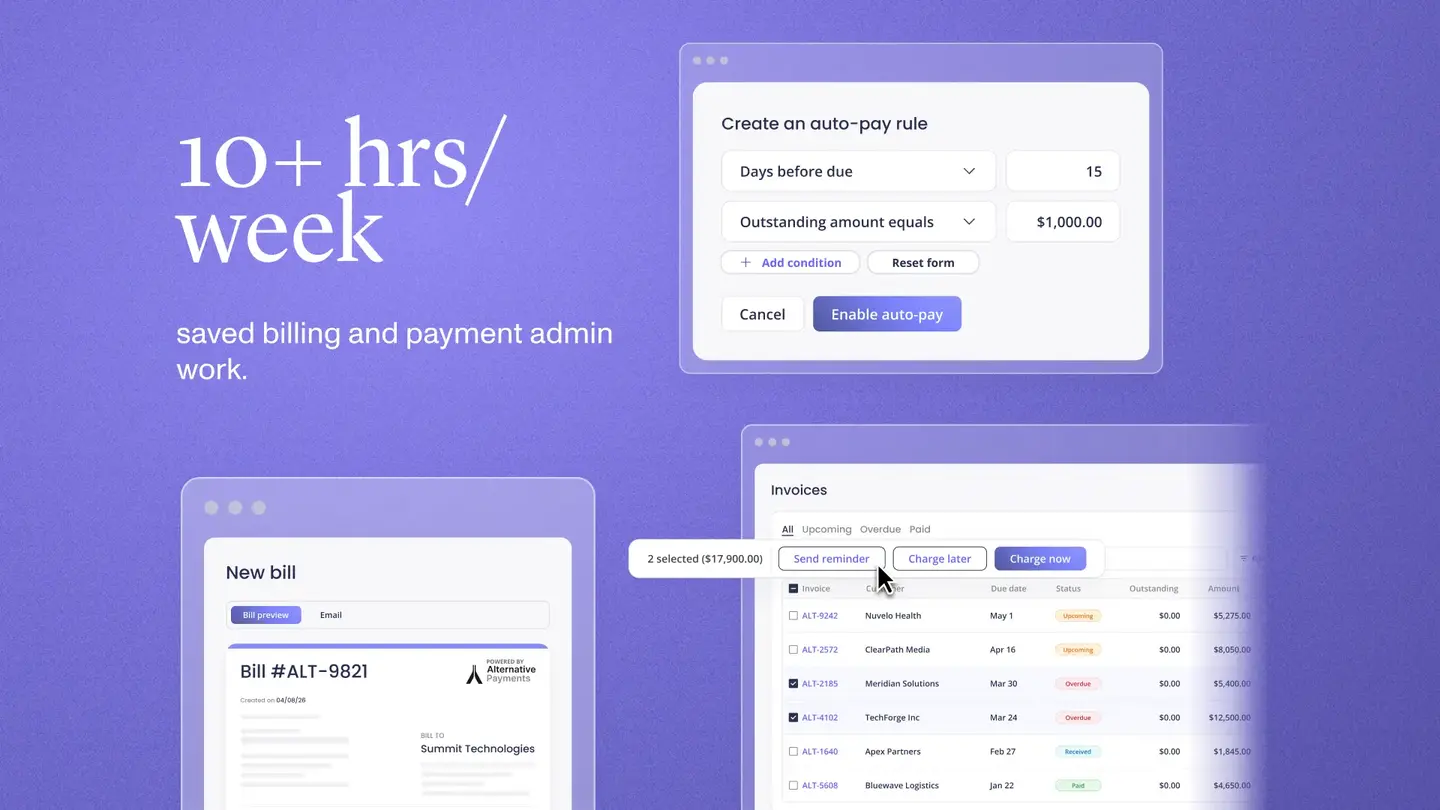
Manual billing processes often feel manageable when an MSP is small. The same systems, however, rarely survive growth without strain.
As recurring revenue expands, invoice volume increases, payment methods diversify, and client expectations rise. What once worked with a handful of clients starts to create friction with dozens or hundreds. The workload does not grow linearly. It compounds.
We see this most clearly in teams that try to solve growth with headcount alone. Adding staff may temporarily relieve pressure, but it does not address the root issue. Manual processes continue to generate exceptions, follow-ups, and reconciliation work that scales faster than revenue.
Payment automation addresses the structural problem. By removing repetitive tasks entirely rather than distributing them across more people, MSPs regain control over how time is spent as the business grows.
How Time Recovery Changes Team Behavior
Time saved through payment automation does not disappear, it gets reinvested. The difference is where that time goes.
Here is how recovered hours tend to show up across MSP teams.
The most common changes we observe include:
- Administrative staff spend less time tracking payments and more time improving internal processes.
- Service managers focus on delivery quality instead of billing clarification.
- Technicians stay in technical flow without being pulled into finance-related questions.
- Leadership reviews financial data without needing added explanation.
The closing effect is not just efficiency. When teams are allowed to stay in their lanes, work quality improves and frustration drops. Automation protects focus, which is often more valuable than raw time savings.
Where MSP Time Quietly Disappears Each Week
Administrative overload is not just about volume, it is about fragmentation. Billing-related tasks tend to interrupt work rather than live in one contained process. Across finance, service management, and leadership, these interruptions commonly add up to ten or more hours each week.
We often see time lost across several areas at once. Finance teams chase confirmations, reconcile partial payments, and investigate failed transactions. Service managers answer billing questions during operational conversations. Leadership reviews reports that require explanation instead of trust. None of these tasks is large enough to justify attention on its own, but together they easily consume ten or more hours each week.
What makes this especially challenging is that billing work often shows up reactively. A client asks a question. A payment fails quietly. A report looks off and needs clarification. Each interruption pulls someone out of focused work and forces a context switch that carries its own hidden cost.
Payment automation changes this dynamic by making billing predictable and self-maintaining. When systems handle routine steps consistently, interruptions stop cascading through the organization.
Why Technicians Get Pulled Into Billing Work
Billing inefficiency rarely stays confined to finance. As MSPs scale, technicians and service managers often become part of the billing loop, even when that was never the intention.
We regularly see technicians asked to confirm whether work was billable, explain line items to clients, or help validate invoices after the fact. These requests may seem reasonable in the moment, but they introduce friction into roles that should remain focused on delivery, security, and improvement.
Every time a technician steps away from technical work to resolve a billing-related question, the cost shows up twice. Time is lost, and momentum is broken. Over time, this creates frustration and a sense that high-value work is constantly being interrupted by non-core billing work.
Payment automation reduces this spillover by tightening the connection between services delivered, invoices generated, and payments collected. When billing data is clear and consistent, fewer questions reach technical teams in the first place.
Is Administrative Overload Really Holding You Back?
Is payment automation actually the reason some MSPs feel less overwhelmed as they grow? The short answer is yes, because much of the pressure teams feel is not caused by service complexity, but by background work that quietly expands over time.
We work closely with MSP finance and operations teams, and one pattern shows up consistently. Administrative work tied to billing and payments rarely feels urgent in isolation. An invoice follow-up here, a reconciliation question there, a quick client email about payment status. Individually, these tasks seem harmless. Collectively, they create a steady drain on time, attention, and momentum.
The challenge is that administrative overload does not announce itself. It does not arrive as a single failure or crisis. It accumulates slowly, embedding itself into daily workflows until teams accept it as normal. Payment automation matters because it directly targets this invisible workload and removes it at the source.
What Payment Automation Actually Eliminates
In practice, the most valuable impact of payment automation is the work it removes from daily operations. It is often misunderstood as simply speeding up payments.
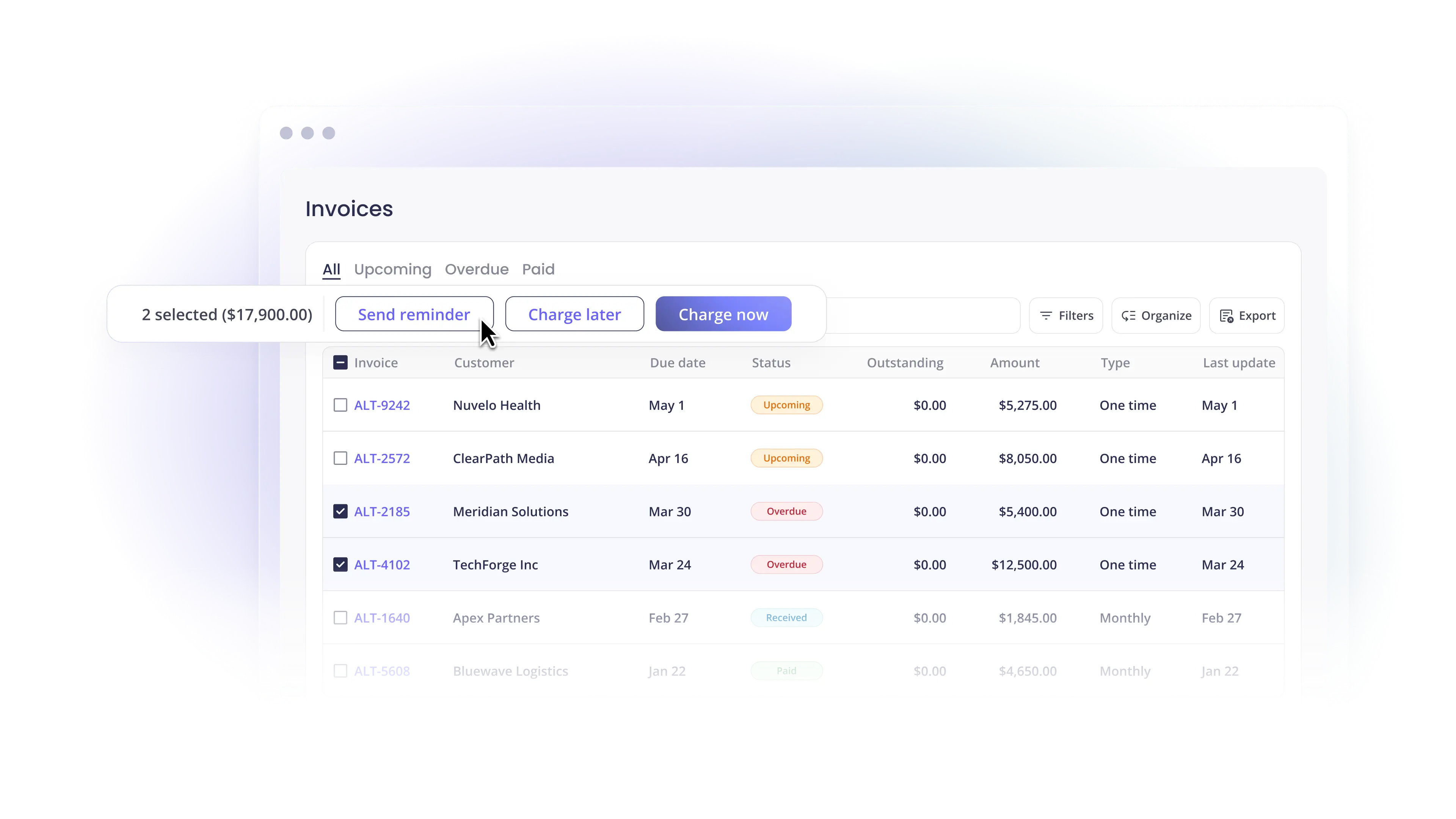
This is not about doing the same tasks faster. It is about ensuring those tasks no longer require human involvement at all. Invoices are generated on schedule. Payment requests are sent consistently. Transactions reconcile automatically. Exceptions surface early instead of weeks later.
The result is a quieter financial workflow. Teams stop checking, chasing, and confirming. Leadership stops asking whether numbers are final. Billing moves into the background where it belongs, supporting the business without demanding constant attention.
The Emotional Cost Of Administrative Noise
Administrative overload not only consumes time, but it also changes how work feels. When billing tasks interrupt the day unpredictably, stress becomes part of the operating rhythm.
We see this most clearly in teams that are constantly reacting. Someone is always checking to see if an invoice has gone out. Someone is always answering a payment question. Someone is always reconciling numbers before a meeting. Even when nothing is technically broken, the background tension remains.
Automation removes this emotional friction. When routine financial tasks run consistently, teams stop bracing for interruptions. The workday becomes calmer, not because there is less responsibility, but because the noise has been removed.
A Simple MSP Scenario That Shows The Difference
Here is a scenario we see frequently.
An MSP finance manager notices a recurring client invoice has not been paid, but instead of sending a manual follow-up, the system has already issued a friendly reminder on schedule. The client updates their payment method the same day, and the issue resolves quietly without anyone needing to step into an uncomfortable conversation.
Nothing dramatic happens, and that is the point. Routine follow-up is handled before it becomes a human problem.
Why Leadership Confidence Depends On Clean Payment Data
We see leadership teams delay hiring, expansion, or tooling investments simply because billing data needs clarification. Time is spent validating the past instead of planning the future.
Payment automation restores confidence by ensuring billing data is accurate, consistent, and timely. When numbers can be trusted without caveats, leadership conversations change tone. Planning becomes proactive. Decisions move faster. Confidence replaces hesitation.
Why Automation Creates Future Optionality
The long-term value of payment automation is not just fewer tasks or faster payments. It is flexibility.
When billing systems run cleanly, MSPs gain options. New pricing models become easier to support. Growth does not require proportional increases in administrative headcount. Mergers, acquisitions, and valuations become simpler because financial data holds up under scrutiny.
Automation does not just support today’s workload. It protects the business from future complexity. That optionality is what allows MSPs to grow without carrying unnecessary operational weight.
Next Steps: Assess Where Time Is Being Lost
Administrative overload often hides in plain sight. The best place to start is with an honest evaluation.
This section offers a practical way to reflect on current billing workflows without committing to change.
To begin assessing your current state:
- Identify how many hours each week are spent on billing follow-ups, reconciliation, and payment questions
- Map which roles are being interrupted by billing tasks outside their core responsibilities
- Review where payment issues surface late instead of early
- Ask whether your billing process supports growth or quietly limits it
The goal is not immediate action. It is clarity. Once time loss becomes visible, better decisions naturally follow.
Simplify your customer payments, unlock instant cash flow
Keep reading


Can AI financial analysis explain why your margins changed?

Autotask QuickBooks integration: choosing a billing and payment operating model