•
IT Services
•
Automate Accounts Receivable
•
Set Up Subscription Billing
March 27, 2026
How MSP Billing Software Is Changing MSP Operations
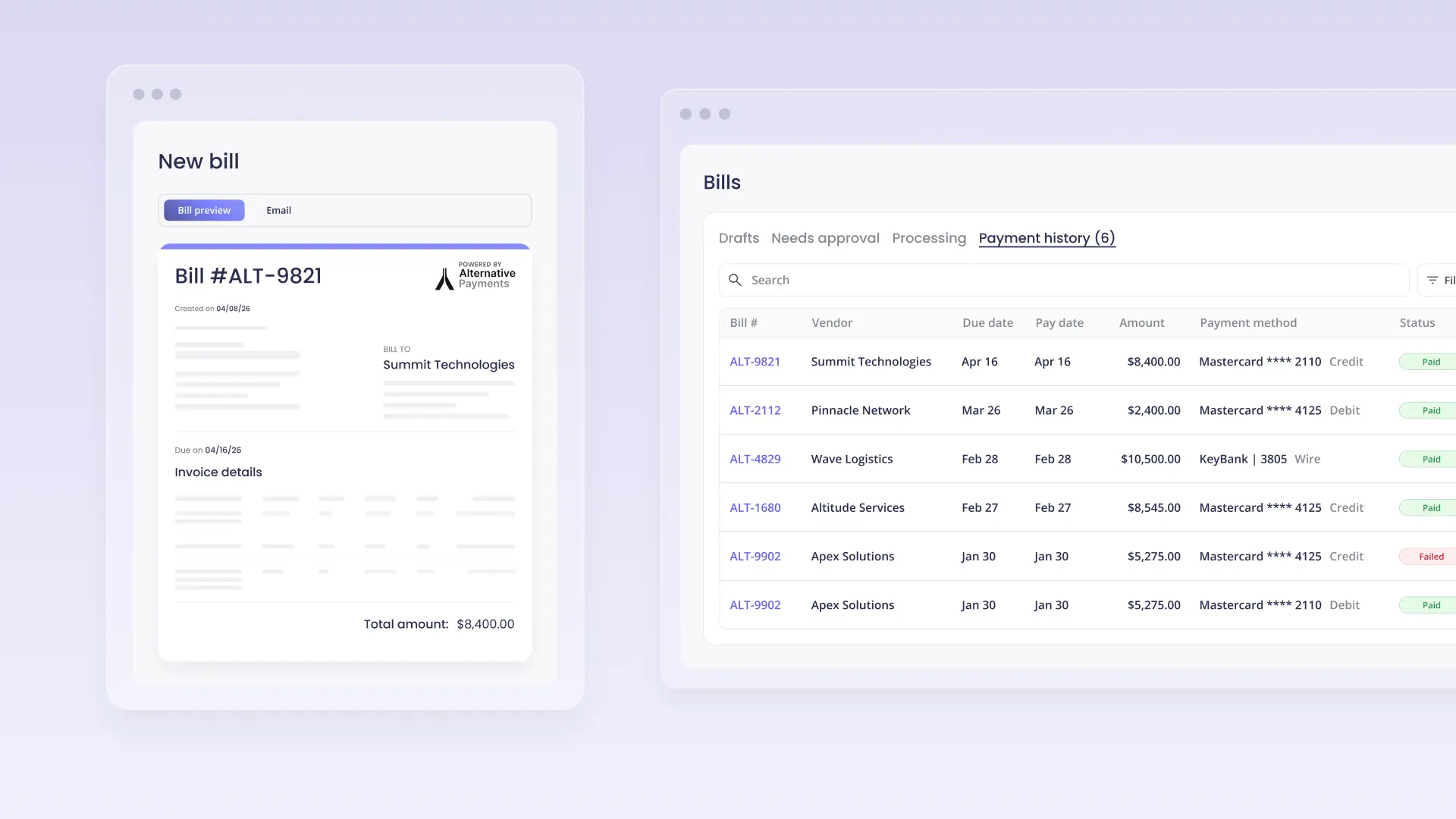
Billing is where operational clarity either exists or breaks down for MSPs.
What should be a straightforward process often turns into disconnected systems, manual reconciliation, and delayed visibility. As complexity grows, so does the gap between what is happening in the business and what teams can actually see.
Modern MSP billing software is changing that by turning billing into a connected, real time system that supports better decisions.
Why MSP Payment Integration Is Harder Than It Looks
Most MSPs already have the tools they need. A PSA platform, an accounting system, and a payment processor are all in place.
The issue is not the tools. It is how they interact.
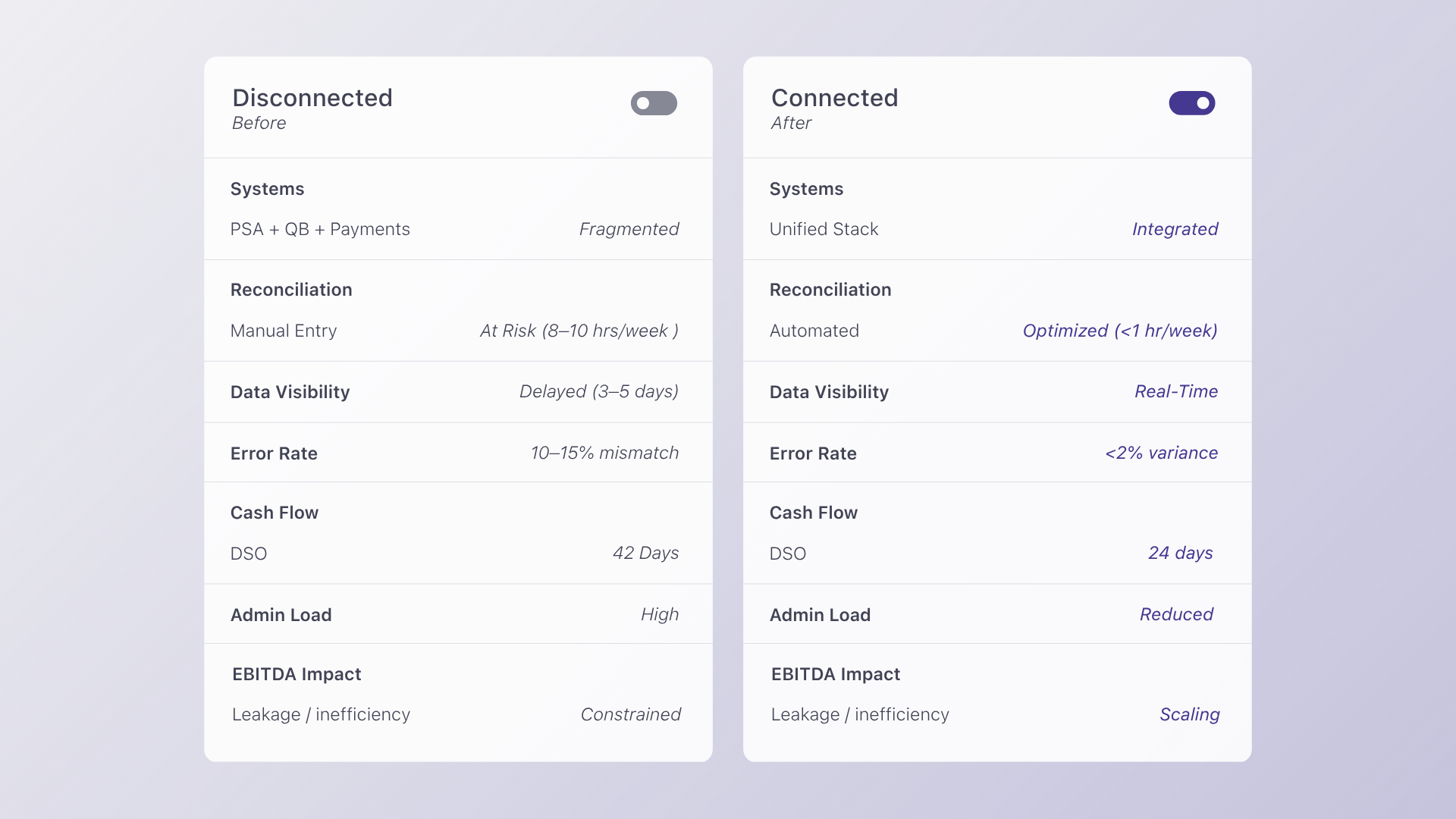
PSA to accounting syncs often break during updates, creating manual re entry and reconciliation gaps. Payment data lives across multiple systems, including PSA tools, QuickBooks, and payment platforms, without a single source of truth.
This fragmentation slows everything down.
According to the Association for Financial Professionals, 78% of finance teams report that manual reconciliation is one of their most time consuming tasks. On average, it takes more than eight hours each week.
That is time that should be spent on higher value work.
This is exactly where MSP billing software becomes critical. It replaces fragmented workflows with a unified financial system.
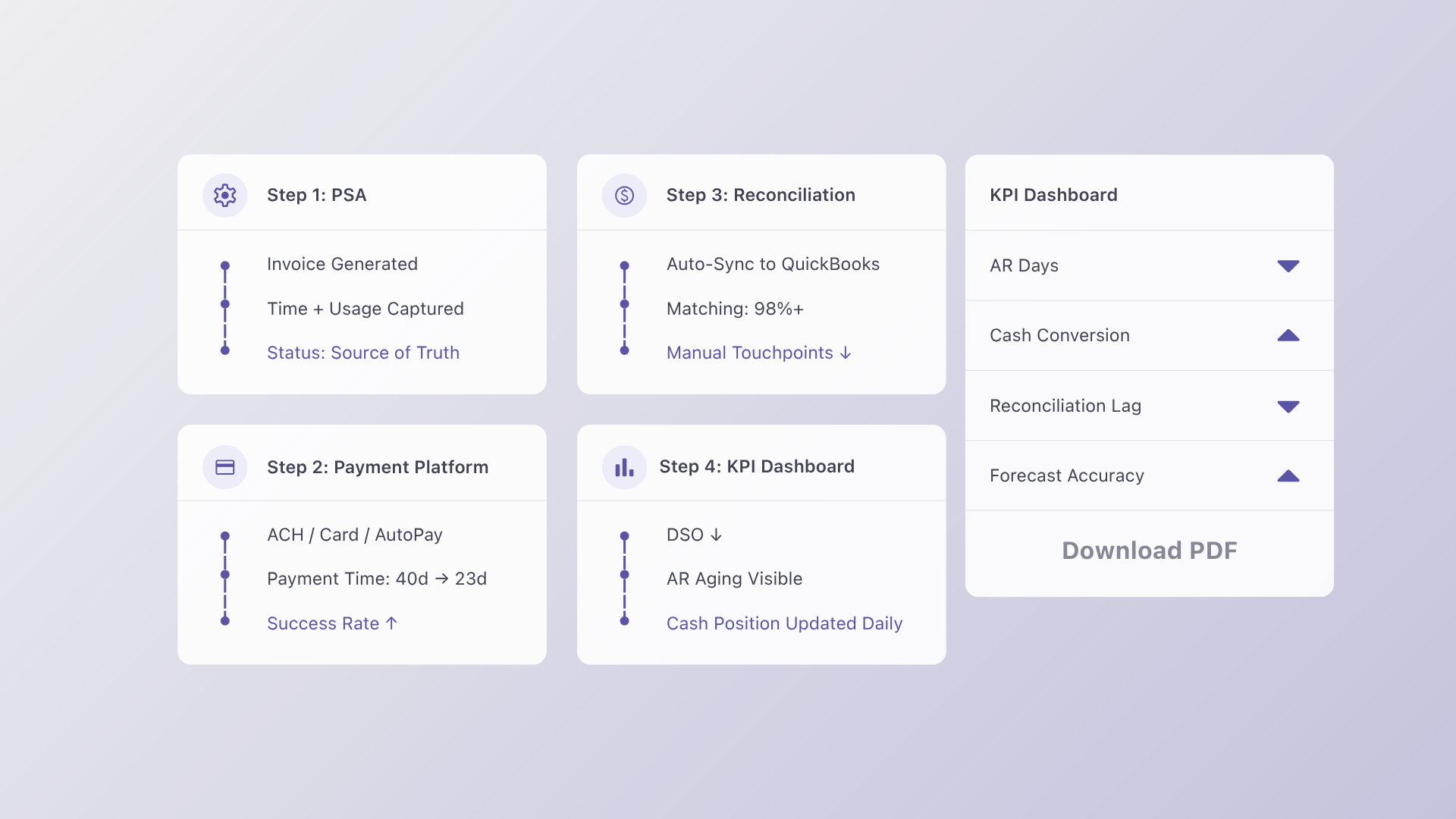
The Integration Stack That Actually Works
High performing MSPs are not adding more tools. They are connecting the right ones.
A modern MSP billing software stack integrates platforms like ConnectWise, Autotask, or HaloPSA with a purpose built payment solution designed for MSP workflows.
What matters most is the data flow.
An invoice is created in the PSA. A payment is collected through an integrated platform. The reconciliation is automatically recorded in the accounting system.
This removes duplicate entries and reduces errors.
More importantly, it creates real time financial visibility across the business.
When MSP billing software is implemented correctly, billing becomes a system that supports growth rather than slowing it down.
Setup Walkthrough: From Disconnected to Integrated
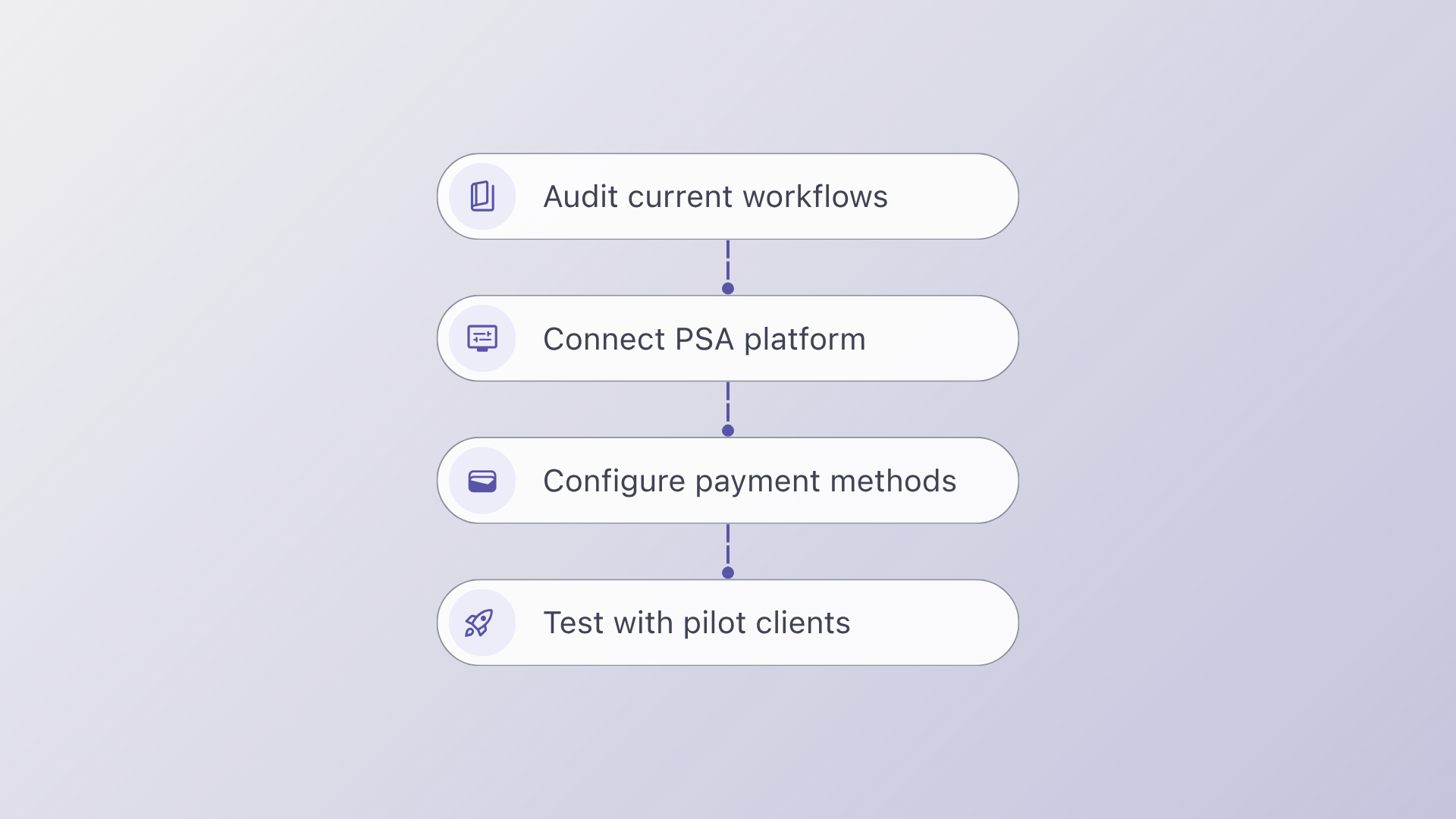
Transitioning to MSP billing software does not require rebuilding your entire stack. It requires a structured approach.
Start by auditing your current workflows. Identify where manual work exists and where systems fail to sync properly.
Next, connect your PSA platform first. This creates a reliable foundation for all operational and financial data.
Then configure payment methods based on client preferences. This includes ACH, card payments, and automated billing.
Finally, test the system with a small group of clients. Validate the process before rolling it out across your full customer base.
This phased approach reduces risk and ensures a smoother transition.
Integration Pitfalls to Avoid
A common mistake is assuming that integration means everything will work automatically.
Every system needs to be tested with real invoices and real payments to ensure accuracy.
Another mistake is migrating all clients at once. This increases the likelihood of errors and operational disruption.
Many MSP leaders also hesitate because onboarding new tools often feels complex and time consuming.
The goal of MSP billing software is not to add complexity. It is to eliminate it by creating alignment across systems.
Conclusion + Next Step
MSP billing software is no longer just about invoicing. It is about building a connected financial system that improves visibility, reduces manual work, and accelerates cash flow.
When billing, payments, and reconciliation are aligned, teams operate with more clarity and confidence.
If you want to see how this works in practice, take the next step.
Book a 20-minute demo and see how Alternative Payments can help reduce your DSO by up to 40%.
Simplify your customer payments, unlock instant cash flow
Keep reading