•
IT Services
•
Mid-market
•
Set Up Subscription Billing
January 23, 2026
High-Growth IT Billing Models You Need Now
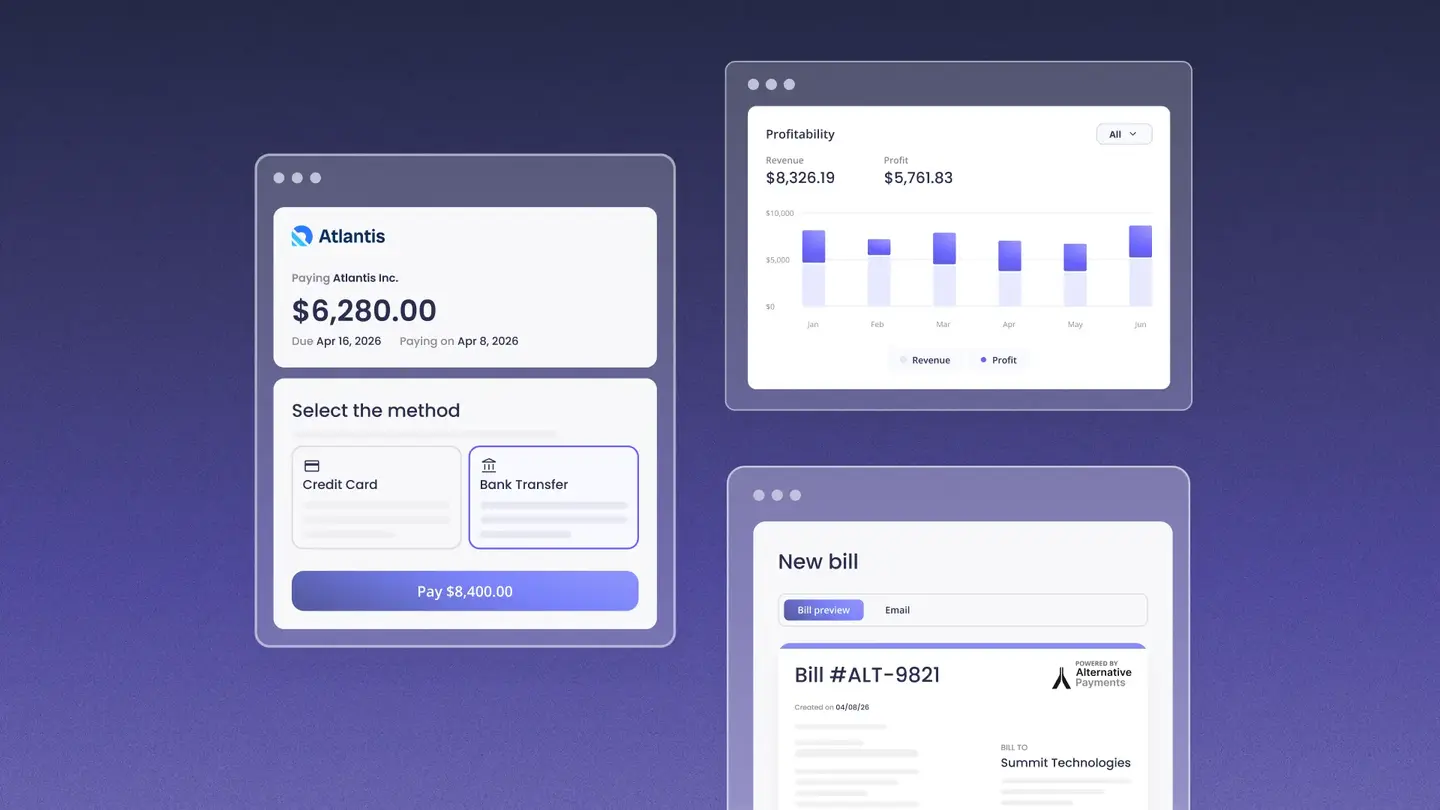
Co-managed IT and hybrid billing aren’t just ‘trends’, they are the current requirements for landing enterprise clients. If your billing setup can’t handle usage-based models yet, you’re essentially leaving growth on the table. We’re seeing that when the billing infrastructure is flexible, the sales conversations get a lot easier. It turns a potential hurdle into a competitive advantage.
As the industry shifts away from simple per-user pricing, MSPs are increasingly finding themselves in co-managed environments where responsibilities are split with internal IT teams. Without a sophisticated approach to IT Billing, these high-growth opportunities can quickly become administrative nightmares that drain your margins through manual reconciliation and opaque cost-tracking.
We see the adoption of flexible, usage-based billing as the essential bridge between traditional managed services and the scalable, hybrid IT models of the future.
The Evolution Toward Hybrid Billing Architecture
The traditional “one size fits all” managed services contract is losing its effectiveness as clients demand more tailored engagements. Mature MSPs are moving toward a hybrid billing architecture that combines a stable monthly recurring revenue base with variable components tied to specific high-value activities.
This evolution allows you to capture revenue that was previously lost to “out-of-scope” project work that was too small to bill separately but too frequent to ignore. By building a framework that accommodates both fixed and fluid costs, we enable the business to capture a larger share of the client’s technology spend without increasing the risk of scope creep.
Navigating The Complexity Of Co-Managed Logistics
Co-managed IT is one of the fastest-growing segments for modern MSPs, yet it introduces significant logistical hurdles in how services are tracked and invoiced. When you share a ticketing system or infrastructure management with an internal IT department, the lines of responsibility often become blurred. Effective IT Billing in these environments requires a system that can granularly distinguish between tasks performed by the MSP and those handled by the internal team.
Without this level of detail, disputes over invoice accuracy become inevitable, and the MSP often ends up performing “ghost work” that is never captured or billed.
The Profitability Trap Of All-You-Can-Eat In Co-Managed Spaces
Applying a traditional flat-fee model to a co-managed environment is a recipe for margin erosion.
Internal IT teams naturally tend to offload the most complex, time-consuming, or high-risk tasks to their MSP partner while retaining the simple, high-frequency “easy wins” for themselves. This means that an MSP charging a flat fee per device or per user is likely doing significantly more difficult work for the same price.
To maintain profitability, we must shift toward models that account for the specific technical depth and resource consumption involved in these high-tier escalations.
Implementing Tiered Usage-Based Structures
Usage-based billing provides a pathway to scale revenue alongside the client’s actual consumption of resources like cloud storage or compute power.
This level of automation does more than just prevent billing errors; it creates a clean audit trail that simplifies internal justification for the client. When every tier change is documented and predictable, the enterprise team can stick to their budget without the friction of mid-quarter surprises.
However, implementing these tiers requires a level of precision that manual systems simply cannot provide. A successful tiered model relies on clear “burst” triggers and automated threshold notifications to ensure that the client is never surprised by a variable invoice.
Structuring these tiers effectively requires a balance between simplicity for the client and protection for your margins.
- High-growth billing requires clearly defined tiers that correspond to specific infrastructure milestones.
- Automated tracking ensures that every gigabyte or compute hour is captured without manual intervention.
- Transparent triggers provide clients with visibility into when they are approaching the next billing bracket. Usage-based models align your revenue directly with the value the client receives from their infrastructure.
By moving to an automated tiered system,, we eliminate the end-of-month scramble to calculate usage and ensure that invoices are issued with absolute accuracy. This shift transforms billing from a reactive administrative chore into a proactive reflection of the client’s growth.
Solving The Visibility Gap In Hybrid Environments
The most common point of friction in complex billing models is a lack of transparency between the MSP and the client.
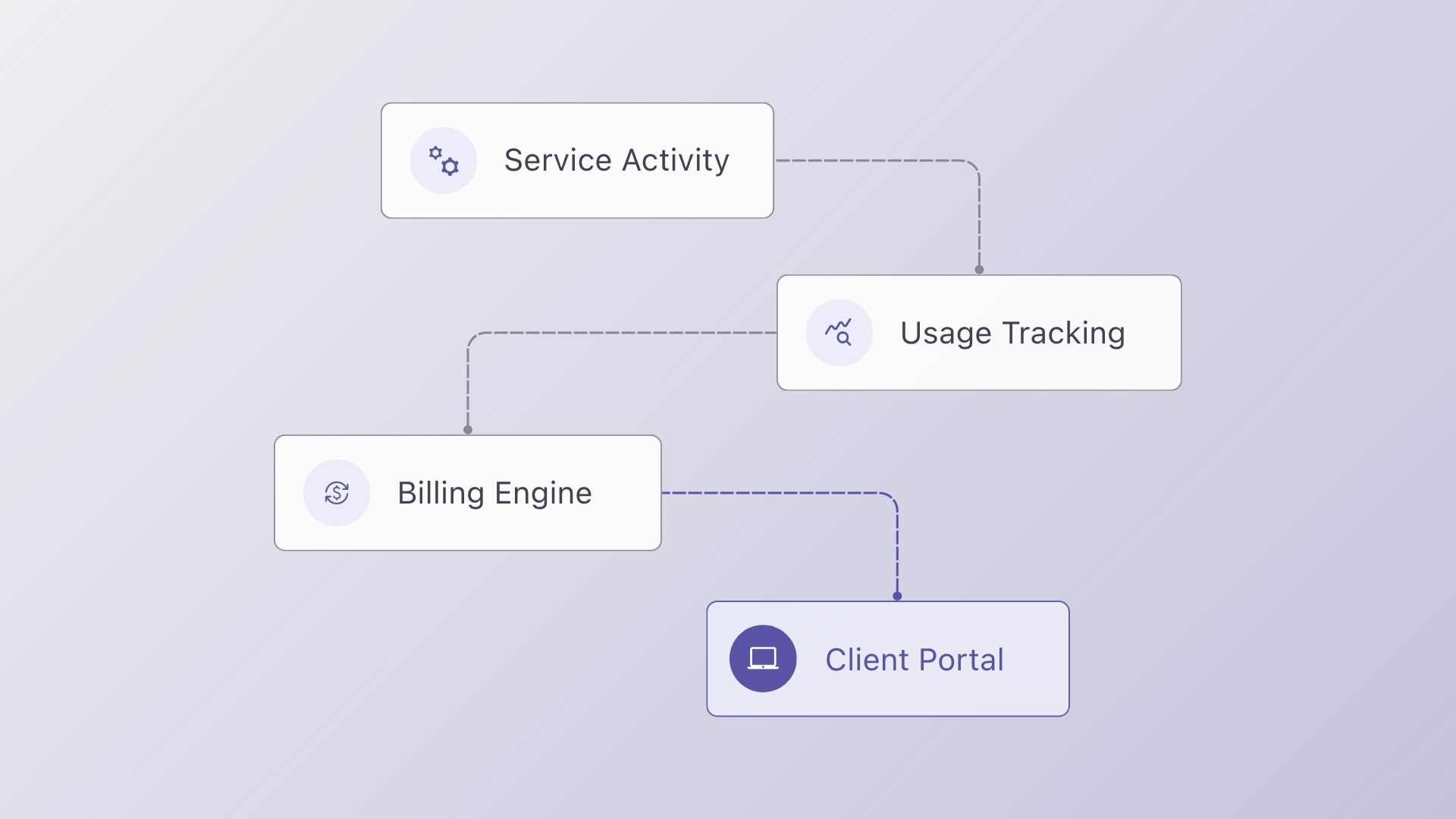
In hybrid environments, the client needs to see exactly what they are paying for, especially when invoices fluctuate based on usage or specialized service requests. A modern billing portal must provide a real-time view of consumption and service delivery, enabling clients to audit their own costs at any time.
When you close the visibility gap, you build a foundation of trust that makes it much easier to discuss contract expansions or price adjustments in the future.
Automating The License True-Up Cycle
Usage-based models offer significant revenue potential, but they also introduce the risk of “license leakage,” where an MSP pays for third-party software that they fail to bill back to the client. In a co-managed environment, where client employees might add or remove users frequently, manual tracking is virtually impossible. Automated IT Billing systems solve this by synchronizing directly with vendor portals to ensure that every active license is accounted for on the next invoice.
This automation ensures that your margins are protected from the “quiet drain” of unrecovered costs, which can represent a significant percentage of a firm’s net profit over a fiscal year.
The Psychological Shift In Client Negotiations
Moving away from flat-rate pricing requires a shift in how you communicate value during the sales process. Instead of presenting usage-based or tiered billing as a variable cost risk, we position it as a tool for budget flexibility and scalability.
This approach allows the client to pay only for what they use during leaner months while having the immediate capacity to scale during growth phases. Modern buyers increasingly prefer consumption-based models because they align costs directly with business utility.
Handling Variable Billing In Cash Flow Forecasting
One of the internal challenges of high-growth billing models is managing the fluctuation in monthly revenue.
While a per-user flat fee provides a predictable floor, tiered and usage-based models introduce a degree of variability that can complicate cash flow forecasting. We recommend a “core plus variable” approach, where the foundational managed services are billed on a fixed recurring basis, while the consumption-heavy components are billed in arrears.
This structure provides the business with a stable baseline of operational capital while allowing the top-line revenue to expand dynamically with the client’s success.
Data Integrity As A Requirement For Usage Audits
When an invoice varies from month to month, the likelihood of a client inquiry or dispute increases significantly.
To maintain a professional relationship, the MSP must be able to provide “audit-proof” data that clearly justifies every line item on the bill. If your billing is based on manual spreadsheets or vague estimates, you lack the defensibility needed to resolve these questions quickly. A modern IT Billing infrastructure maintains a digital paper trail of usage logs and service timestamps, ensuring that every charge is backed by objective data that can be reviewed and verified by the client’s own finance department.
Scalability And The Future Of Consumption-Based IT
The ability to offer sophisticated, flexible pricing is no longer a luxury reserved for enterprise-level providers.
As the market matures, clients expect their MSP to act as a sophisticated technology partner that can adapt to their changing business needs. Investing in a billing infrastructure that supports co-managed logistics and tiered usage today is an investment in your firm’s future scalability.
Simply by removing the administrative bottlenecks associated with complex billing, you empower your team to chase larger, more complex contracts with the confidence that your back office can handle the load.

Next Steps For Modernizing Your Billing Models
Transitioning to advanced billing structures requires a careful evaluation of your current administrative capacity and your clients’ service needs.
We recommend a phased approach to ensure that your team can adapt to the new workflows without disrupting cash flow.
- Evaluate your top five largest clients to determine if a co-managed or tiered model would better reflect their current resource consumption.
- Identify “hidden” costs in your current contracts, such as unbilled cloud storage or frequent out-of-scope escalations that should be captured in a usage-based tier.
- Audit your current license management process to calculate the “leakage” between what you pay vendors and what you bill to clients.
- Survey your finance team to identify how many hours per month are spent on manual reconciliation for complex or non-standard invoices.
- Research IT Billing platforms that offer native integration with your existing PSA and vendor tools to eliminate manual data entry.
Taking these steps provides the operational clarity needed to move beyond stagnant pricing models and embrace the high-growth potential of modern IT services.
Simplify your customer payments, unlock instant cash flow
Keep reading

How Seamless PSA Integration for MSP Payments Is Changing MSP Operations
ConnectBooster vs. Alternative Payments: Which MSP Payment Platform Fits Your Billing Workflow?