•
Automate Accounts Receivable
•
IT Services
•
Reduce DSO
•
Small Businesses
February 12, 2026
Hidden Leaks: Why Uncollected Fees Kill Growth
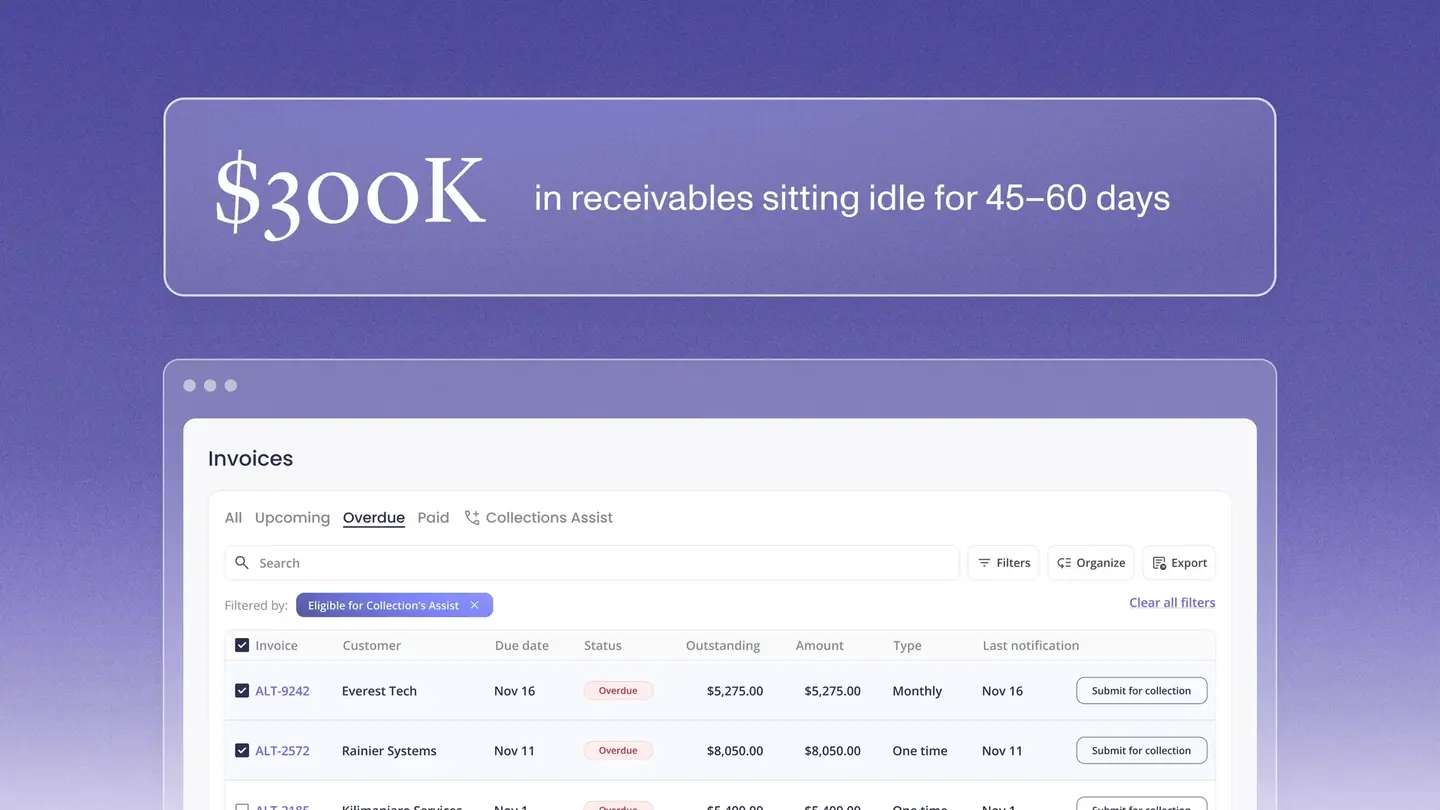
Most firms believe growth has one answer: more revenue.
More clients. More services. More billable hours.
So they push harder on sales. But growth rarely stalls because demand is weak. It stalls because cash is slow.
Late payments are not just missing money. They are frozen opportunities.That trapped cash could be funding new hires, better technology, strategic expansion, or stronger partner distributions.
The real constraint is not collections. It is capital velocity. And most firms are leaking it every single month.
AR Is Not an Accounting Metric. It’s Growth Capital
Revenue supports your plans. Cash makes those plans happen.
Many businesses struggle not because they lack sales, but because they lack available cash. Revenue can look strong on paper, but if payments are delayed, there is no real capital to hire, invest, or expand.
Research from the JPMorgan Chase Institute shows that many small businesses operate with limited cash buffers, often less than a month of operating expenses. When cash is delayed, operational flexibility shrinks quickly.
Every unpaid invoice represents:
- Deferred hiring
- Delayed software investment
- Postponed partner distributions
- Missed expansion opportunities
This is the opportunity cost of AR.
If $300,000 sits in receivables for 45–60 days, what return could that capital generate if it were accessible today?
Growth is funded by collected cash not billed revenue.
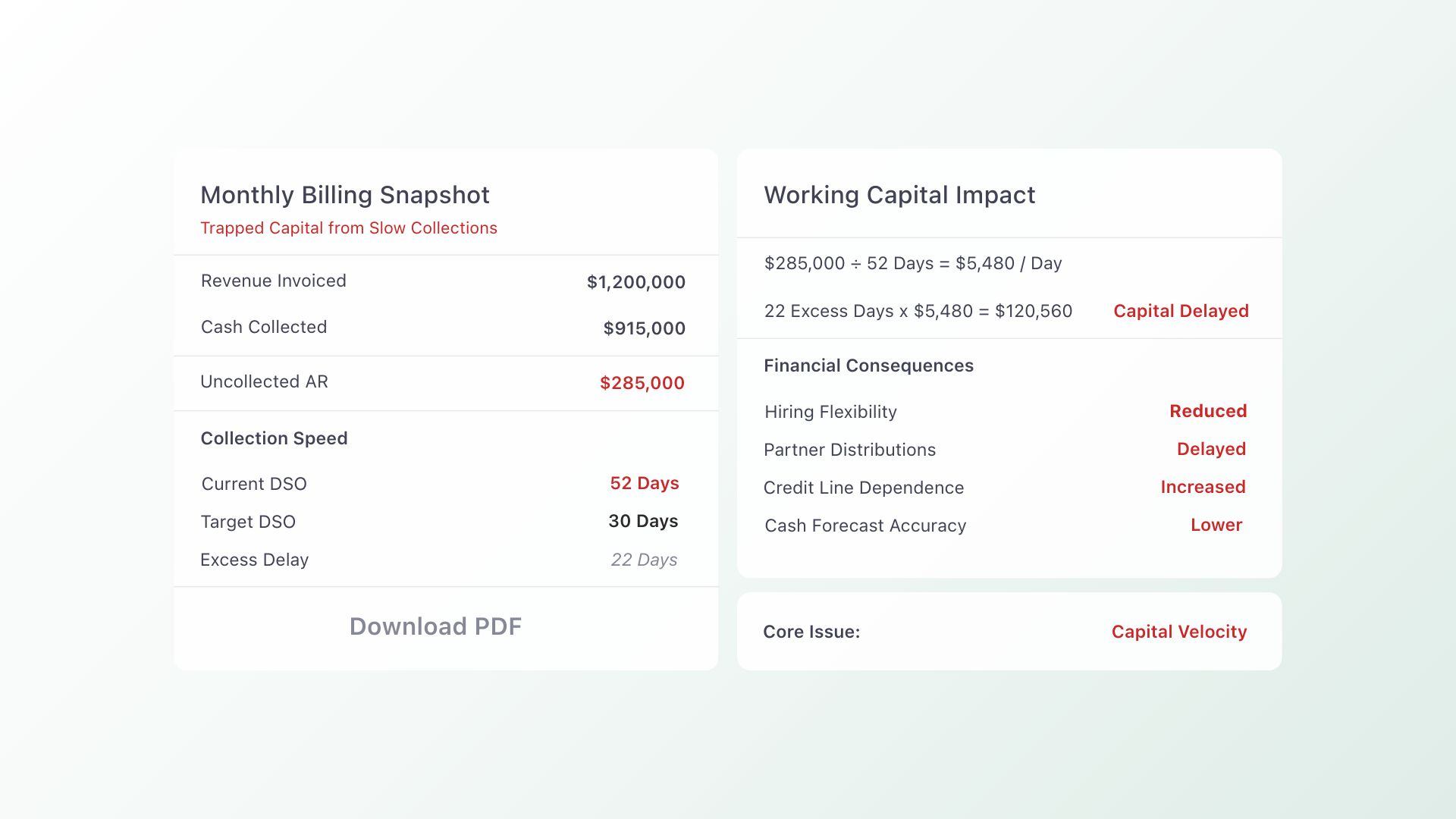
The Compounding Cost of Slow Collections
The drag from late payments compounds quietly over time.
1. Hiring Delays
Growing firms must often hire ahead of revenue. That requires liquidity. When cash is tied up in receivables, leadership becomes conservative. Hiring slows, not because demand is weak, but because capital is unavailable.
2. Technology Stagnation
Modern firms invest continuously in automation, cybersecurity, and operational systems. But these upgrades require upfront cash.
Delays in AR translate directly into delayed modernization.
3. Lower Partner Distributions
Partners often interpret cash pressure as a margin issue. In many cases, it is simply a liquidity timing issue.
Improving collection speed can increase available distributable income without increasing revenue.
That’s a direct lever on firm profitability.
4. Increased Reliance on Credit
When firms borrow to smooth cash flow while waiting on receivables, they pay interest on money they have already earned.
Working capital inefficiency becomes a hidden expense.
Companies that optimize working capital often unlock significant cash without operational expansion. Improving the cash conversion cycle can materially strengthen financial performance and resilience.
Why Firms Tolerate AR Drag
If slow collections harm growth, why do firms accept it?
Because the problem is usually systemic, not relational.
Common barriers include:
- Manual invoicing processes
- Inconsistent payment reminders
- Limited payment method options
- Administrative overload
- Discomfort asking clients to pay faster
Many firms assume collections are about confrontation. In reality, collections are about infrastructure.
Clients generally pay according to the system presented to them. If reminders are inconsistent and payment methods are inconvenient, delays become normalized.
The fix is to replace ad hoc follow-up with a defined sequence. The Escalation Ladder is a five-rung sequence for overdue invoices that moves from friendly reminder to final decision on a fixed schedule, so every unpaid invoice always has a defined next step. We walk through each rung, including the exact reminder language to use, in our guide to what to do when a client pays late.
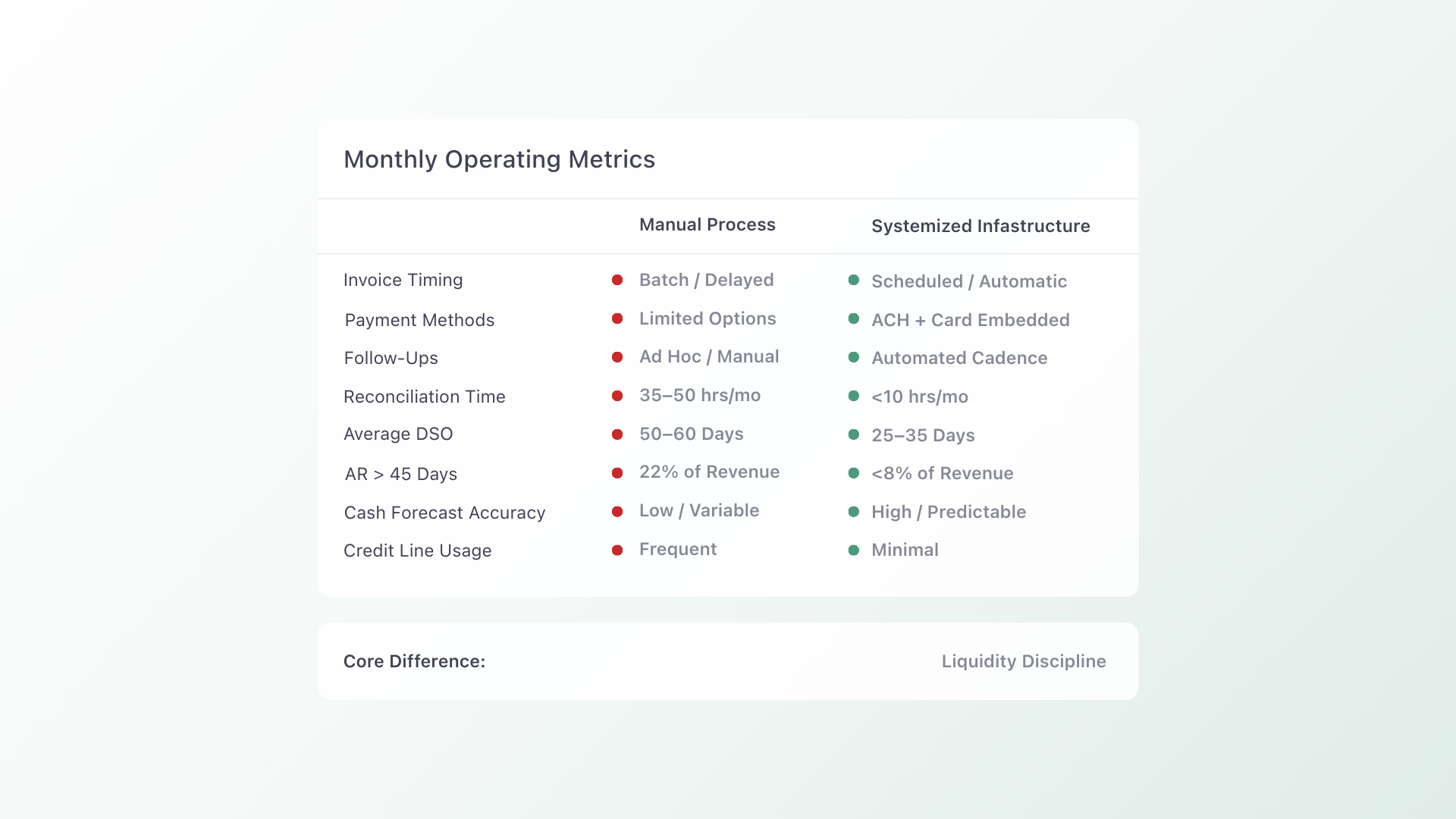
Growth Requires Liquidity Discipline
High growth firms do not treat billing and payments as routine back office tasks. They treat them as financial infrastructure that supports expansion.
Instead of sending invoices inconsistently or relying on manual follow ups, they implement standardized invoicing schedules and automated reminders to create predictable payment behavior.
They establish clear payment terms so expectations are set from the beginning, and they embed ACH and card options directly into the invoice to remove friction.
Most importantly, they maintain real time visibility into accounts receivable so leadership can monitor cash flow performance and act quickly when trends shift.
Billing is not administrative overhead. It is a system that directly influences liquidity and growth.
A significant percentage of B2B invoices are paid late globally, often extending beyond agreed terms. Payment behavior is not an anomaly, it is a structural pattern. Firms that systematize their billing processes consistently outperform those that rely on manual follow-up.
Accelerating Cash Without Adding Clients
This is where infrastructure matters.
Alternative Payments is not about chasing money. It is about accelerating access to capital you have already earned.
The real solution is not working harder to collect. It is building a system that makes timely payment the default.
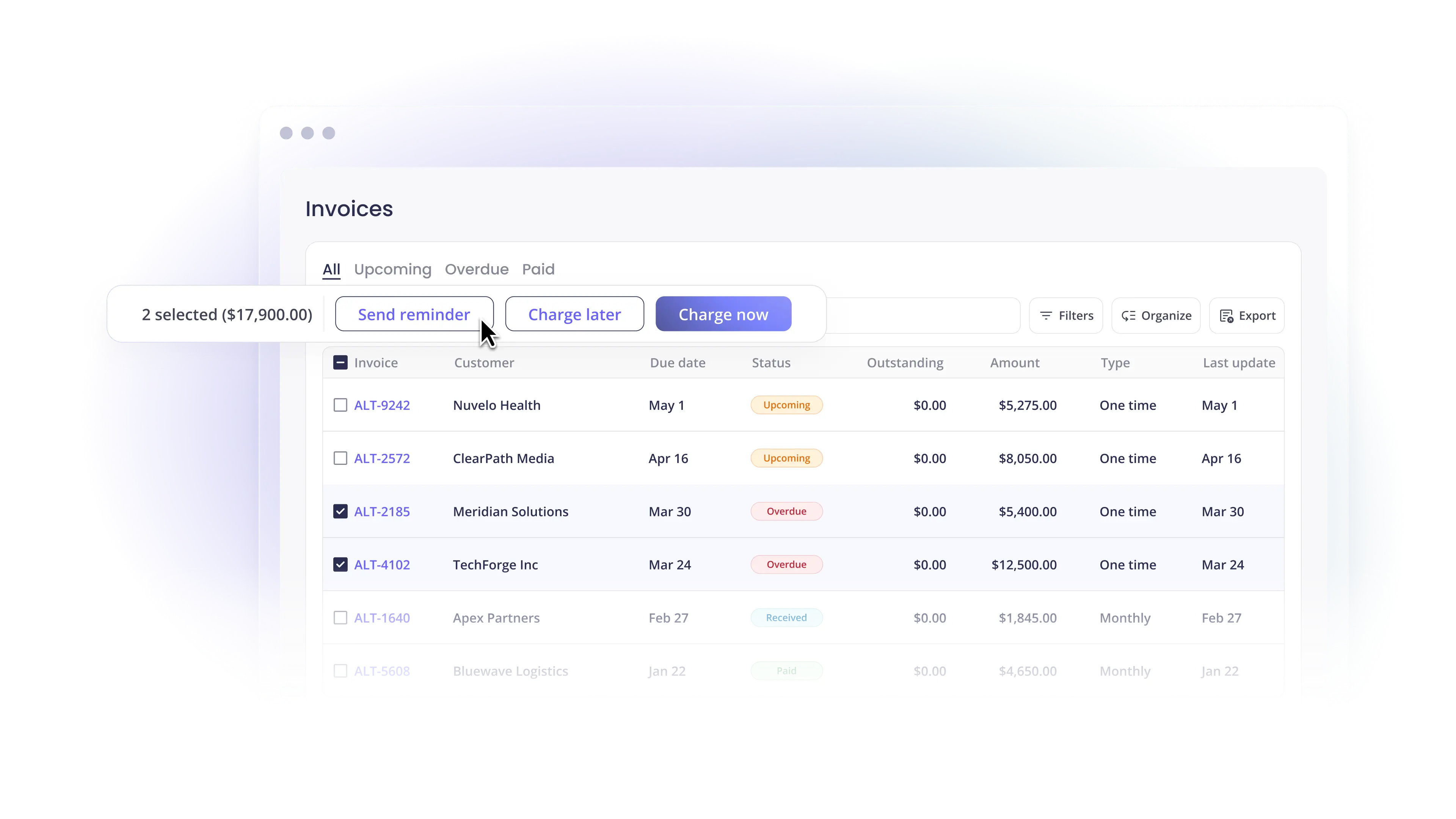
Alternative Payments replaces inconsistent manual follow ups with automated invoicing and structured reminders, ensuring invoices go out on time and clients are prompted consistently. That structure removes friction and sets clear payment expectations.
It also makes paying simple. With embedded ACH and card options directly in the invoice, clients can act immediately. Faster payments improve liquidity and directly support Firm Profitability.
For recurring service firms, automated recurring billing creates predictable cash flow instead of uncertain receivables. That stability supports confident hiring and reinvestment decisions.
Just as important is visibility. Real time insight into DSO, aging, and payment trends turns accounts receivable into a strategic metric rather than a back office report.
The outcome is simple. Faster capital velocity, less administrative strain, stronger liquidity, and ultimately, stronger Firm Profitability.
Growth Is Already on Your Balance Sheet
Many firms assume expansion requires one thing: more sales. But in many cases, the capital needed to scale is already sitting on the balance sheet, tied up in accounts receivable.
Uncollected fees quietly reduce investment capacity, limit partner returns, and slow operational agility.
The most expensive response is giving up on the money entirely. Invoices that age past 30 days are usually still collectible, and writing them off should be a last resort, not a habit. Here is when to write off an unpaid invoice.
Before launching another marketing campaign or introducing a new service line, it is worth asking: How much capital is currently trapped in AR? How much growth is being delayed not by lack of demand, but by slow collections?
The firms that scale efficiently do three things well. They grow revenue, protect margins, and accelerate capital velocity. Revenue gets attention. Margins get measured. But capital velocity determines how quickly strategy turns into execution.
Late payments are not just inconvenient. They restrict momentum.
And the solution is not confrontation. It is infrastructure.
If you are looking to accelerate cash flow and strengthen Firm Profitability, learn how Alternative Payments helps firms turn receivables into reliable working capital.
Simplify your customer payments, unlock instant cash flow
Keep reading


ConnectWise QuickBooks integration: what a complete payment workflow should cover

NetSuite payment gateways: an enterprise MSP buyer's framework