•
IT Services
•
Automate Accounts Receivable
•
Enterprise
•
Mid-market
January 6, 2026
Future-Proofing Your Back Office: What to Look for in Modern IT Billing Technology
Choosing the right billing platform is less about feature comparisons and more about long-term confidence.
When MSPs evaluate billing technology, it is easy to get caught up in surface-level capabilities. What matters more is whether the system can quietly support growth without introducing risk, friction, or ongoing manual work. As billing volume increases, small weaknesses become magnified, which is why defining what “good” actually looks like matters before reviewing options.
To ground that evaluation, we consistently look for a set of operational signals that indicate whether a billing platform is built to scale.
When comparing billing platforms, we recommend asking the following:
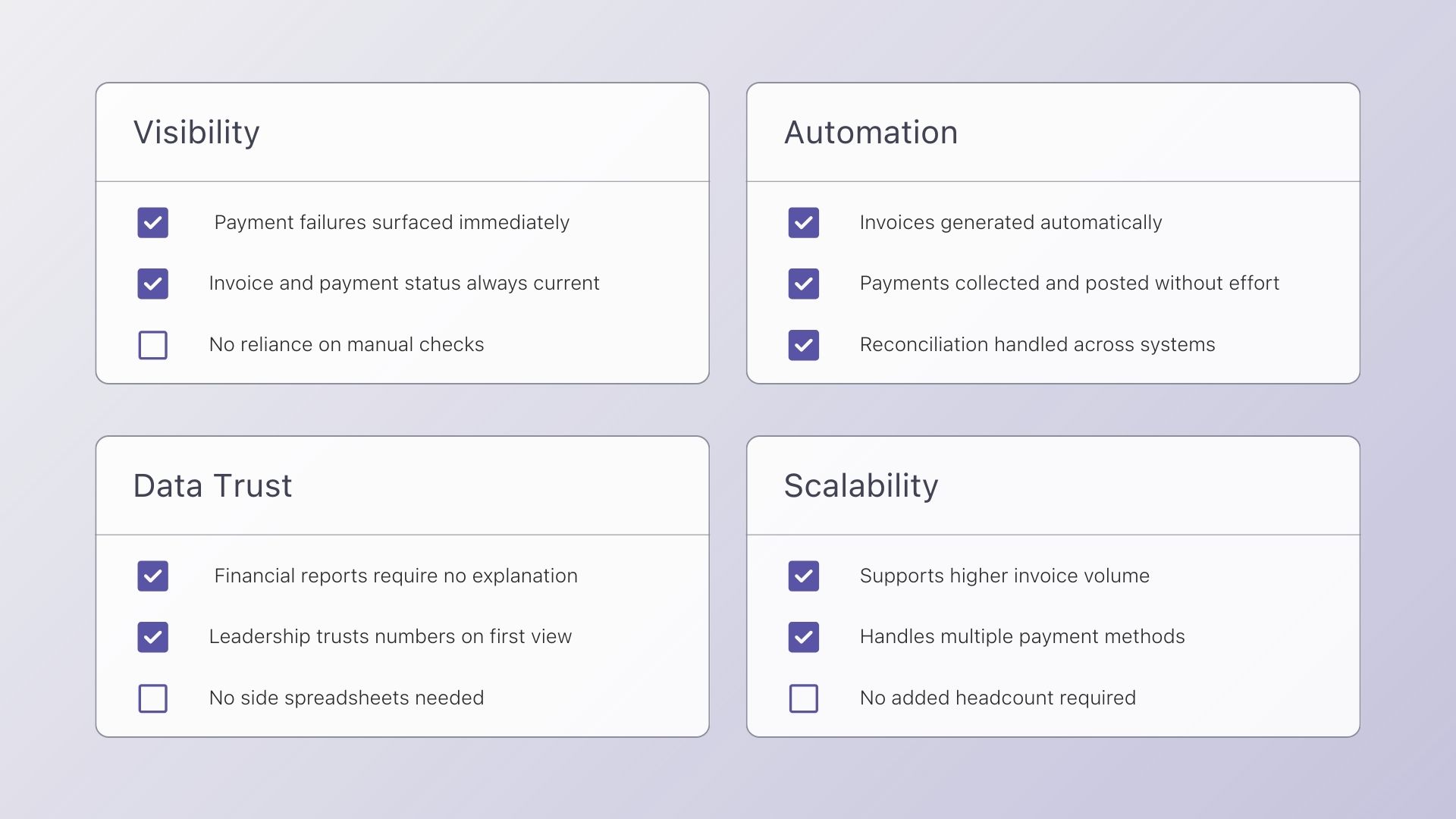
- Does the platform surface payment failures immediately, without relying on someone to notice
- Are invoices, payments, and reconciliation fully automated across connected systems
- Can leadership access trusted financial data without added explanation or validation
- Does the system reduce the need for human follow-up rather than relying on it?
- Will the platform handle higher volume without increasing back-office workload?
Each of these questions points to the same underlying outcome, reducing uncertainty while increasing control. A platform that performs well here removes drag quietly and supports clarity as the business grows. One that does not may appear functional today but will continue to demand attention, explanation, and manual effort as complexity increases.
The Cost Of Treating Billing As “Good Enough”
The most expensive billing problems are rarely the obvious ones.
A system that mostly works can still create ongoing overhead. Small inefficiencies compound quietly. Payments take longer to reconcile. Reports require explanation before they can be trusted. Exceptions pile up and demand human intervention. None of these issues feels urgent in isolation, but together they drain time and focus.
We often see this play out during routine leadership reviews. A growth hire or service expansion comes up, but the team pauses because revenue numbers need clarification or adjustments before anyone feels comfortable moving forward. The decision is not rejected, it is delayed, and that delay becomes part of the cost of the system.
When billing data requires frequent validation, leadership conversations slow down. Meetings turn into clarifications instead of planning sessions. Teams hesitate before committing to hiring or investment decisions because the numbers feel incomplete.
We see this pattern repeatedly. “Good enough” billing often costs more in attention and opportunity than teams realize. The longer it stays in place, the more normalized the friction becomes.
What “Modern” Actually Means In IT Billing
Modern billing is often described in vague terms, but the practical definition is much simpler.
A modern IT billing platform reduces human dependency while increasing visibility. Invoices are generated consistently. Payment status is clear without manual reconciliation. Failures surface immediately instead of being discovered weeks later. Data flows cleanly between systems without needing workarounds.
Modern does not mean complicated. It means dependable, transparent, and designed to support scale without increasing effort.
What Future-Proof Billing Looks Like In Practice
Modern billing is often described in vague terms, which makes it harder to evaluate what actually matters.
In practice, a future-proof billing platform reduces human dependency while increasing visibility across the entire payment lifecycle. Invoices are generated consistently and on schedule. Payment status is clear without manual reconciliation or cross-checking between systems. Failures surface immediately, instead of being discovered weeks later during reviews or client conversations. Financial data moves cleanly between connected platforms without workarounds, exports, or follow-up questions.
Modern does not mean complex or overloaded with features. It means dependable, transparent, and designed to support scale without increasing effort. When billing works this way, it fades into the background and allows teams to focus on decisions, not cleanup.
Why Integration Depth Matters More Than Feature Lists
Feature comparisons are easy. Integration depth is harder to evaluate, but far more important.
Billing does not operate in isolation. It sits between your PSA, your accounting platform, and your payment workflows. When those systems are loosely connected, data gaps appear. Manual syncing becomes normal. Errors are caught late instead of prevented early.
A deeply integrated billing environment allows information to move automatically and reliably. Invoice status updates in real time. Payments reconcile without intervention. Financial data remains consistent across systems.
We encourage MSPs to evaluate how billing technology fits into their broader ecosystem, not just what it can do on its own. The strength of those connections determines how resilient the back office will be as volume and complexity increase.
The Leadership Test: Can You Trust Your Billing Data
Every billing system eventually faces the same test: Can leadership trust the numbers without hesitation?
When time is spent validating reports instead of discussing strategy, certainty erodes even if revenue is healthy. That uncertainty affects everything from hiring timelines to service expansion plans.
We have seen MSP leadership teams delay decisions simply because billing data required reconciliation or explanation before it felt usable. The delay was not dramatic, but it was costly. Momentum slowed while clarity caught up.
A future-proof billing platform supports leadership by making financial data immediately usable. Trust in the numbers restores confidence, reduces stress, and allows decisions to move forward without unnecessary manual effort.
Evaluating Billing Through A Risk Lens
Future-proofing billing requires looking beyond convenience and into risk exposure.
Risk in billing rarely shows up as a single failure. It appears as gaps in visibility, delayed detection of issues, and dependence on manual oversight. Over time, those gaps increase financial uncertainty and operational stress. As MSPs grow, tolerance for that risk decreases, even if the system technically still works.
We encourage teams to ask a simple question when evaluating billing technology: What happens when something goes wrong? How quickly is it visible, who is alerted, and how much manual effort is required to correct it? Systems designed for scale answer those questions clearly. Systems designed for basic use often do not.
This risk-based view helps distinguish between platforms that merely process payments and those that actively protect the business.
The Emotional Impact Of Stable Billing Systems
Operational clarity has an emotional dimension that is often overlooked.
Stable billing systems reverse that dynamic. When processes run quietly and predictably, attention shifts back to higher-value work. Teams stop bracing for surprises. Trust replaces vigilance.
Finance feels pressure to catch issues early, when billing systems are unstable or opaque, and stress spreads across teams. Operations hesitate to rely on reports. Leadership carries low-grade uncertainty into planning conversations.
We see this most clearly in growing MSPs. As volume increases, manual oversight becomes exhausting. Automation and visibility do more than save time, they reduce cognitive load. That emotional relief is a meaningful part of future-proofing the back office.
Future Optionality Depends On Billing Flexibility
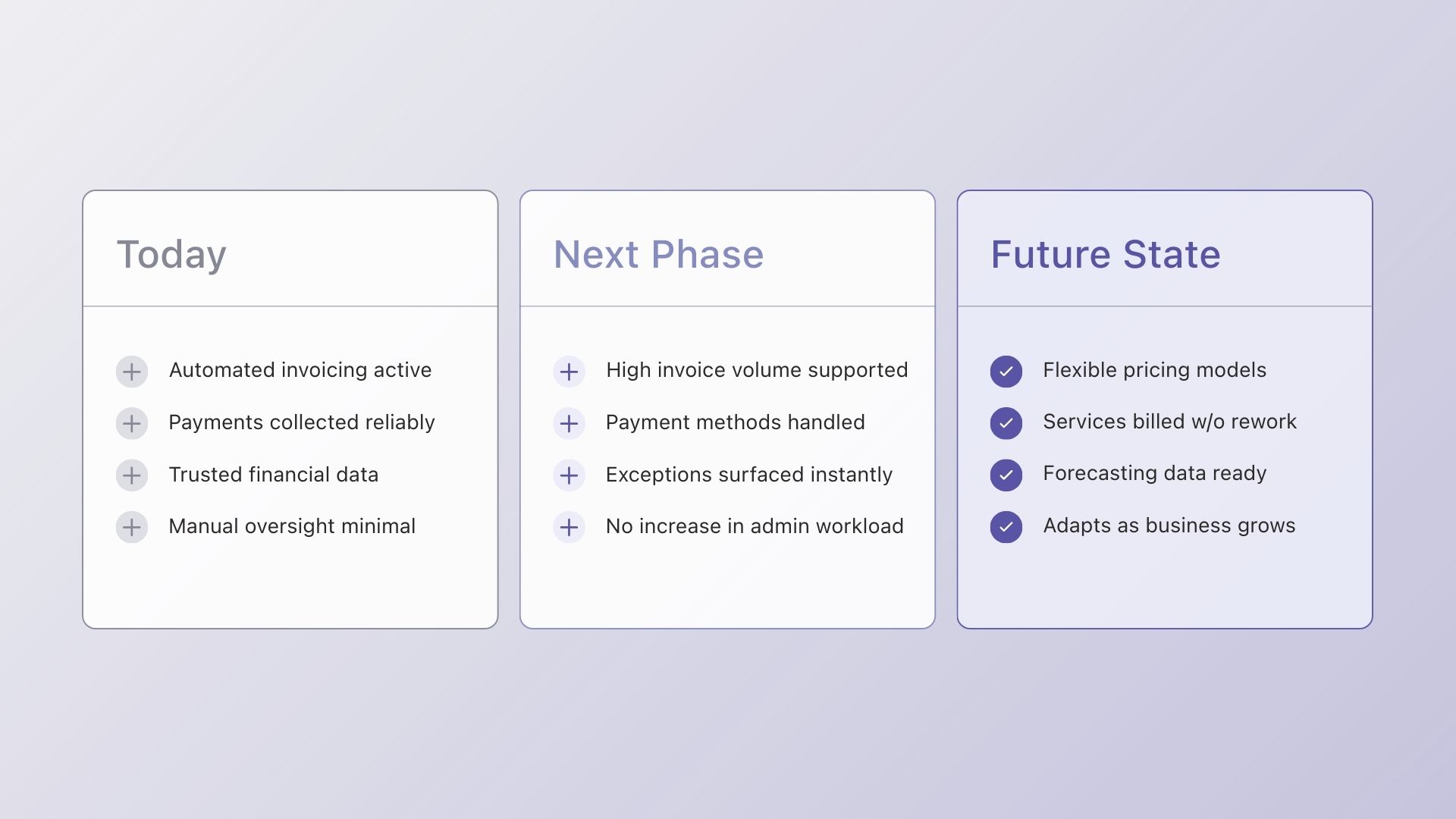
Future-proofing is not about predicting every change. It is about choosing infrastructure that can absorb change without strain. Billing platforms play a larger role in that flexibility than many teams realize.
A flexible billing platform supports new pricing models, payment methods, and client expectations without rework. It allows MSPs to adapt offerings, introduce financing, or adjust billing structures without disrupting core operations.
Platforms that lack this flexibility can lock businesses into rigid processes. Changes require workarounds. New opportunities feel risky because the billing system cannot easily support them.
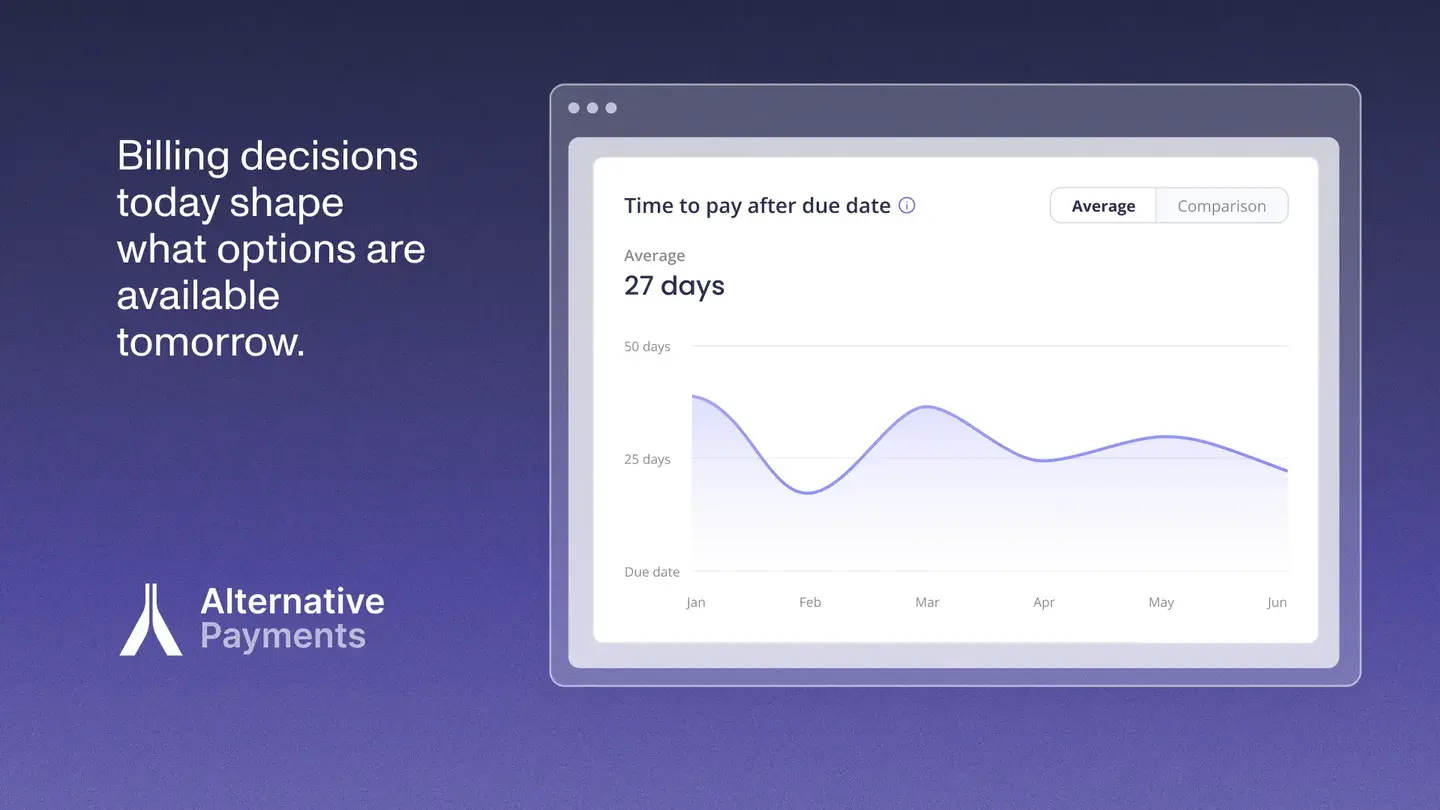
Billing decisions today shape what options are available tomorrow.
Why Billing Decisions Now Shape Long-Term Growth
Is your current billing setup actually supporting where your business is headed, or just keeping things moving for now?
For many MSPs, billing feels settled because invoices go out and payments come in. That surface-level success can hide a deeper issue. As recurring revenue grows and operations become more complex, billing systems start to influence far more than collections. They affect forecasting confidence, leadership alignment, and how quickly the business can respond to change.
Across MSP finance and operations teams, billing technology was chosen years ago for simplicity, but it often becomes the limiting factor later. What once worked fine begins to introduce delays, manual checks, and uncertainty that slow decision-making. Growth does not break systems overnight. It exposes their weak points gradually.
Next Steps For Assessing Your Billing Readiness
This final step is about reflection, not action for action’s sake.
Before making changes, it helps to assess where your current billing system truly stands.
To begin that assessment:
- Review how often billing data requires explanation before decisions are made
- Identify where manual checks or follow-ups still exist in your payment workflow.
- Ask leadership whether billing numbers are trusted immediately or verified first.
- Consider whether your current platform could support higher volume without added effort.
These questions surface readiness gaps without assigning blame or forcing premature change. They help teams see where visibility breaks down and where operational confidence starts to erode.
Meaningful improvement in IT billing does not begin with new tools. It begins with an honest assessment, because understanding where visibility or risk is lost is always the first step toward restoring control and confidence.
Simplify your customer payments, unlock instant cash flow
Keep reading


Can AI financial analysis explain why your margins changed?

Autotask QuickBooks integration: choosing a billing and payment operating model