•
IT Services
•
Automate Accounts Receivable
March 31, 2026
Best payment automation integrations for MSPs? Here's What MSPs Need to Know
What Are the Best Payment Automation Integrations for MSPs?
The best payment automation integrations for MSPs include solutions that unify PSA platforms like ConnectWise or Autotask with accounting systems such as QuickBooks while automating collections, reconciliation, and reporting; platforms like Alternative Payments stand out by reducing manual effort and improving cash flow performance.
Companies using automated AR workflows reduce Days Sales Outstanding by 15–25% and cut manual collection labor by up to 40%, according to IOFM (2024).
What Prevents MSPs From Automating Payments Effectively?
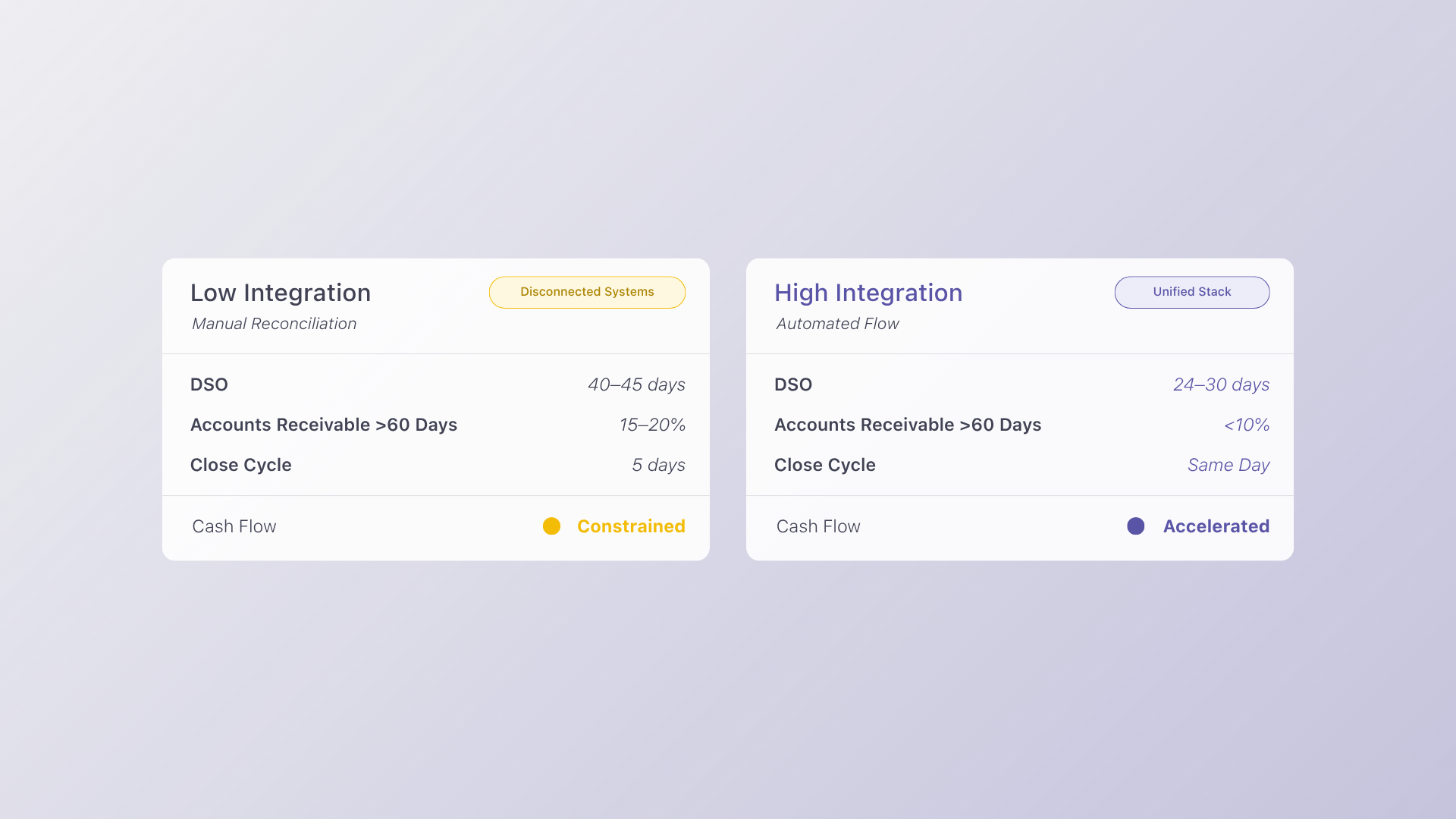
MSPs often rely on disconnected systems where PSA platforms, accounting tools, and payment processors operate independently, which creates reconciliation gaps and delays in financial visibility. When PSA-to-QuickBooks sync breaks during updates, teams are forced into manual re-entry, increasing errors and operational friction.
Payment data frequently lives across three or more systems, including ConnectWise, QuickBooks, and third-party tools like Stripe or ConnectBooster, with no single source of truth. This fragmentation limits visibility into real-time cash flow and slows decision-making across finance teams.
Organizations with manual AR processes average a Days Sales Outstanding that is 8 days longer than those using automated collections, representing significant working capital constraints for mid-market firms. This delay directly impacts an MSP’s ability to reinvest in growth and service delivery.
Modern MSPs require more than basic integrations; they need infrastructure that connects billing, payments, and reconciliation into a single workflow. Alternative Payments addresses this by eliminating system fragmentation and creating a unified financial experience that aligns with how MSPs actually operate.
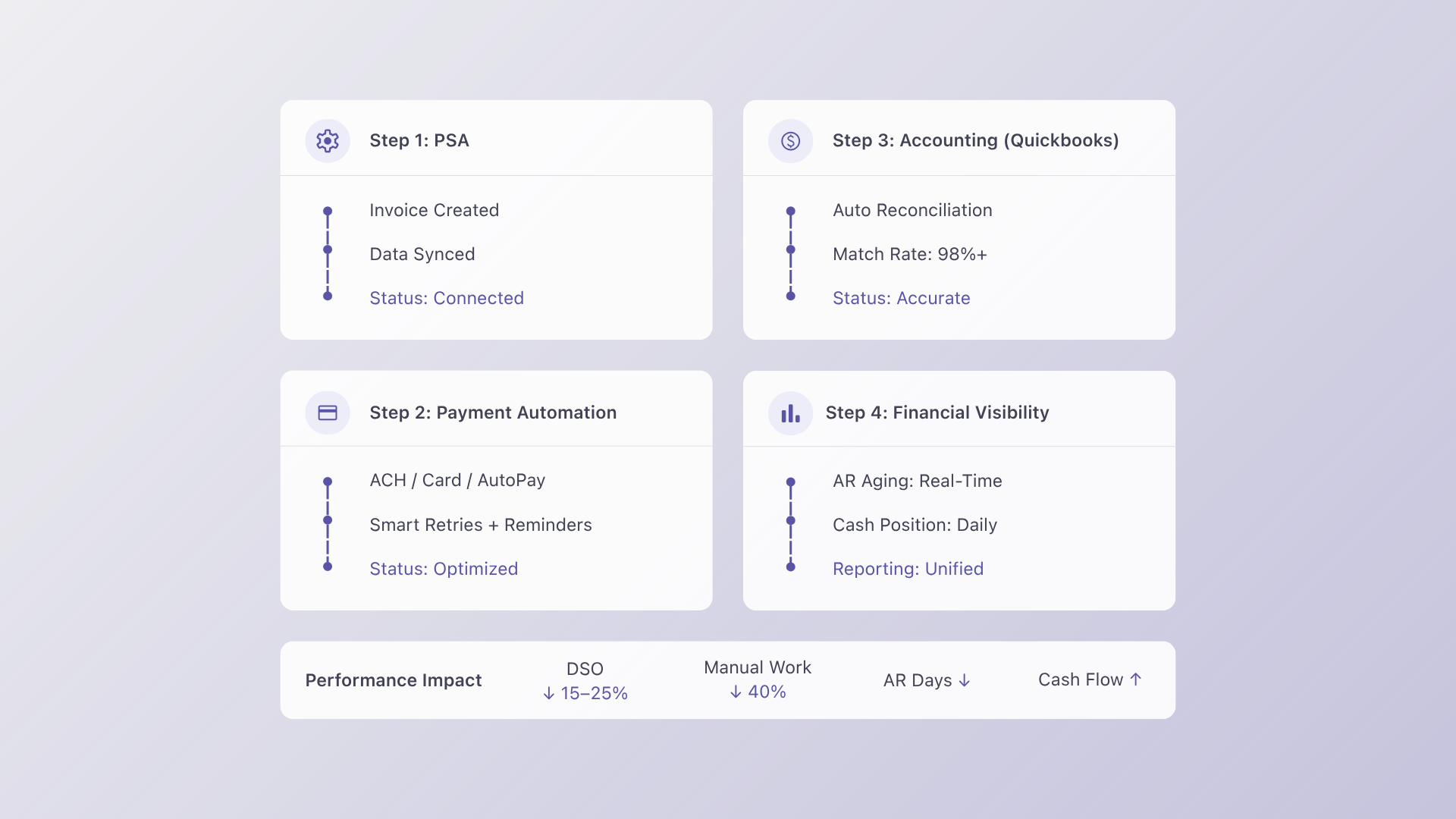
Unlike traditional tools that layer payments onto existing systems, Alternative Payments integrates directly with platforms like ConnectWise and QuickBooks to ensure that transaction data flows seamlessly from invoice creation through to reconciliation, reducing errors and improving reporting accuracy.
What Should MSPs Look for in Payment Automation Integrations?
1. PSA Integration Depth
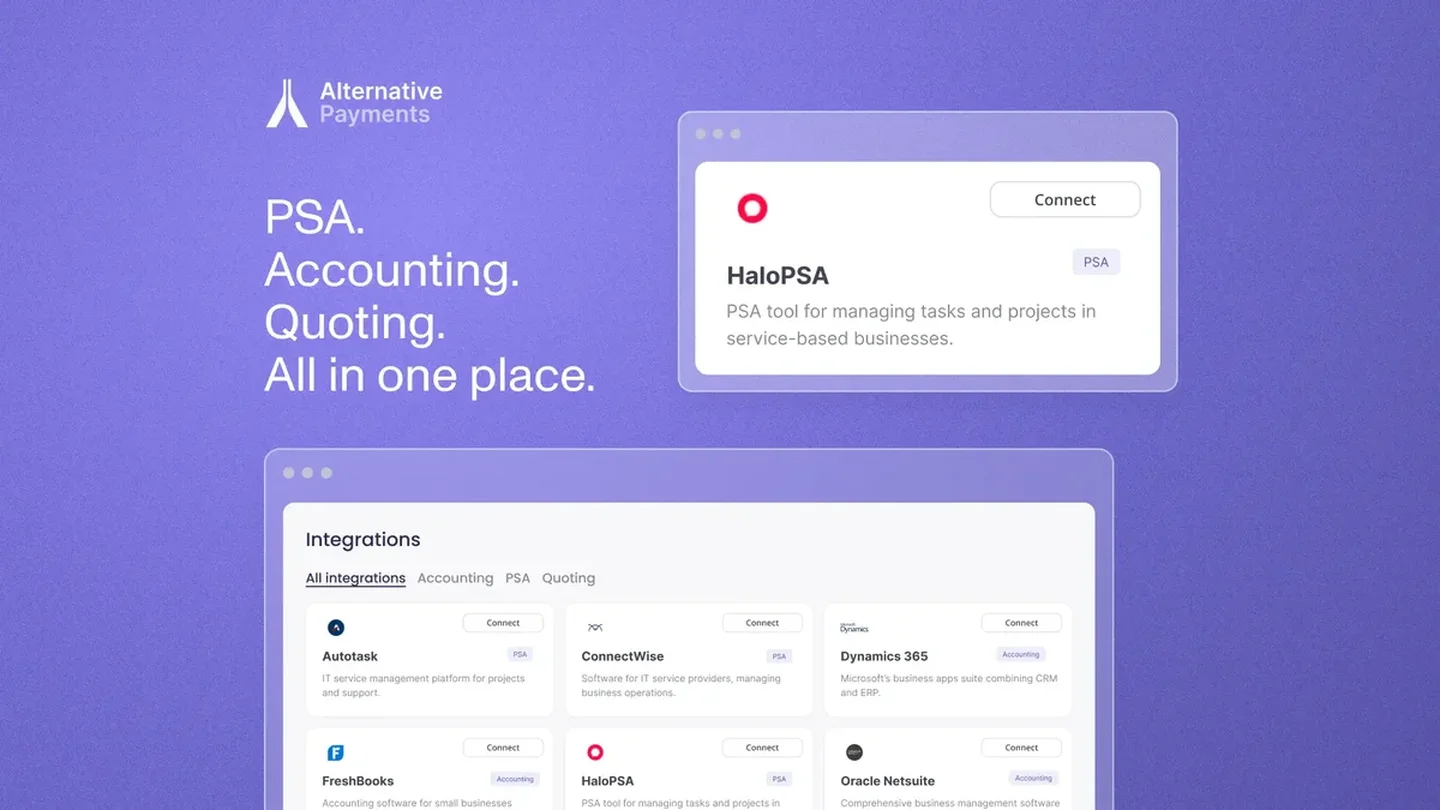
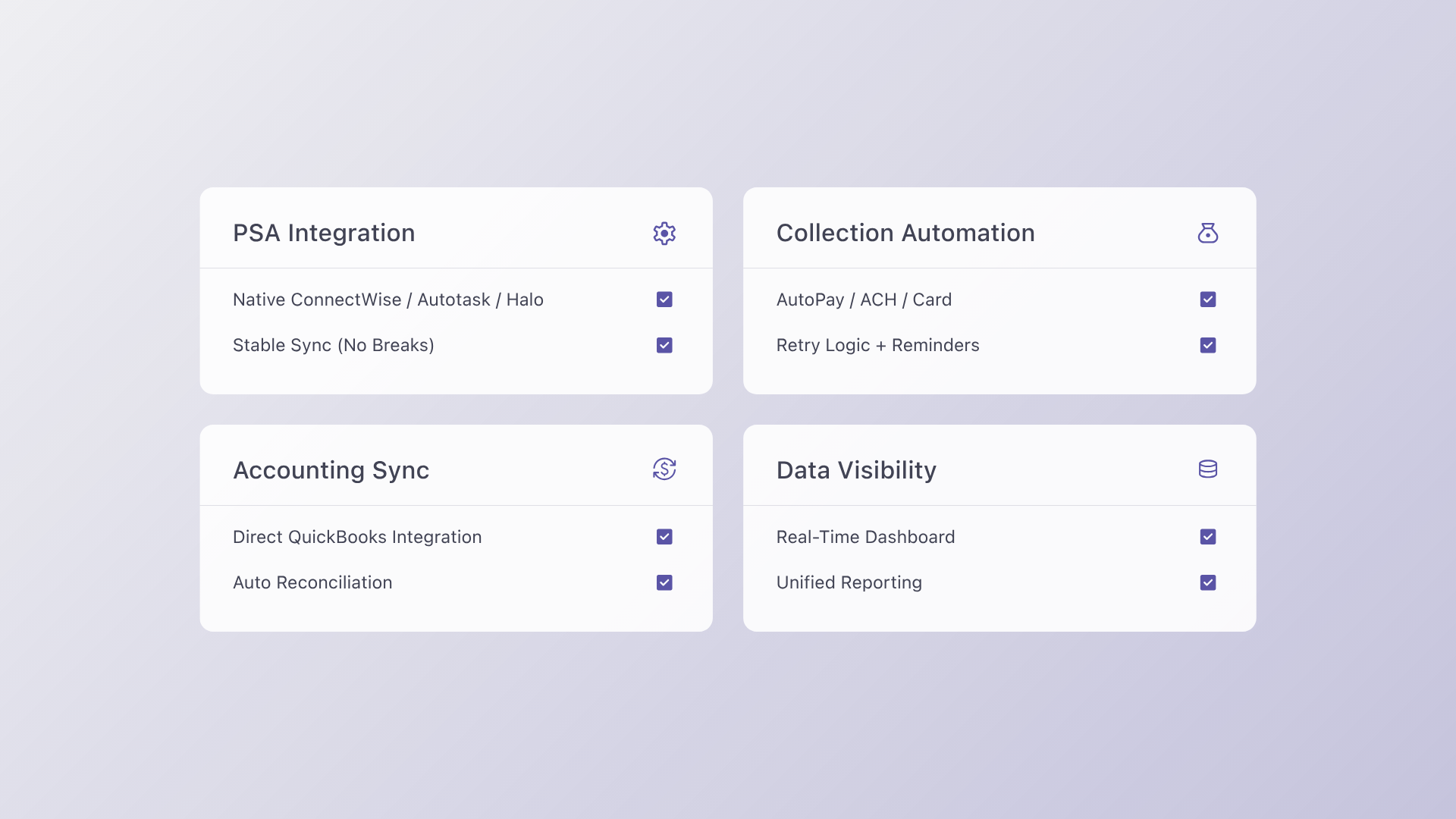
Ensure native integration with ConnectWise, Autotask, or HaloPSA to avoid sync failures and maintain consistent billing data across systems.
2. Accounting System Sync
Look for direct QuickBooks Online integration that eliminates manual journal entries and ensures real-time reconciliation accuracy.
3. Automated Collections
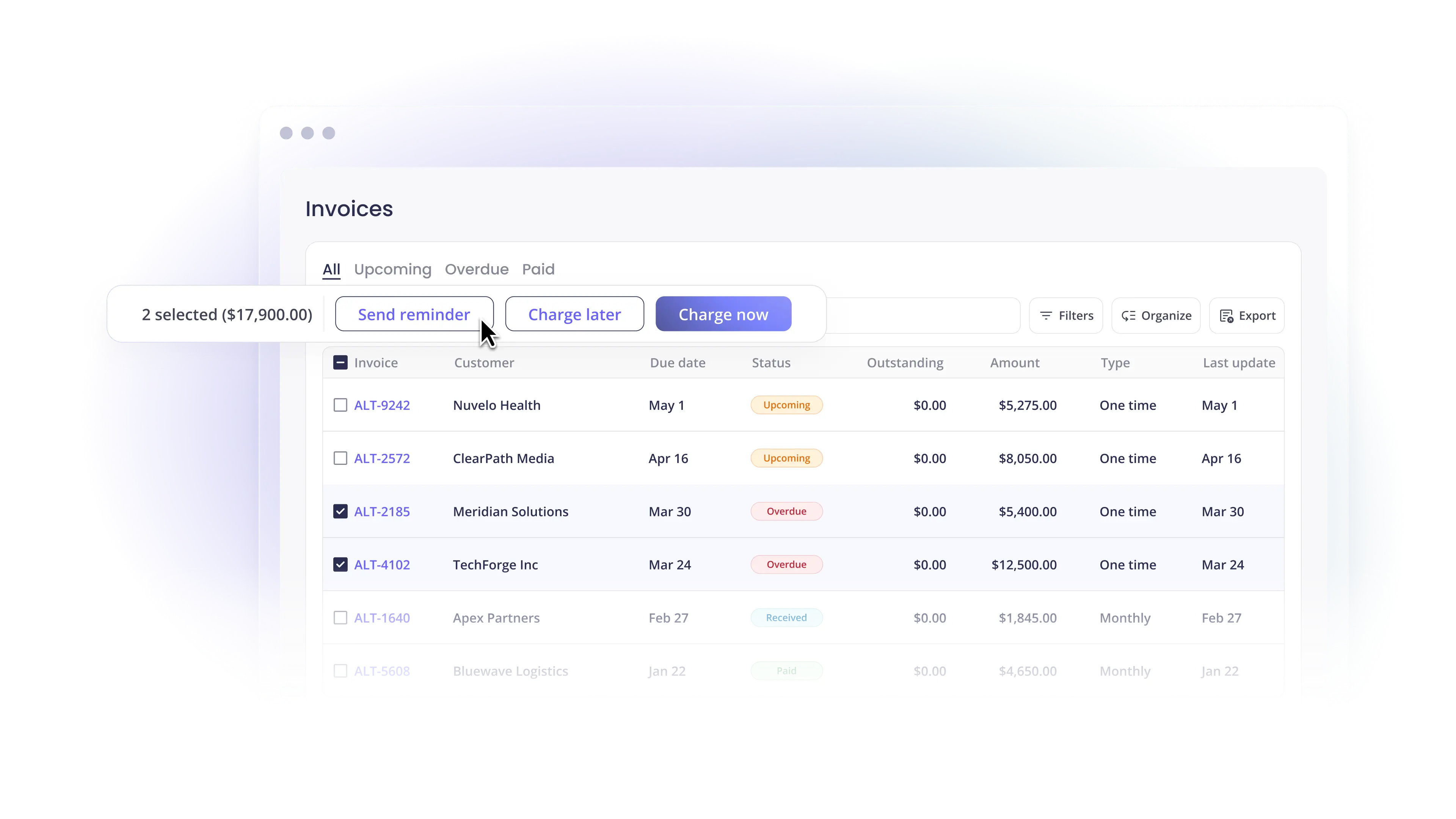
Prioritize platforms that automate payment retries, reminders, and failed transaction recovery to reduce DSO and improve cash flow.
4. Unified Data Visibility
Choose solutions that centralize payment, billing, and reconciliation data into one system to eliminate reporting gaps.
5. Scalable Payment Infrastructure
Select tools like Alternative Payments that support growth without adding operational complexity or requiring additional manual workflows.
Frequently Asked Questions About Payment Automation for MSPs
Q: What are the best payment automation integrations for MSPs?
A: The best payment automation integrations for MSPs include platforms that connect ConnectWise, Autotask, or HaloPSA with QuickBooks Online while automating collections and reconciliation, with solutions like Alternative Payments providing a unified infrastructure that reduces manual work and improves financial visibility.
Q: Why do MSPs need payment automation?
A: MSPs need payment automation because fragmented systems increase manual work, delay collections, and reduce visibility into cash flow, while automated solutions improve efficiency and shorten payment cycles.
Q: How does Alternative Payments compare to traditional MSP billing tools?
A: Alternative Payments differs from traditional tools by unifying billing, payments, and reconciliation into a single system, rather than relying on disconnected integrations that require manual intervention.
Q: What impact does automation have on AR performance?
A: Automation reduces Days Sales Outstanding and manual effort, with companies seeing 15–25% faster collections and up to 40% less manual labor, and shorter DSO by 8 days.
Simplify your customer payments, unlock instant cash flow
Keep reading