•
IT Services
•
Automate Accounts Receivable
•
Collections
•
Security
January 9, 2026
A Step-By-Step Strategy To Win Disputes On MSP Payments
For MSPs operating on recurring revenue, even a single lost dispute can ripple outward. Revenue is clawed back. Finance teams drop everything to respond. Processors take notice. And leadership confidence in billing predictability quietly takes a hit.
The reality is that most chargebacks are decided long before a response is ever submitted. Outcomes hinge on whether billing, service delivery, and authorization data are already aligned, accessible, and defensible when the dispute arrives.
Before diving into tactics, it helps to understand what evidence actually carries weight with processors and issuing banks.
It starts with documentation readiness, continues with alignment between billing and service records, depends on responding within tight timelines, and ultimately improves through prevention. When these elements work together, disputes become easier to manage and far less disruptive.
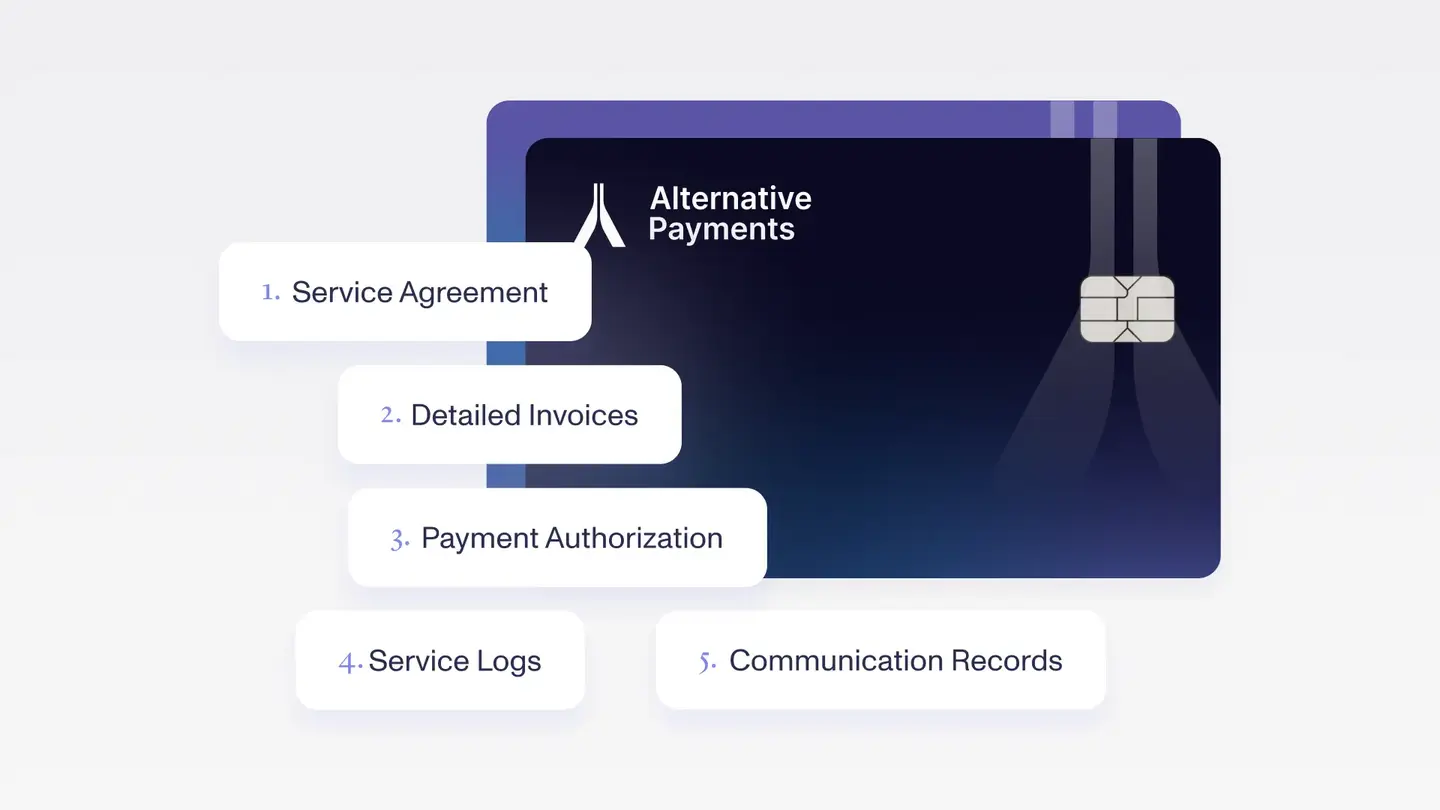
The most effective chargeback responses include:
- A signed or clearly accepted service agreement outlining billing terms
- Detailed invoices that align directly with services delivered
- Proof of payment authorization or stored payment credentials
- Service logs or ticket history showing ongoing engagement
- Communication records confirming acknowledgment or receipt
When this information is readily available, disputes become easier to resolve. When claims are scattered or incomplete, even valid ones become vulnerable.
The goal is not to overwhelm the bank with documents. It is to remove ambiguity. Clear evidence shortens review cycles and increases win rates.
Why Chargebacks Deserve Serious Attention
Are chargebacks just a rare inconvenience, or are they quietly shaping the risk profile of your MSP payments?
They are more than most teams realize. Even infrequent disputes introduce financial friction, operational distraction, and long-term processor scrutiny that can compound over time.
We see chargebacks treated as edge cases far too often. A dispute comes in, someone scrambles to respond, and the team moves on once it is resolved or written off. The problem is not the individual event. It is the lack of a repeatable defense strategy behind it.
In MSP environments built on recurring revenue, chargebacks disrupt more than a single transaction. They interrupt trust in billing systems, force manual intervention, and introduce uncertainty into what should be a predictable cash flow. Addressing them properly requires intention, not reaction.
What Actually Triggers Chargebacks In MSP Payments
Most chargebacks are not driven by bad actors. They are driven by confusion.
Clients dispute charges when invoices are unclear, when payment authorization feels ambiguous, or when internal approvals break down on their side. In MSP billing, this often shows up when service descriptions feel generic, billing cycles change without context, or a payment posts differently than expected.
In working with MSP finance and operations teams, we consistently see disputes originate from moments where visibility drops. A client does not recognize a charge immediately. An invoice is forwarded internally without explanation. A cardholder flags a transaction because they are unsure who approved it.
None of these scenarios reflects dissatisfaction with service delivery. They reflect gaps in communication and process clarity. That distinction matters because it means many chargebacks are preventable long before a dispute is ever filed.
The Hidden Cost Of Losing A Dispute
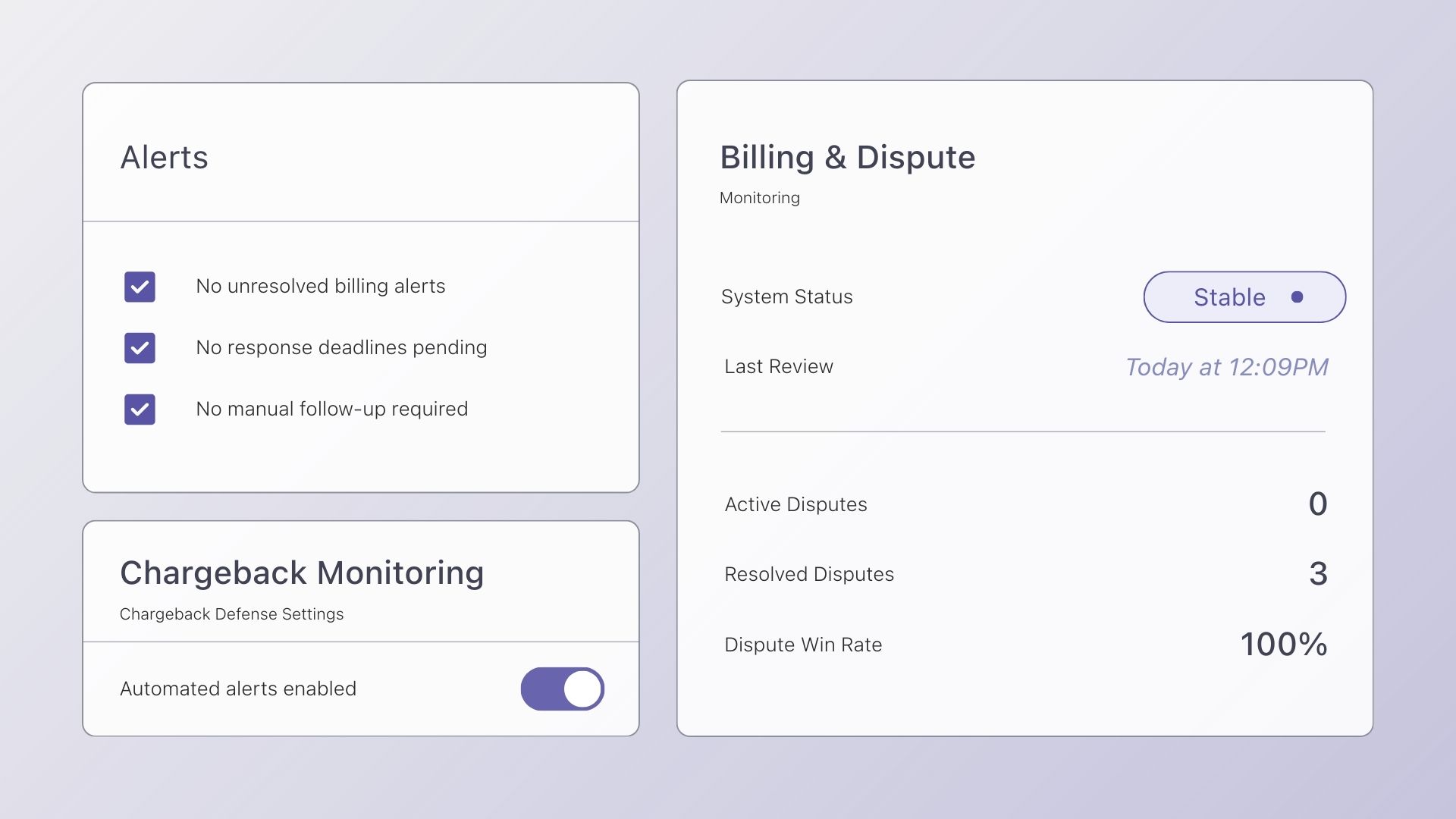
The direct fee attached to a lost chargeback is only the surface-level cost.
Every unresolved dispute contributes to how processors evaluate risk. Higher chargeback ratios can trigger monitoring programs, reserve requirements, or longer payout timelines. Internally, each dispute pulls time away from finance and leadership teams who already operate with limited bandwidth.
There is also a reputational cost inside the business. When disputes become normalized, teams begin to expect exceptions. Billing stops feeling dependable. Conversations shift from planning to cleanup.
Over time, this erodes predictability in MSP payments as a stable system. The organization spends more energy managing uncertainty than moving forward.
Why Even Strong MSPs Lose Winnable Chargeback Disputes
Many MSPs lose disputes they should win because the evidence exists, but it is not readily accessible.
Service logs live in one system. Contracts live in another. Payment confirmations are buried in inboxes or portals. When a dispute arises with a tight response window, teams struggle to assemble a complete narrative in time.
The issue is rarely a lack of documentation. It is a fragmented system. Without a defined process for evidence collection and retrieval, even valid claims fall apart under deadlines.
This is where chargeback defense stops being a finance task and becomes an operational one. Winning disputes consistently requires systems and workflows designed for response, not improvisation.
Reframing Chargeback Defense As A Process
Winning disputes is not about escalation or persistence. It is about being ready earlier.
A strong chargeback strategy treats disputes as predictable events that can be planned for. Evidence is collected continuously. Billing records are consistent. Authorization is clear. When a dispute arises, the response is procedural, not emotional.
This shift changes how MSP payments are managed overall. Instead of reacting to exceptions, teams build operational trust that disputes can be handled cleanly without disrupting daily operations.
Chargebacks do not disappear with this approach, but their impact shrinks dramatically. They become manageable signals instead of disruptive surprises.
At this point, the question becomes readiness.
Chargeback defense only works when systems, documentation, and timing are already aligned before a dispute arrives. The checklist below helps MSPs quickly assess whether their current billing setup supports that level of readiness or still relies on manual reconstruction under pressure.
MSP Chargeback Defense Readiness Checklist
Use this checklist to pressure-test how prepared your billing and payments process really is when a dispute shows up. You do not need to be perfect. You just need to know where manual work or guesswork still exists.
Ask yourself:
- If a chargeback came in today, could we pull the full service agreement quickly without hunting through folders or inboxes?
- Can we clearly show how this invoice ties back to specific services, tickets, or contracted work?
- Do we have a clean record of how and when payment was authorized, including who approved it and through which method?
- Would someone outside our team understand the invoice without additional explanation?
- Are service logs or ticket history easy to retrieve and already aligned with billing records?
- Do payment confirmations and timestamps live in one place, or are they spread across systems?
- Could we assemble a complete dispute response without pausing month-end close or pulling in multiple teams?
- Do disputes feel like a defined process, or do they still trigger a scramble when they happen?
If several of these questions feel uncomfortable or require manual work to answer, that is not a failure. It is a signal. Chargeback risk rarely comes from bad intent. It comes from systems that were never designed to tell the full story quickly.
Where Automation Strengthens Dispute Defense
Manual chargeback handling breaks down under pressure.
Automation introduces consistency where human processes struggle to keep pace.
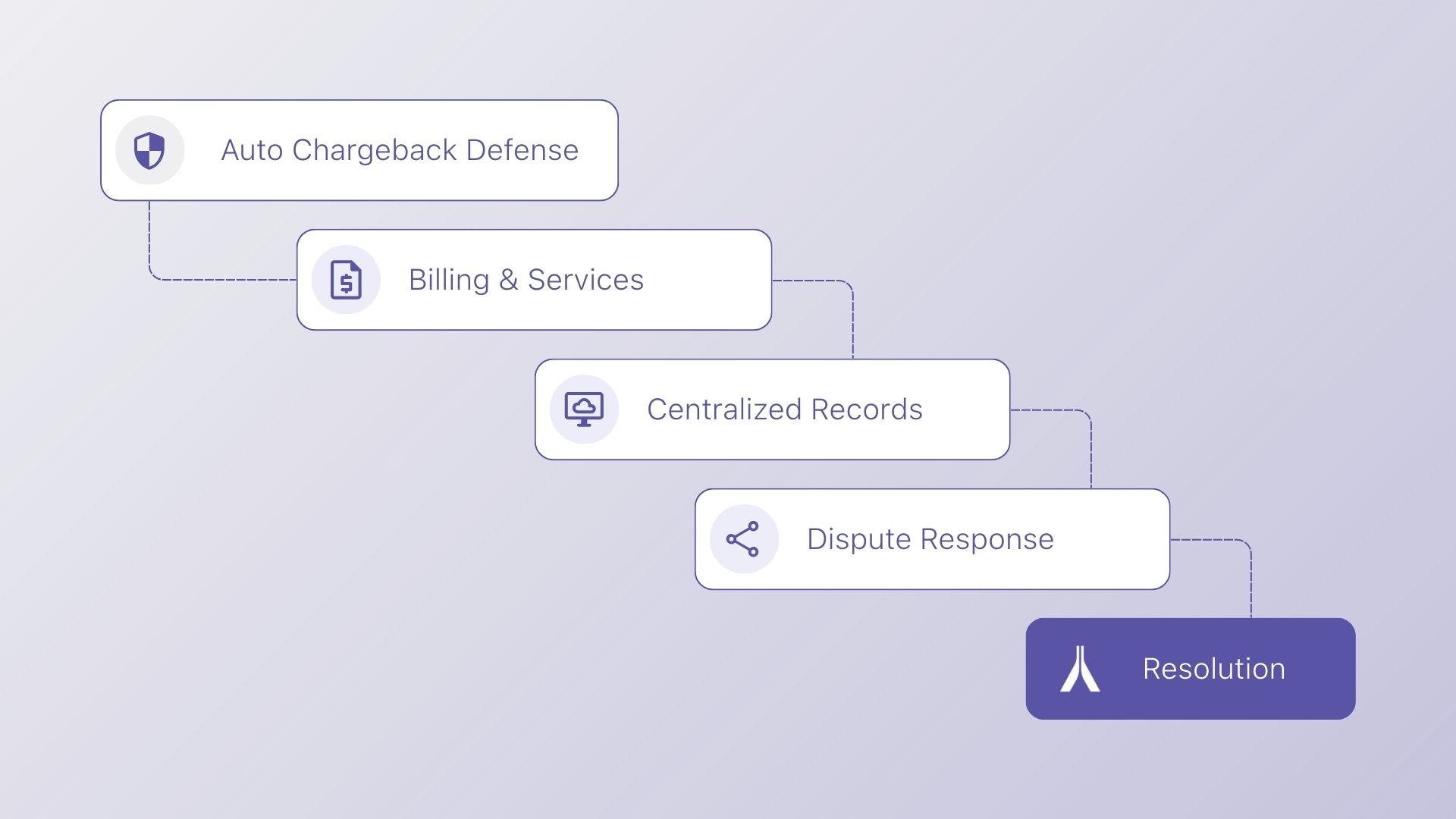
Automation supports chargeback defense by keeping billing data, service records, and payment confirmations aligned over time. Invoices are generated consistently, authorizations are captured and time-stamped at the moment of approval, and each charge remains directly linked to the services or tickets it represents. Because records are retained in a centralized system rather than scattered across tools or inboxes, dispute evidence is already organized, complete, and accessible when challenges surface weeks or months later, without the need for reconstruction.
This matters because disputes rarely happen immediately. When a client flags a charge long after the fact, automated systems preserve context that manual processes often lose.
A Realistic MSP Dispute Scenario
An MSP receives a chargeback notice for a quarterly services invoice.
Without automation, the finance team pauses month-end work to locate service records, confirm authorization, and reconstruct invoice details across systems.
With automated billing and synced service data, the response is straightforward. The dispute packet is assembled quickly, submitted on time, and resolved without escalation. The client relationship remains intact, and internal momentum continues uninterrupted.
The difference is not the dispute itself. It is the confidence in handling it.
As a result, the dispute is resolved in the MSP’s favor, not because of escalation or persistence, but because the documentation clearly reflects an authorized, delivered, and accurately billed service.
How To Reduce Chargeback Risk Before It Starts
The most effective chargeback strategy is prevention.
Reducing disputes starts with clarity, consistency, and expectation-setting long before payments post.
This section focuses on practical habits that lower risk without adding friction.
To reduce chargeback exposure, teams should focus on:
- Clear invoice descriptions that map directly to services delivered.
- Predictable billing schedules communicated in advance.
- Consistent payment authorization language across portals and agreements.
- Automated reminders that reinforce awareness before charges post.
Each of these steps reinforces recognition. When clients understand what they are paying for and when, disputes become far less likely.
Prevention is quieter than defense, but far more efficient.
The Emotional Impact Of A Defensible Billing System
Chargebacks introduce emotional strain that often goes unacknowledged.
They create tension between finance teams, service managers, and leadership.
When disputes are frequent or poorly handled, internal trust erodes. Teams second-guess billing accuracy. Leaders hesitate to rely on revenue forecasts. Conversations slow down.
A defensible billing system restores confidence. Teams trust the data. Leaders trust the process. Disputes stop feeling personal and start feeling procedural.
This emotional stability matters as much as the financial outcome.
Next Steps For Strengthening Chargeback Defense
Chargeback readiness begins with assessment, not reaction.
Before refining tools or workflows, it helps to understand how prepared your current system truly is.
To evaluate your chargeback defense posture:
- Review how quickly dispute evidence can be assembled today
- Identify where billing or service data still requires manual retrieval.
- Ask whether authorization records are consistently documented.
- Assess how often disputes interrupt normal finance operations.
These steps surface gaps without assigning blame. They create clarity around risk and readiness.
Strong chargeback defense is not about winning every dispute. It is about building a billing foundation that protects revenue, preserves trust, and supports confident growth.
Simplify your customer payments, unlock instant cash flow
Keep reading


Can AI financial analysis explain why your margins changed?

Autotask QuickBooks integration: choosing a billing and payment operating model